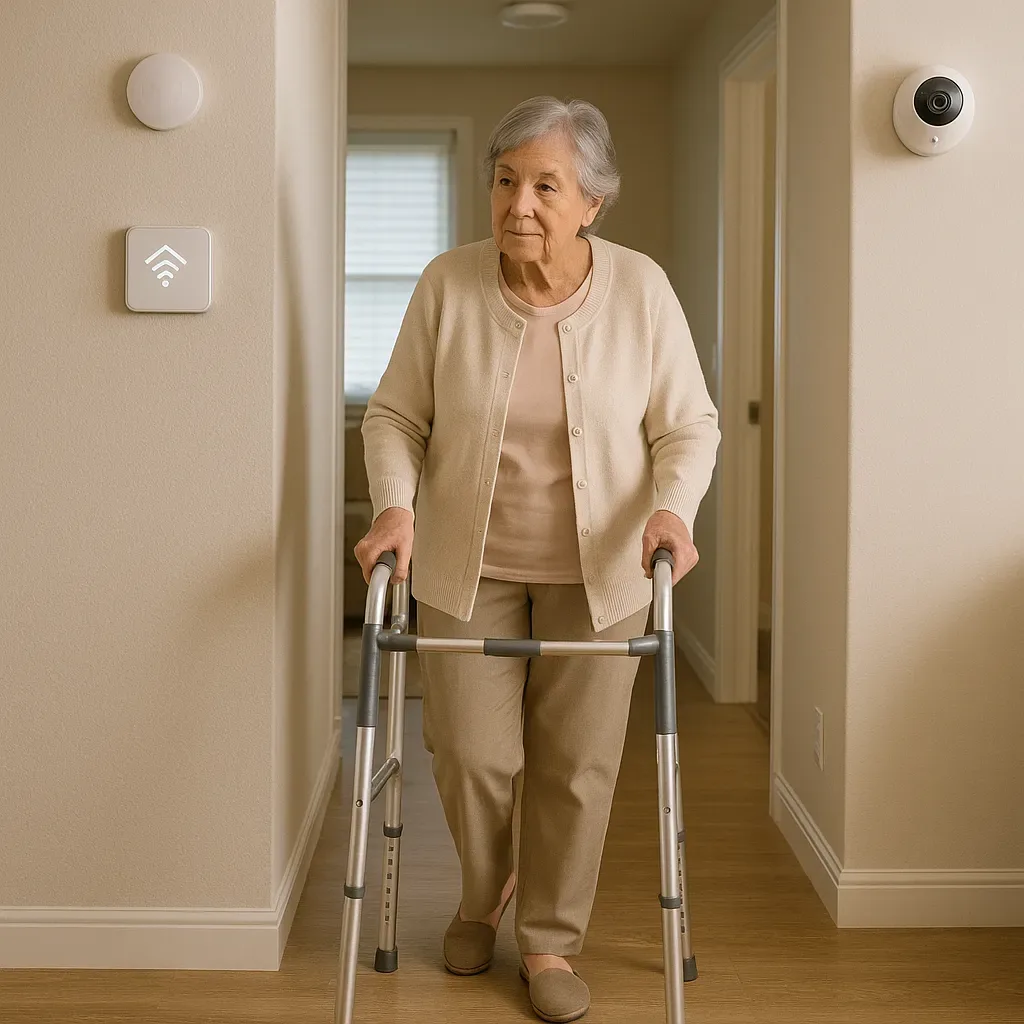
The Scale of the Problem: Falls in Thai Elderly
Thailand’s Department of Medical Services reports that approximately 30% of Thais aged 60 and above experience at least one fall per year, and 1 in 5 of those falls results in a serious injury such as a hip fracture — which carries a 20–30% one-year mortality rate in elderly populations. The primary incident locations are bathrooms (45%), stairs (25%), and bedrooms (15%) — all of which can be monitored with smart sensors.
Fall Detection Technologies in Smart Home
Floor Pressure Sensor (FSR): Pressure-sensitive mats placed under bathroom rugs or beside beds detect walking patterns. A sudden-impact pattern (pressure spike followed by stationary weight) triggers an automatic fall alert. Ideal for bathrooms and bedside positions.
mmWave Radar (LD2410/LD2450): Detects movement and body posture without a camera, fully preserving privacy. Distinguishes between lying flat on the floor (fall) and sitting in a chair (normal). Runs locally via ESPHome in Home Assistant.
AI Camera + Pose Estimation: An IP camera running a pose estimation model (Google MediaPipe or OpenPose on Coral TPU) analyses skeleton landmarks and flags fall posture patterns. Higher accuracy than radar but raises privacy concerns.
Wearable SOS Button + Fall Detector: Devices such as Apple Watch (built-in fall detection), Philips Lifeline, or Medical Alert bracelets detect falls via accelerometer and auto-dial emergency contacts.
Designing a Smart Elderly Care Zone
Bathroom — highest risk zone:
- Anti-slip mat with FSR pressure sensor
- mmWave radar alerting after 15+ minutes of stillness
- Non-contact pull-cord emergency alarm
- Motion-activated lighting that illuminates immediately at night
Stairs — secondary risk zone:
- Motion sensor + LED stair lighting that activates as the resident approaches
- Stair gate sensor alerting when the elderly person uses stairs at night
Bedroom:
- Bed exit sensor (FSR mat beside bed) alerting on night exits
- mmWave fall detection within the room
- Automatic night-light path from bed to bathroom
Elderly Fall Detection Automation
yaml
alias: "Elderly Fall Alert - Bathroom"
trigger:
  - platform: state
    entity_id: binary_sensor.bathroom_mmwave
    to: "on"
    for:
      minutes: 15
condition:
  - condition: time
    after: "21:00:00"
    before: "06:00:00"
action:
  - service: notify.line_notify
    data:
      message: "ALERT: Elderly resident in bathroom over 15 minutes — please check"
  - service: tts.google_translate_say
    target:
      entity_id: media_player.living_room_speaker
    data:
      message: "Attention — please check the bathroom."
Daily Activity Monitoring for Long-Term Health Tracking
Beyond fall detection, motion sensors throughout the home log activity patterns:
Morning check-in: If no movement is detected in the kitchen or bathroom by 8–9 a.m., HA sends a LINE message to family members.
Sleep quality: Beside-bed mmWave tracks breathing rate and the number of night exits. Anomalies may signal early warning signs of cardiac issues or sleep apnea.
Medication reminders: A smart plug on a medication box or an NFC tag on the pill organiser triggers a reminder automation at the scheduled medication time.
Elderly Care Smart Home Budget
Basic package (฿8,000–15,000): 2 mmWave sensors (bathroom + bedroom), 3 motion sensors, 2 smart plugs, 1 SOS button, LINE Notify integration.
Full package (฿15,000–30,000): Adds 2 FSR pressure sensor mats, sleep monitor, 1 IP camera with local AI, wearable SOS button, smart lock, automatic night lighting.
Investing in a Smart Home Elderly Care system costs far less than a single hospitalisation from a fall, and provides 24-hour peace of mind for family members living at a distance.