Indoor Air Quality Problems Thai Residents Often Overlook
Many people assume a sealed indoor environment protects them from pollution. The reality is quite different: WHO research indicates indoor air quality can be 2-5 times worse than outdoor air. In Bangkok, where most homes run air conditioning continuously in sealed spaces, pollutants accumulate without adequate ventilation.
Common indoor air pollutants include PM2.5 infiltrating through gaps and openings, CO2 from respiration accumulating in closed rooms, VOCs from paints, furniture, and cleaning products, and formaldehyde released by plywood and adhesives used in modern furniture. Each of these has documented health effects ranging from reduced cognitive performance to long-term respiratory disease.
Real-Time Air Quality Monitoring with IoT Sensors
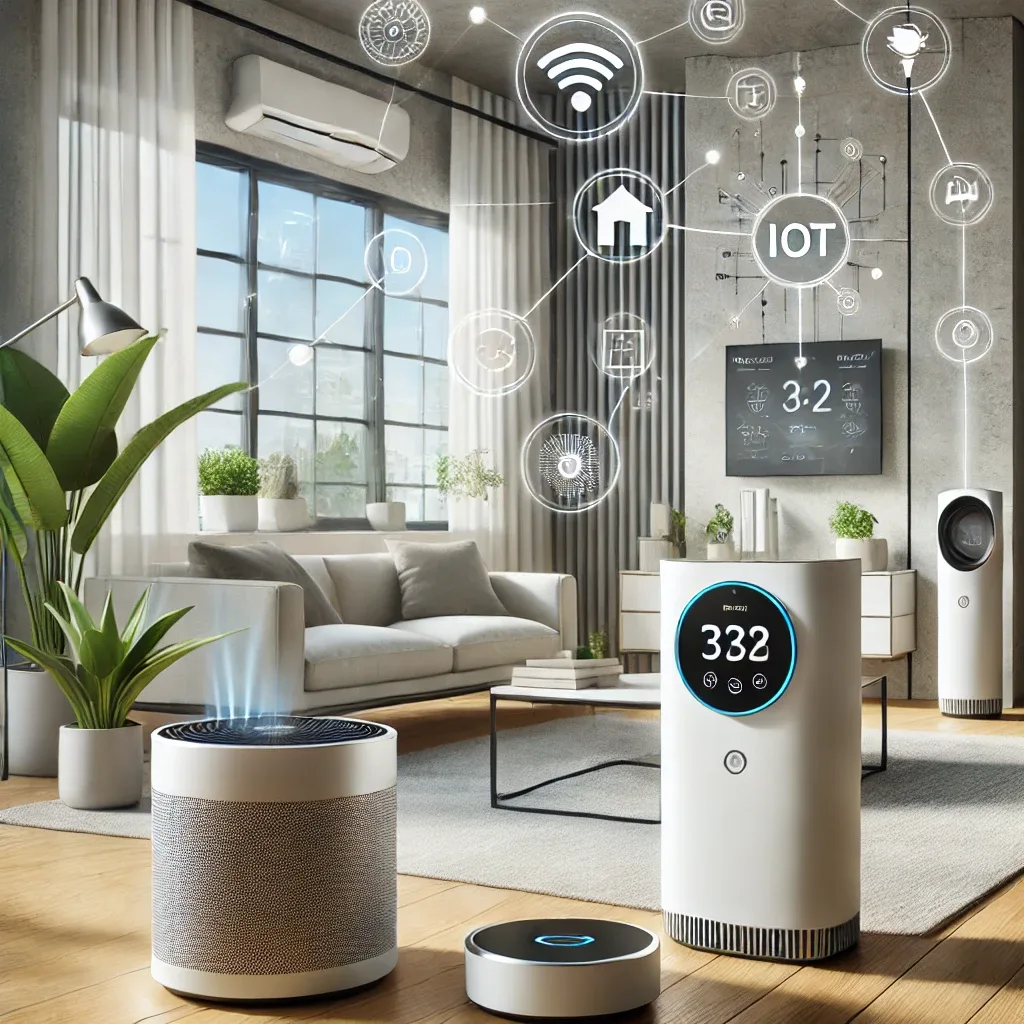
IoT air quality sensors transform home air management from reactive to proactive. The Sensirion SCD40 measures CO2 with high accuracy using NDIR technology (±40 ppm accuracy) and is well-suited for bedrooms and living areas. PMS7003 (Plantower) measures PM1.0, PM2.5, and PM10 with fine granularity, while the SGP30 detects VOC and H2 compounds.
Positive Air Pressure systems — created using a fan with HEPA filtration at the home's air intake — maintain slightly higher indoor pressure than outdoor. This pressure differential prevents PM2.5 and external pollutants from infiltrating through gaps and cracks. The approach is particularly effective on Bangkok AQI days above 100, dramatically reducing indoor particulate infiltration.
Home Assistant Automation for Clean Air
The distinguishing advantage of IoT for air quality is automatic response — the system acts before residents notice a problem. Recommended automation sequences include:
When CO2 exceeds 1,000 ppm, activate ERV at Medium speed. When CO2 exceeds 1,500 ppm, increase to High speed and send a smartphone notification. When CO2 falls below 800 ppm, reduce ERV back to Low speed for energy conservation.
For PM2.5: when PM2.5 exceeds 35 μg/m³, activate the air purifier (Xiaomi 4 Pro or Dyson TP09) at Medium speed. When PM2.5 exceeds 75 μg/m³, increase to Maximum speed and close external air intake vents.
ERV and Intelligent Ventilation
An Energy Recovery Ventilator (ERV) is the cornerstone of clean air in sealed homes. ERV draws fresh outdoor air in while transferring heat and moisture from exhaust air, avoiding the energy penalty of cooling unconditioned outdoor air from scratch. In Bangkok's climate, this energy recovery reduces the cooling load penalty of ventilation by 60-70%.
Connecting an ERV to Home Assistant via Modbus RS-485 enables automatic four-speed control triggered by live CO2 sensor readings. Panasonic WhisperGreen and Mitsubishi Lossnay are widely used ERV models in Thailand that support Modbus integration.
IQAir API and Real-Time Outdoor Air Data
Pulling outdoor AQI data from the IQAir API into Home Assistant enables the system to make intelligent decisions about whether to bring in outdoor air or remain fully sealed. On Bangkok days with AQI above 100, all ventilation fans shut down automatically and the system relies entirely on indoor air purification.
Combining internal sensor readings with external AQI data allows Home Assistant to generate a composite Air Quality Score for the home, displayed on a Grafana dashboard with alerts when quality deteriorates beyond normal baselines. This gives residents actionable data rather than vague awareness, enabling informed decisions about ventilation, purification, and time spent in specific rooms.