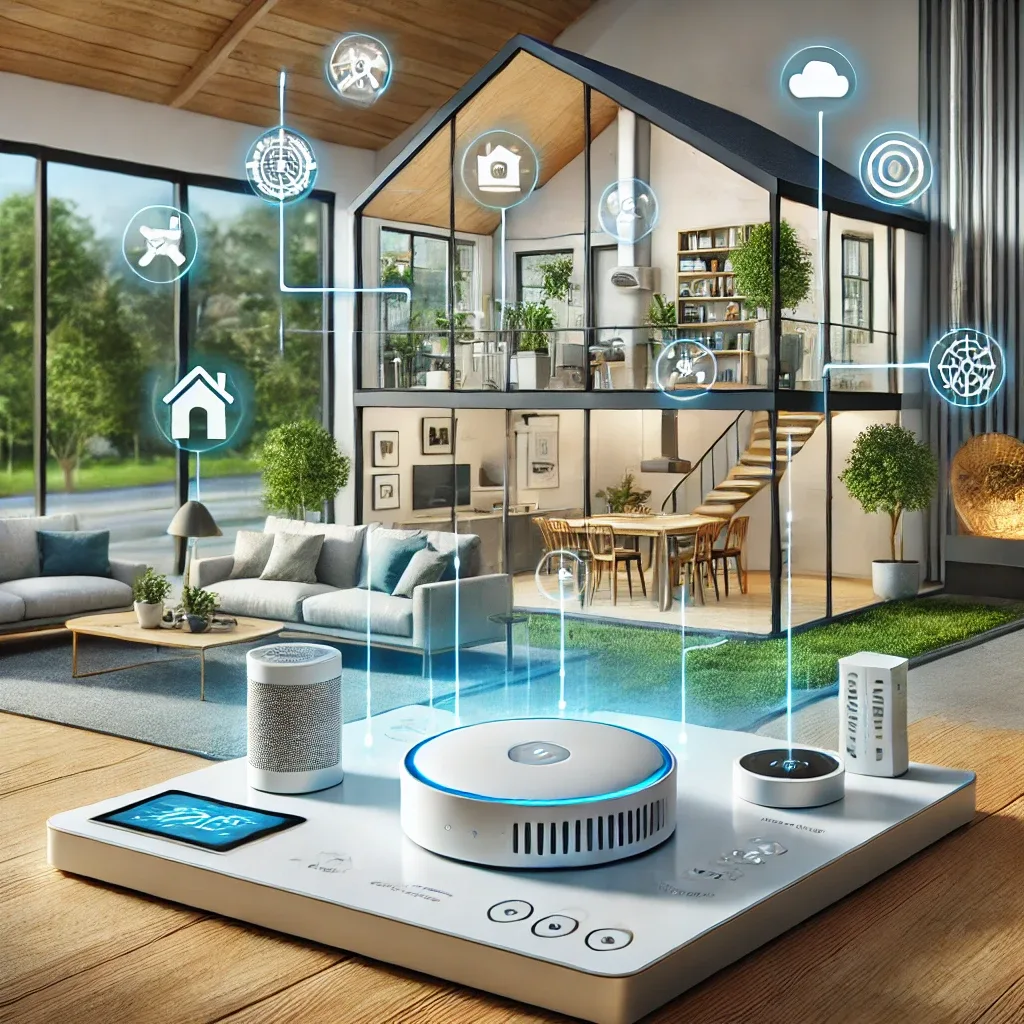
Why Connect Air Purification to Smart Home?
Bangkok homes sealed with air conditioning accumulate invisible air quality problems: CO2 gradually rising above 1,000 ppm from breathing, PM2.5 infiltrating from outside, and VOC off-gassing from furniture and paint. Running a standalone air purifier or Fresh Air System on a fixed schedule is insufficient because it cannot respond to real conditions at each moment of the day.
Connecting both systems through Home Assistant creates a responsive, intelligent system. When CO2 exceeds 800 ppm, the ERV activates immediately. When outdoor PM2.5 drops below 50 µg/m³, ventilation rate increases. When outdoor PM2.5 is high, the system switches to relying on indoor HEPA purifiers instead.
Equipment Needed for a Connected System
A complete system requires four core components: indoor air quality sensors such as Awair Element or Aqara TVOC measuring CO2, PM2.5, VOC, humidity, and temperature; outdoor air data from a local sensor or IQAir API; a Fresh Air ERV system supporting RS-485 or Wi-Fi API such as Panasonic or Mitsubishi Lossnay; and HEPA H13 air purifiers with Local API support like Xiaomi 4 Pro or Dyson.
All of these converge at Home Assistant running on Raspberry Pi 5 or HA Green hardware, which acts as the brain deciding which system to activate based on real-time sensor data from all sources simultaneously.
Setting Up Automation Rules
Four key automation rules work together in Home Assistant. Rule one: when indoor CO2 exceeds 800 ppm, activate ERV at Speed 2. Rule two: when outdoor PM2.5 is below 50 µg/m³ and CO2 exceeds 600 ppm, increase ERV to Speed 3. Rule three: when outdoor PM2.5 exceeds 75 µg/m³, shut ERV and activate all room HEPA purifiers at Turbo Mode. Rule four: schedule 6:00-8:00 AM as Morning Ventilation Mode with ERV always on, as CO2 accumulates maximally after a full night of sleeping.
Configuration is done through HA YAML directly or via Node-RED for users who prefer a visual automation interface.
Five Benefits of a Connected System
An integrated system delivers five measurable advantages over using either system independently: real-time responsiveness faster than any fixed schedule, energy savings by activating systems only when needed, historical air quality data for trend analysis through Grafana Dashboard, LINE Notify alerts when air quality deteriorates abnormally, and integration with other routines such as automatically adjusting air conditioning based on air quality conditions.
Families with young children or elderly members benefit most because the system manages air quality on their behalf 24 hours a day without requiring manual checks or adjustments.
Getting Started Is Easier Than You Think
For beginners, start with Home Assistant and a single CO2 sensor to collect 2-4 weeks of baseline data before expanding to ERV and air purifiers. The Thai-language Home Assistant community on Facebook has over 10,000 members ready to help, and pre-built Blueprint automations for Air Quality control are available for free download, letting you deploy a working system in under an hour.