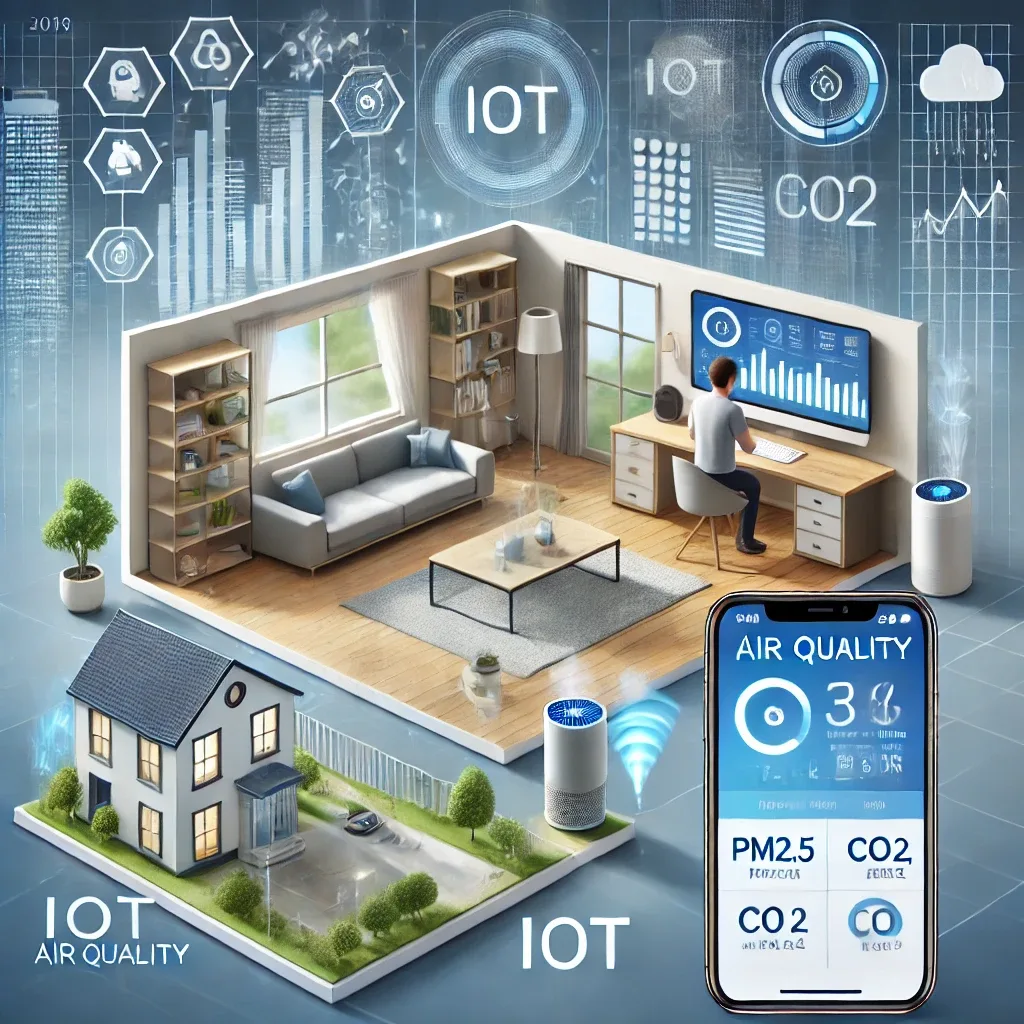
Indoor Air Pollution — The Invisible Problem
Many people assume indoor air is safer than outdoors, but EPA research found indoor pollution levels can be 2-5 times higher than outdoor levels due to pollutant accumulation in enclosed spaces. This counterintuitive reality makes indoor monitoring genuinely essential, not merely optional.
Indoor pollution sources are diverse: PM2.5 and PM10 infiltrating from outside and generated by cooking; VOCs off-gassing from new paint, furniture, and cleaning products; CO2 accumulating from breathing in enclosed areas; allergens from dust mites, pets, and mold; and cooking smoke — particularly deep-frying, which generates PM2.5 comparable to heavy outdoor traffic.
How IoT Technology Works for Air Monitoring
IoT air quality sensors measure key parameters in real-time and transmit data via Wi-Fi or Zigbee to a hub or smartphone app. Data is processed and displayed in easily understood formats, with immediate alerts when any parameter exceeds preset thresholds — turning invisible problems into visible, actionable information.
Multi-parameter sensors now offer comprehensive coverage in single devices. Airthings Wave Plus measures Radon, CO2, TVOC, humidity, temperature, and air pressure in one unit. Awair Element measures PM2.5, CO2, TVOC, humidity, and temperature with an easy-to-understand Air Quality Score. Aqara TVOC Air Quality Monitor measures TVOC, humidity, and temperature with Zigbee support and HomeKit/Matter compatibility.
Why Install Smart Dust Sensors
Smart dust sensors deliver clear benefits across four dimensions. Health: knowing bedroom PM2.5 reached 45 μg/m³ at 2am reveals the need to increase purifier power — real data leads to better decisions than guessing. Energy: purifiers responding to sensor signals use 30-50% less energy than running at maximum speed continuously. Health evidence: 30-90 days of historical data identifies which times of day or year air quality is worst, enabling lifestyle planning and system optimization. Smart Home integration: sensors serve as triggers for all automation types — purifiers, AC, windows, ventilation fans, and LINE/Telegram/Email alerts.
Connecting to Home Assistant
Integrating sensors with Home Assistant follows standard paths. For Zigbee sensors, use a Zigbee Coordinator (Sonoff Zigbee 3.0 USB Dongle or ConBee II) with Zigbee2MQTT integration. For Xiaomi Wi-Fi sensors, use Xiaomi Miot Auto integration. For Matter sensors, use Home Assistant's built-in Matter integration available immediately without additional setup.
After integration, build a dashboard showing PM2.5, CO2, humidity, and temperature with historical graphs; set alerts when values exceed standards; and create automations connecting sensors to purifiers, AC units, or other smart home devices for fully automated air quality management.
Choosing the Right Sensor
Five factors guide sensor selection: parameters measured (PM2.5, CO2, and humidity at minimum); connectivity (Zigbee is energy-efficient and Wi-Fi-independent, Wi-Fi is easier to set up, Matter supports the future); accuracy (check specification sheets — PM2.5 sensor accuracy should be ±10% or better); power source (plug-in suits permanent locations, battery suits portable use); and platform compatibility (Home Assistant, Apple HomeKit, or Google Home as needed).