PM2.5 Health Impacts Across All Body Systems
PM2.5 doesn't affect only the lungs. Particles smaller than 2.5 micrometers enter the bloodstream and impact every organ. Respiratory effects: lung inflammation, increased COPD risk, and asthma exacerbation. Cardiovascular: increased vascular inflammation, heart disease risk, and hypertension. Neurological: PM2.5 travels via the olfactory nerve directly to the brain, increasing Alzheimer's and Parkinson's disease risk. Immune: reduced effectiveness against pathogens and increased autoimmune response.
High-risk groups requiring special attention include young children with developing lungs, the elderly with weakened immune systems, patients with chronic conditions, and pregnant women where PM2.5 exposure may affect fetal development.
Smart Home Tools for Reducing PM2.5
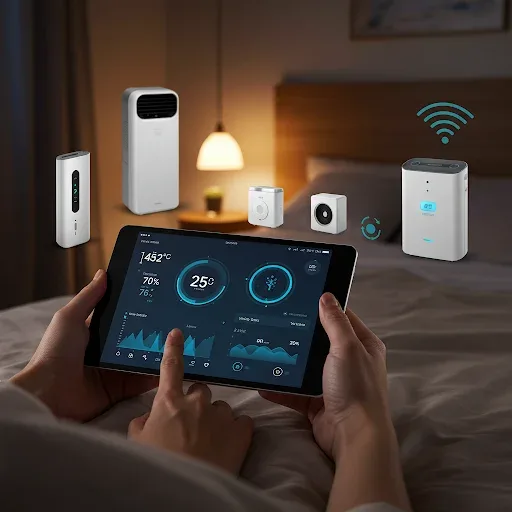
Smart Home systems offer multiple tools working together for comprehensive PM2.5 reduction. Sensors are the system's foundation — Xiaomi Mi Air Quality Monitor, Dyson's built-in sensors, and Honeywell detectors feed data to smartphone apps and Home Assistant for display and device control.
Smart air purifiers are the primary defense. Popular models in Thailand include the Philips Series 3000i with SenseIQ Technology, Dyson Purifier Cool combining fan and purifier functions, and Blueair HealthProtect certified by Allergy UK. These support Wi-Fi and connect directly to apps for remote control and automation.
Smart robot vacuums reduce PM2.5 accumulation on floors and carpets. Roborock, iRobot Roomba, and Ecovacs Deebot models with HEPA filters capture dust during vacuuming without releasing it back into the air. Scheduled operation or Home Assistant-triggered cleaning when PM2.5 rises keeps floors continuously clean.
Smart curtains and windows block outdoor PM2.5 by automatically closing when external levels are high — triggered by outdoor sensors or Air4Thai API data sending signals to curtain or window motors integrated with Home Assistant.
Comprehensive Management Through Home Assistant
Home Assistant centralizes all devices with capabilities exceeding what individual apps provide. Complex multi-device automations are its key strength: when indoor PM2.5 exceeds 50 μg/m³ and occupancy is detected, simultaneously maximize all purifiers, close all curtains, send LINE notifications, and trigger robot vacuum for an extra cleaning pass.
Home Assistant dashboards can display Indoor vs Outdoor air quality in real-time, making it clear when opening windows is safe and when sealing the home is necessary — turning data into daily practical decisions.
Complementary Non-Technology Measures
Beyond Smart Home systems, additional measures reduce PM2.5 further: avoid all indoor combustion including candles, incense, and barbecues; choose washable curtains and carpets to reduce dust accumulation; use HEPA-filtered vacuum cleaners instead of sweeping which disperses fine particles; grow air-purifying plants like Snake Plants, Pothos, and Peace Lilies that absorb some VOCs; and always check Air4Thai before opening windows.