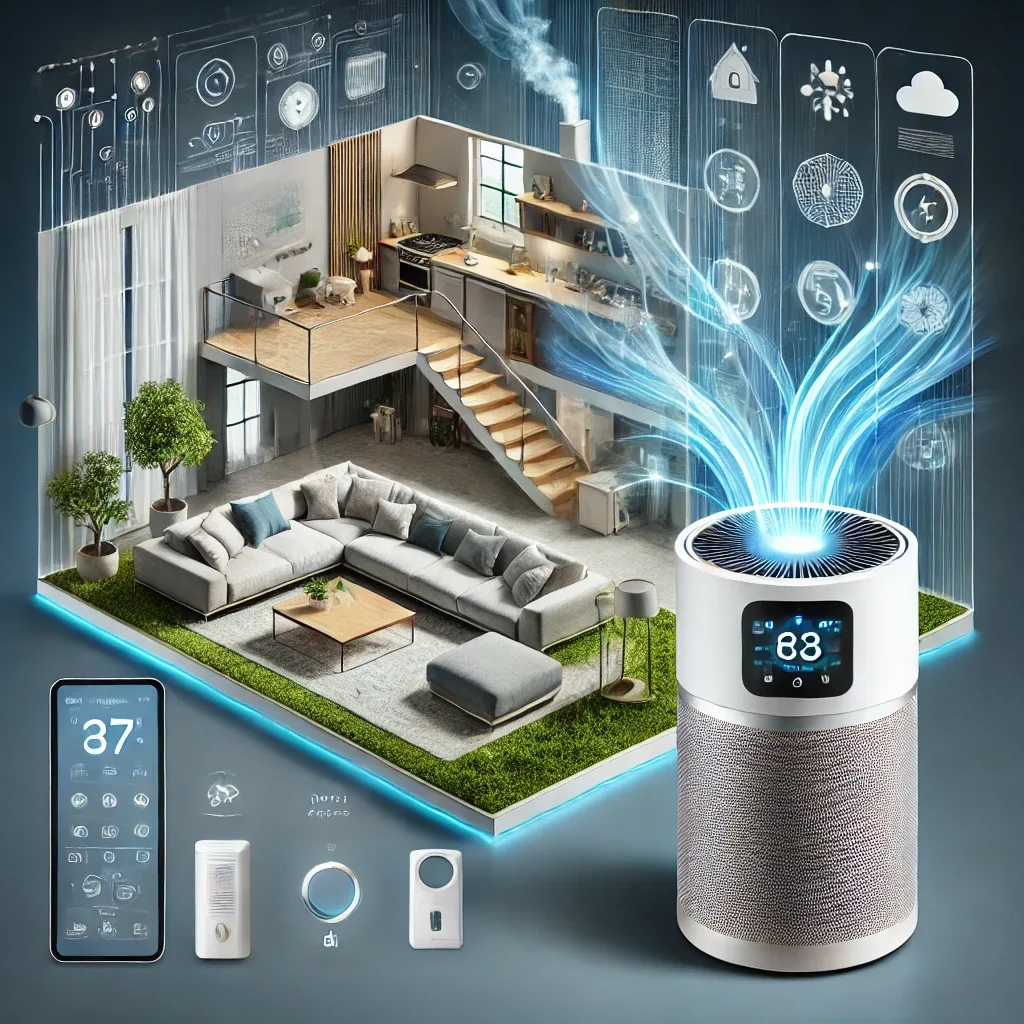
Understanding Indoor Air Pollutants
Indoor air contains multiple invisible pollutants affecting health every day. The primary categories are PM2.5 fine particles smaller than 2.5 microns that penetrate deep into lung tissue, volatile organic compounds (VOC) off-gassing from new furniture, paint, adhesives, and cleaning products, mold spores thriving in Bangkok's high humidity, pet dander and dust mites, and airborne bacteria and viruses.
The most vulnerable groups are young children with still-developing lungs, elderly individuals with weakened immune systems, and anyone with asthma or allergies. Investing in proper air purification is genuinely a healthcare cost-prevention measure, not just a comfort upgrade.
The 4-Step Fresh Air System Process
A complete Fresh Air System works in four stages: first drawing outdoor air through an intake vent, then filtering through a pre-filter catching large particles, passing through HEPA H13 or higher media capturing 99.97% of particles at 0.3 microns, and running through activated carbon absorbing VOC gases and odors. Energy exchange happens through a heat or energy exchanger before clean conditioned air distributes through every room.
Air Purification Technologies Compared
Several technologies exist in the market. HEPA filtration is the gold standard for particle capture, with H13 grade or higher recommended for home use. Activated Carbon filters absorb VOC chemicals and odors that HEPA cannot capture. UV-C ultraviolet light destroys the DNA of bacteria and viruses with high effectiveness. Negative ions cause dust particles to settle out of suspension. Photocatalytic Oxidation (PCO) breaks down volatile organic compounds.
Combining multiple technologies yields the best results. HEPA plus Carbon plus UV-C covers particles, chemicals, and pathogens in a single system, which is why premium purifiers like Dyson use this combination.
Popular Air Purifier Brands for Thai Homes
The Thai market offers strong options across price points. The Dyson Purifier Hot+Cool HP09 includes HEPA H13, Carbon, and UV-C, priced 25,000-35,000 THB. It integrates with HomeKit and Google Home, making it ideal for Smart Home setups. The Xiaomi Smart Air Purifier 4 Pro at 5,000-8,000 THB offers HEPA H13 with Mi Home connectivity, working well via Zigbee2MQTT with Home Assistant. The Blueair Blue Pure 211+ Auto at 8,000-12,000 THB is exceptionally quiet and suitable for bedrooms, with Wi-Fi connectivity.
Calculate required CADR as room area multiplied by 3 to ensure adequate air circulation. Always factor in replacement filter costs over the product's lifetime when comparing prices.
Selection Criteria for Smart Home Users
Smart Home users need additional criteria beyond basic purification performance: Local API support to avoid cloud dependency during internet outages, Home Assistant integration via MQTT or Zigbee, built-in PM2.5 sensors reporting real-time values, automation capability responding to outdoor sensor data, and filter longevity of at least 6 months under Bangkok air quality conditions.
Integrating your purification system with Home Assistant lets you manage whole-home air quality from a single dashboard, create complex automation rules, and visualize via Grafana exactly which hours of day show the poorest indoor air quality so you can optimize ventilation schedules accordingly.