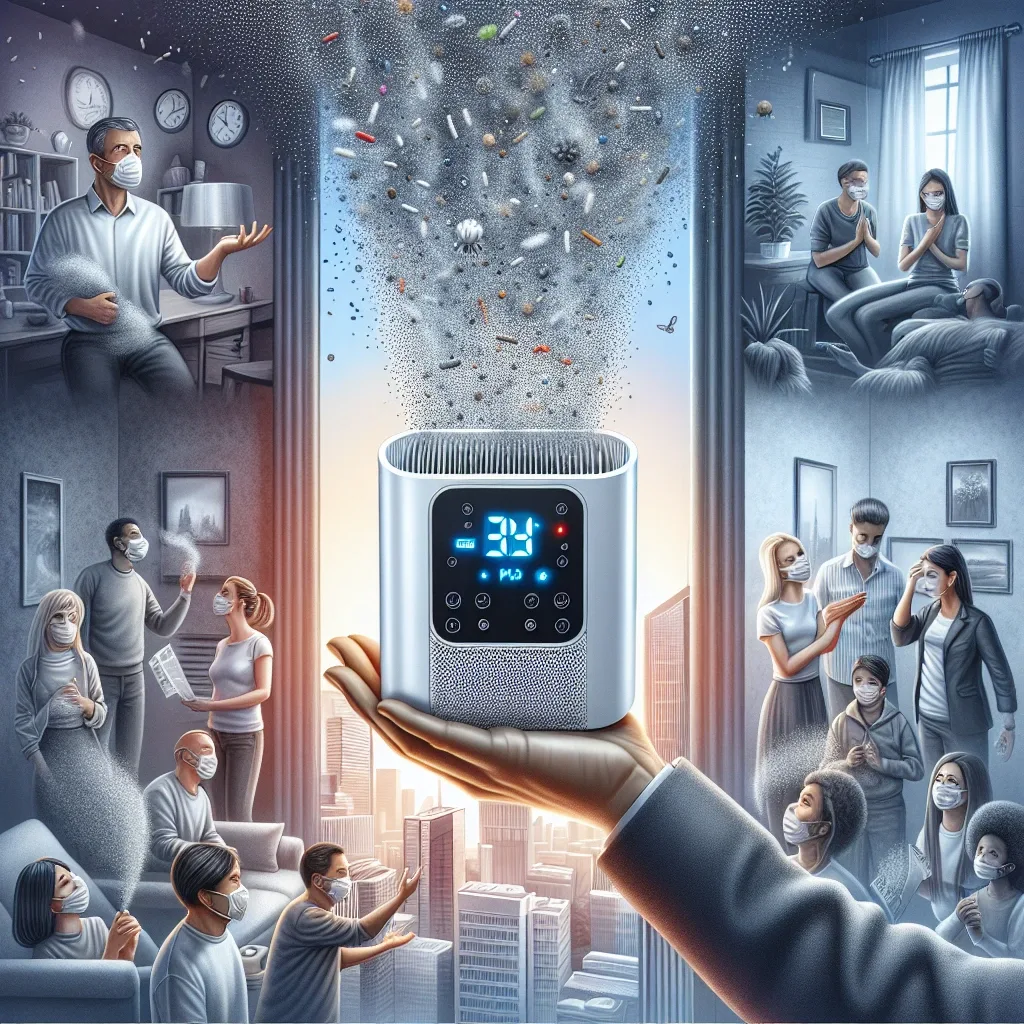
What Is PM2.5 and Why Do You Need a Smart System
PM2.5 particles smaller than 2.5 micrometers can penetrate directly into the bloodstream through lung alveoli. Research has found that PM2.5 can travel via the olfactory nerve directly into the brain, increasing risk of Alzheimer's and Parkinson's disease — a pathway that makes it more dangerous than simple lung exposure.
A smart system is needed rather than a standard purifier because PM2.5 levels in Bangkok aren't constant. Morning rush hours (06:00-09:00) and evening peaks (17:00-20:00) see significantly higher levels due to traffic. A smart system that detects and responds in real-time is dramatically more effective than timed schedules set in advance.
Technology HappySmart Uses
HappySmart's Smart Air Filtration system operates across multiple technology layers. The sensor layer simultaneously measures PM2.5, PM10, CO2, humidity, and temperature, pushing data to the cloud every 1-5 minutes. Laser particle counters provide higher accuracy than traditional infrared sensors and can distinguish particle sizes for better data.
The filtration layer combines HEPA H13 (99.97% PM2.5 removal), activated carbon for VOCs, formaldehyde, and odors, and UV-C for bacteria and virus deactivation. The AI and machine learning layer learns user behavior — wake times, sleep schedules, occupancy patterns — and proactively adjusts operation, reducing energy consumption during unoccupied periods without manual configuration.
Home Assistant integration extends capabilities further: presence detection activates purifiers when residents return home, complex multi-trigger automations respond to PM2.5, CO2, and VOC thresholds simultaneously, and LINE Notify alerts warn when air quality deteriorates.
Installation and Setup Steps
Installing a HappySmart Smart Air Filtration system follows four clear steps. Step 1: position the unit at least 20cm from all walls, at 0.5-1.5m height, away from direct airflow from AC units or windows. Step 2: install additional outdoor sensors on balconies or near windows to enable indoor/outdoor air quality comparison.
Step 3: connect to the app and Home Assistant by adding the device in Xiaomi Home or Tuya Smart, then integrating with Home Assistant via Xiaomi Miot Auto or Tuya Integration. Step 4: configure automations — for example, PM2.5>35 triggers maximum speed plus LINE notification, PM2.5<12 drops to minimum speed, and unoccupied mode activates energy-saving settings automatically.
Real-World Results
HappySmart Smart Air Filtration users consistently report dramatically improved indoor air quality, particularly during Bangkok's high-PM2.5 winter season. Indoor PM2.5 stays below 15 μg/m³ even when outdoor levels reach 100 μg/m³. Allergy and asthma symptoms decrease measurably, and occupants report improved alertness and concentration — particularly noticeable during work-from-home periods when sustained cognitive performance matters most.