How Important Is Clean Indoor Air?
WHO research attributes indoor air pollution to over 3.8 million premature deaths annually worldwide. In Bangkok, hot and humid conditions combined with sealed air conditioning mean homes accumulate PM2.5 from outside, VOC from building materials, CO2 from breathing, mold spores, and allergens at high concentrations. This is not just a discomfort issue but a genuine health risk.
Investing in a Smart Home Solution with integrated air purification is therefore a measurable health investment, not merely a convenience upgrade. Studies find that clean indoor air reduces allergy medication use, decreases sick days, and increases productivity for home office work.
Required Features of a Smart Home Air Purification System
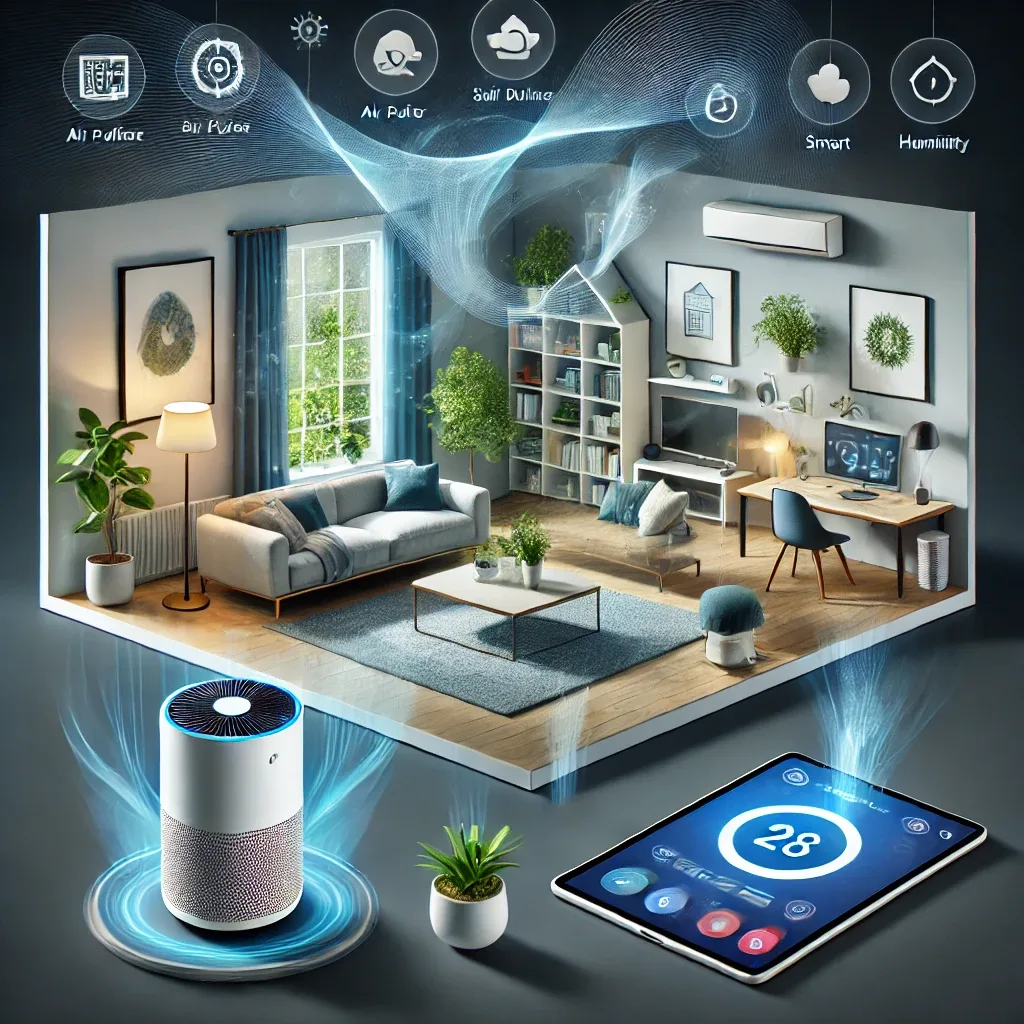
A quality Smart Home air purification system needs four capability dimensions. Purification capability includes HEPA H13 for particles, Activated Carbon for VOC, and UV-C for pathogens. Connectivity includes Local API support to avoid cloud dependency and Home Assistant integration. Built-in real-time PM2.5 sensor reporting. And filter longevity of at least 6 months under Bangkok air quality conditions for cost-effective operation.
Avoid devices that are 100% cloud-dependent, as brand server shutdowns or outages stop all functionality. Choosing models with Local API such as Xiaomi or Dyson protects against this risk and ensures long-term reliability regardless of the manufacturer's server status.
Smart Home Solution Tiers for Thailand
The entry tier at 15,000-30,000 THB includes Home Assistant on RPi5, 2-3 Zigbee sensors, and one Xiaomi 4 Pro air purifier. The mid tier at 30,000-80,000 THB adds a bedroom ERV, sensors in every room, and an Ecobee Smart Thermostat. The premium tier at 80,000-200,000 THB delivers a whole-home system with ERV in every zone, Dyson purifiers in every room, a Grafana Dashboard, and backup power systems.
ROI of Investing in Clean Indoor Air
ROI calculation for a Smart Home air purification investment comes from savings on medication, doctor visits, and lost productivity from illness. Families with allergy-sensitive members report saving 2,000-5,000 THB per month on allergy medications alone, recovering the entry-tier investment within 12-18 months.
Additionally, Smart Thermostat and ERV integration reduces electricity costs by 10-20%, adding a second ROI stream that accelerates overall payback faster than most people initially expect when evaluating the investment.