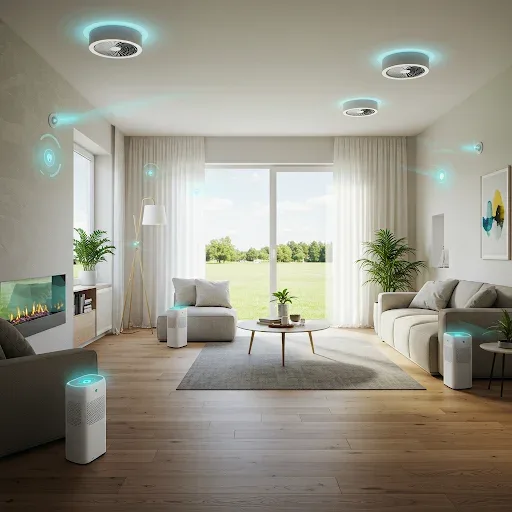
Why Allergy Sufferers Need Smart Home More Than Most
People with allergies, asthma, or sensitive skin have significantly higher susceptibility to airborne pollutants than the general population. PM2.5 particles, dust mites, pollen, mold spores, and volatile organic compounds (VOCs) are all common allergy triggers found indoors.
Smart Home systems allow allergy sufferers to control indoor environmental conditions continuously and precisely, replacing inconsistent manual management. In Bangkok — where PM2.5 fluctuates dramatically between seasons and even between morning and evening — this real-time responsiveness is particularly valuable.
Smart Air Purifiers — First Line of Defense
For allergy sufferers, smart purifiers need specific capabilities: HEPA H13 or H14 filters capturing PM2.5, dust mites, and pollen at over 99.97% efficiency; built-in laser PM2.5 and PM10 sensors with automatic speed adjustment; and noise below 35 dB in Sleep mode for bedroom use.
Positioning matters enormously. For allergy sufferers, place purifiers in the bedroom 1-2 meters from the bed and in living or working areas. Avoid pointing the air outlet directly at sleeping positions to prevent dry throat from direct airflow.
Smart AC and Temperature Control
Smart AC connected to home automation helps allergy sufferers in multiple ways. Maintaining 24-26°C reduces dust mite and mold growth — both thrive in heat and humidity. Inverter technology maintains stable temperatures with fewer fluctuations that can trigger symptoms. Automating AC on/off based on schedules or occupancy detection maintains a consistent environment while saving energy.
Humidity Control — Most Critical for Allergy Sufferers
Relative humidity directly impacts allergy severity. The optimal range for allergy sufferers is 40-50% RH — at this level, dust mites struggle to reproduce, mold cannot spread easily, and respiratory mucous membranes function optimally.
Smart Home automation manages this precisely: when humidity exceeds 60%, activate Dehumidifier until it reaches 50%; when humidity drops below 35%, activate Humidifier to 45%. These thresholds run automatically through Home Assistant, maintaining the optimal range continuously without manual intervention.
Smart Ventilation
Good ventilation reduces CO2 buildup and dilutes VOCs, but must be done intelligently to avoid bringing outdoor PM2.5 inside. Smart windows connected to outdoor PM2.5 sensors open only when outdoor PM2.5 is below 25 μg/m³ and close automatically when levels rise.
ERV (Energy Recovery Ventilator) or HRV systems are superior because they exchange fresh air while filtering out PM2.5, providing the benefits of ventilation without the pollution risk of simply opening windows.
Bedroom Sensors and Environment Optimization
For allergy sufferers, the bedroom is the most critical space since 6-8 hours per night are spent there. Recommended bedroom sensors: PM2.5 plus PM10, CO2, humidity, temperature, and a CO sensor if any gas appliances are present.
Configuring bedroom automations: PM2.5>25 increases purifier speed; CO2>800 activates ERV for 15 minutes; humidity>55% activates Dehumidifier; 30 minutes before sleep, adjust room temperature to 25°C and run purifier at maximum for 10 minutes then step down. This creates optimal sleeping conditions automatically every night.
The system also sends automatic maintenance alerts when filter cleaning or replacement is due based on accumulated runtime, ensuring consistent maintenance without needing to remember replacement schedules.