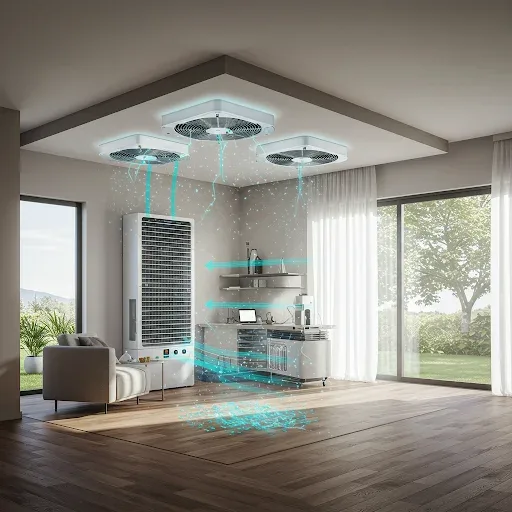
What Is a Positive Air Pressure System
A Positive Air Pressure (PAP) system creates higher indoor air pressure than outdoors by drawing outside air through HEPA filters and continuously blowing it into the home. This pressure differential — typically 5-15 Pascals above outdoor pressure — means that PM2.5-laden outdoor air cannot infiltrate through cracks, ventilation gaps, or door seals.
In Bangkok, where PM2.5 regularly exceeds safe limits during cool-dry season (November–February) and agricultural burning season (March–May), a PAP system is one of the most effective solutions for protecting indoor air quality without sacrificing ventilation.
How a PAP System Works
The system operates through four key processes working simultaneously. First, pressure creation: a fan draws outdoor air through a multi-stage filter bank and pushes it into the home, maintaining positive pressure continuously. Second, airflow control: air naturally escapes through small gaps, preventing outdoor pollutants from entering since airflow is always outward.
Third, multi-stage filtration: air passes through a pre-filter capturing large particles, an activated carbon filter absorbing VOCs and odors, and finally a HEPA H13 filter removing over 99.97% of PM2.5 particles. Fourth, climate conditioning: filtered air is temperature and humidity adjusted before distribution throughout the home.
Benefits of Positive Air Pressure
A well-designed PAP system delivers multiple simultaneous benefits. On pollution prevention: PAP systems can reduce indoor PM2.5 by 80-95% compared to unprotected homes. The continuous supply of HEPA-filtered fresh air also prevents CO2 buildup, keeping occupants alert and improving sleep quality.
Humidity is maintained at the optimal 40-60% RH range, reducing mold, dust mites, and bacteria growth. VOCs from new furniture, paints, and cleaning products are continuously diluted and filtered. The overall result is a living environment that actively protects health rather than merely passively avoiding pollution.
Why Modern Homes Need PAP
Modern homes are increasingly designed for energy efficiency with better-sealed windows, doors, and walls. While this reduces energy consumption, it also reduces natural air exchange — CO2 accumulates, chemical off-gassing from building materials concentrates, and the air becomes stale.
A PAP system solves this directly by providing continuous filtered fresh air without opening windows to outdoor pollution. When integrated with Home Assistant or other smart home platforms, automation can adjust ventilation rates based on PM2.5 levels, CO2 concentration, or occupancy schedules — optimizing both air quality and energy consumption intelligently.
Selecting and Installing a PAP System
Key selection factors include coverage area, air changes per hour (ACH — 0.35-0.5 per hour is recommended for residences), filter grade (HEPA H13 minimum for high PM2.5 areas), noise level, and smart home compatibility.
For a 100-150 sqm home, a mid-sized PAP system with CADR around 300-500 CMH is typically sufficient. Professional installation ensures proper duct insulation, correct pressure balancing, and smart integration. Maintenance involves filter replacement every 6-12 months depending on local air quality conditions.