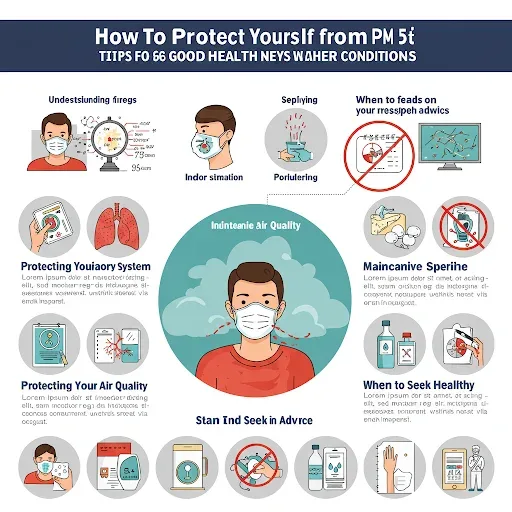
Understanding PM2.5 and Its Health Dangers
PM2.5 describes particles smaller than 2.5 microns in diameter — 30 times smaller than a human hair. This size allows particles to bypass the filtering mechanisms of the nose and throat entirely, reaching the deep alveoli of the lungs and entering the bloodstream directly. Health impacts span respiratory diseases such as asthma, pneumonia, and COPD; cardiovascular disease; and with long-term exposure, elevated lung cancer risk. Prevention is as essential as treatment.
Outdoor Protection Strategies
Time outdoor activities intelligently. In Bangkok, PM2.5 typically peaks between 7-9 AM and 5-7 PM during rush hours. Going outdoors after 10 AM or after sunset substantially reduces exposure.
Avoid roads with heavy traffic, particularly those with diesel buses and trucks emitting visible exhaust. Where possible, choose routes through parks or riverside paths. Never exercise outdoors on high-PM2.5 days — faster breathing during exercise increases particle inhalation by 5-10 times compared to rest. Move workouts indoors or to gyms with air purification.
Choosing a Mask That Actually Protects Against PM2.5
Mask standards that provide genuine PM2.5 protection: N95 (95% filtration), KN95 (Chinese standard, 95%), KF94 (Korean standard, 94%), and masks incorporating carbon filters alongside HEPA provide added protection. The mask must fit snugly with no gaps, covering both nose and mouth completely with secure straps. A loosely fitted mask provides minimal protection regardless of its filtration rating.
Replace N95 masks after 8 hours of continuous use or when the mask becomes damp. Do not reuse masks without proper disinfection, as accumulated dust and pathogens on the filter surface may themselves become a health hazard.
Supporting the Body Internally During High-PM2.5 Periods
Drink 8-10 glasses of water daily to help the body clear toxins and maintain respiratory membrane moisture. Eat foods rich in vitamin C (citrus, bell peppers), vitamin A (carrots, pumpkin, mango), and antioxidants from dark leafy greens and richly colored fruits.
Perform at least 30 minutes of light indoor exercise daily — yoga, pilates, or indoor walking — to stimulate circulation and immune function. Avoid smoking or secondhand smoke environments, which compound the oxidative damage that PM2.5 has already initiated.
Using Air Purifiers and Tracking Air Quality
A HEPA air purifier is a sound long-term investment. Run it continuously in the bedroom and living area. Replace filters on schedule to maintain performance — a clogged filter makes the machine work harder while delivering less clean air.
Clean air conditioner filters monthly during dust season, as uncleaned units recirculate accumulated dust throughout the room. Install an AQI monitoring app on your phone and check conditions before going outside every time.
Long-Term Health Management
Schedule annual pulmonary health checks, particularly for those living in consistently high-PM2.5 urban areas. Spirometry testing measures lung function and can identify abnormalities early, before chronic symptoms appear. HappySmart provides consultation for Smart Home systems that automatically detect and respond to PM2.5 conditions, making your home a safe refuge in any weather.