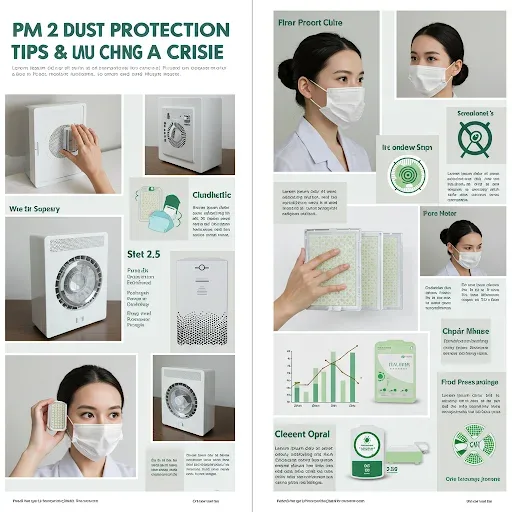
What Is PM2.5 and How Does It Harm the Body
PM2.5 or Particulate Matter 2.5 describes suspended airborne particles with diameters of 2.5 microns or smaller. Primary sources include vehicle engine combustion, industrial facilities, open burning, and atmospheric chemical reactions.
Because of their extreme small size, PM2.5 particles can remain suspended in air for hours to days. When inhaled, they penetrate deeper into the respiratory system than larger particles, affecting multiple body systems.
The respiratory system is the most directly affected, experiencing irritation and inflammation of the airways, with increased risk of asthma, COPD, and pneumonia. The cardiovascular system is affected when particles enter the bloodstream, causing vascular inflammation and raising the risk of heart disease and stroke. Environmentally, PM2.5 reduces visibility to create haze conditions and contributes to long-term ecological harm.
Everyday Methods to Protect Yourself from PM2.5
Wearing a certified mask is the most important first line of defense when going outside during periods of high AQI. N95 masks filter 95% of fine particles and must fit firmly against the face to be effective.
Avoiding outdoor activities when the AQI exceeds 100, particularly exercise that causes faster and deeper breathing, is critical. Deep breathing during high-pollution events dramatically increases the volume of particles reaching the lungs. Track AQI using apps like AirVisual or IQAir to plan your daily activities around pollution levels.
Maintaining a clean home consistently means cleaning floors and surfaces regularly, changing bedding more frequently during dust season, and cleaning air conditioning filters every 2 to 3 months to prevent them from becoming sources of indoor pollution.
Smart Home Technology That Reduces PM2.5
Modern Smart Home systems are not just conveniences but effective health protection tools.
Air purifiers connected to Home Assistant continuously monitor indoor PM2.5 in real time and adjust operation automatically without human input. When dust levels exceed a set threshold, the system activates the purifier immediately and returns it to standby when air quality recovers.
Automatic smartphone alerts when PM2.5 exceeds safe levels keep you informed about conditions so you can decide whether to start the purifier, close windows, or avoid outdoor activities.
Connecting to outdoor air quality API data allows the system to adapt to real environmental conditions, such as automatically closing smart curtains when the outdoor AQI is high and activating ventilation when outdoor air improves.
Additional Health Care During Dust Crisis Conditions
Beyond technology, practical health measures should accompany Smart Home protection. Drink at least 8 glasses of water daily to support the body in clearing inhaled particles. Eat foods rich in vitamin C and antioxidants including citrus fruits, leafy green vegetables, and legumes to support immune function.
People with pre-existing respiratory or cardiovascular conditions should consult their physician about a specific action plan for days when AQI is especially elevated, and always keep prescription medications readily available.