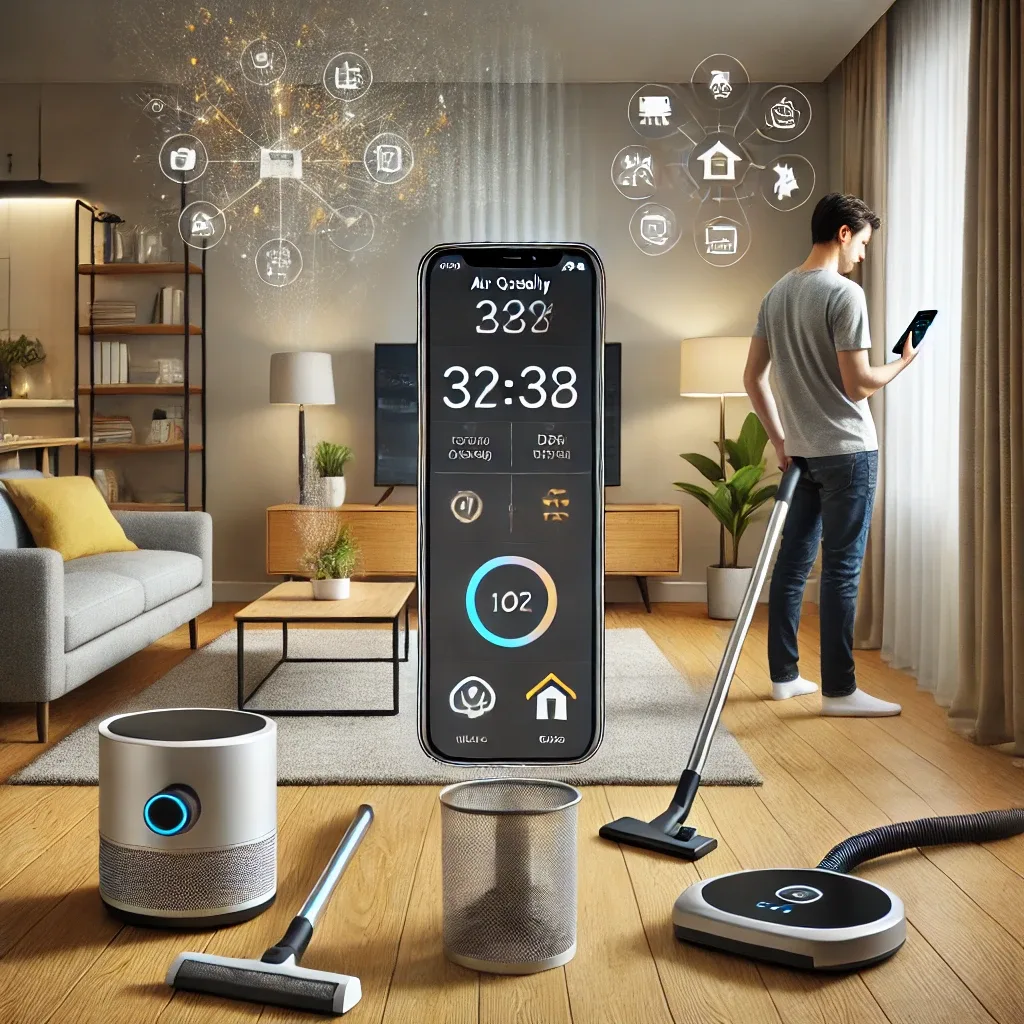
Why Managing Home Dust Requires Multiple Technologies
Household dust comes in many types with different sources. Visible large dust particles accumulate on floors and carpets. Fine PM2.5 infiltrates from outdoors. Dust mites colonize mattresses and sofas. No single device can address all of these effectively.
Combining robot vacuums, cordless vacuums, air purifiers, and dust curtains into an automated system through Home Assistant represents the most effective and convenient approach available today.
Smart Robot Vacuums: Hands-Free Floor Management
Modern robot vacuums use multiple sensor types working together, including infrared, ultrasonic, and Lidar systems that build three-dimensional maps of the home to plan cleaning routes precisely.
Top models in 2025 include the Roborock S8 Pro Ultra with a self-cleaning mop system, the iRobot Roomba j9+ with intelligent obstacle recognition, and the Ecovacs Deebot X2 Omni which supports Home Assistant integration directly. Models with HEPA filtration are recommended for homes with allergy sufferers or pets.
Connecting to Home Assistant or Google Home enables voice commands, scheduled cleaning during unoccupied hours, and Automation rules that start the robot when a PM2.5 sensor detects unusually high dust levels, creating a responsive system rather than a fixed schedule.
Cordless Vacuum Cleaners: The Indispensable Complement
Robot vacuums handle floors well but cannot reach sofas, mattresses, curtains, high shelves, or tight corners. A lightweight cordless vacuum addresses these areas quickly and effectively.
Choose a model with a HEPA filtration system to prevent fine dust from being expelled back into the air during suction. Match the dust bin capacity to your home size, and select a model with specialized pet hair attachments if you have dogs or cats.
For minimum dust disturbance during cleaning, vacuum rather than sweep, wipe floors with a slightly damp cloth, and launder curtains and bedding on a consistent schedule.
Electric Dust Curtains: Blocking Dust at the Source
Electric dust curtains use electrostatic principles to capture airborne particles before they enter the home, installed at windows or air entry points to filter incoming air from outside, particularly in areas near busy roads or construction sites.
Modern curtains can be controlled through smartphone apps, set on automatic schedules, and connected to Smart Home systems to close automatically when outdoor sensors detect worsening air quality, reducing the flow of external dust into rooms significantly.
Integrating Everything through Home Assistant and HomeBridge
The greatest strength of automation is having all devices communicate and respond together. Practical Automation examples include: when a sensor detects indoor PM2.5 exceeding 50 AQI, the system simultaneously starts the robot vacuum, increases purifier fan speed, and closes dust curtains. When morning outdoor air quality improves, curtains open automatically for ventilation and the purifier switches to standby mode to save energy. During periods when nobody is home, the robot runs on schedule and all systems shift to energy-saving mode.
HomeBridge supports Apple users who prefer controlling everything from the Home app on iPhone without opening separate apps for each device.