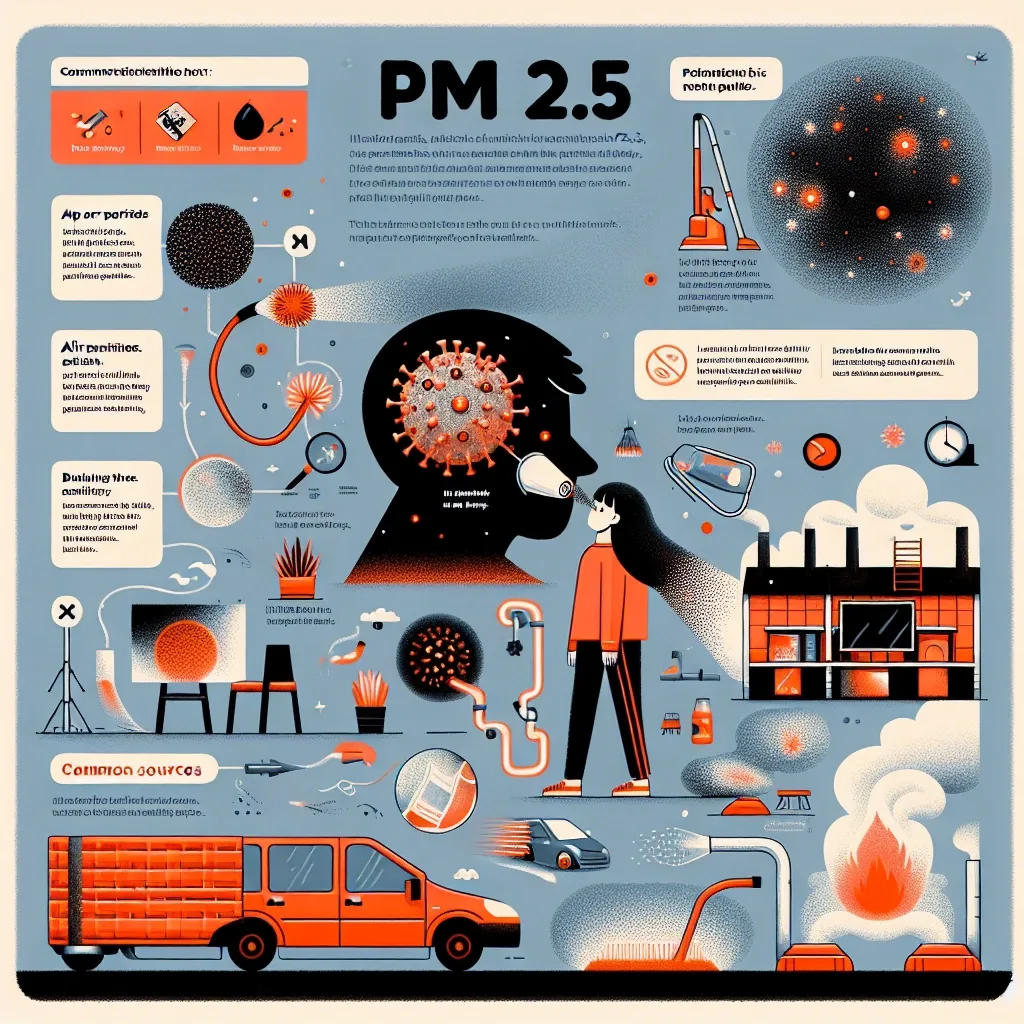
What Exactly Is PM2.5?
PM2.5 stands for Particulate Matter 2.5 — particles with a diameter no greater than 2.5 microns (micrometers). For context, a human hair is approximately 50-70 microns in diameter, making PM2.5 particles 20-30 times smaller.
These particles can remain suspended in air for hours to days and travel hundreds of kilometers from their source. PM2.5 comes in two main types: primary particles emitted directly from sources (vehicle exhaust, industrial smoke, construction dust) and secondary particles formed through atmospheric chemical reactions between gases (NOx, SO2, VOC).
PM2.5 Sources in Daily Life
Outdoor sources include diesel vehicle exhaust (the primary source in Bangkok), industrial facilities, agricultural and waste burning, construction and demolition dust, and fossil fuel combustion.
Indoor sources are frequently overlooked: high-heat stir-frying and deep-frying that generates large amounts of PM2.5; candles, incense, and heaters; poorly ventilated gas stoves; laser printers and electronics; indoor smoking; and fresh paint and furniture releasing VOCs that react to form secondary PM2.5.
PM2.5 Hazards to Body Systems
Respiratory system: PM2.5 reaches deep into alveoli, causing inflammation. Accumulated exposure impairs lung function, increasing the risk of asthma, COPD, and lung cancer. The IARC classifies outdoor PM2.5 as a confirmed Group 1 carcinogen.
Cardiovascular system: PM2.5 that enters the bloodstream triggers vascular inflammation, raises blood pressure, accelerates arterial plaque formation, and significantly increases the risk of heart attack and stroke.
Neurological system: Recent research finds that sufficiently small PM2.5 can travel via olfactory nerves directly into the brain. It is associated with dementia and Alzheimer's disease in the elderly and slower brain development in children.
Effective Home PM2.5 Prevention
First layer — prevent dust entry: close doors and windows when AQI is high, install rubber weatherstripping around doors and windows, use washable curtains instead of heavy drapes, and remove shoes before entering.
Second layer — filter existing dust: HEPA H13 purifiers at sufficient CADR, kept on Auto Mode continuously, with filters replaced on schedule (every 6-12 months).
Third layer — draw in clean air: a Positive Air Pressure system pulls fresh air through HEPA filters to create positive indoor pressure; HRV/ERV systems filter incoming air while recovering energy.
Recommended Apps and Devices
Outdoor tracking: Air4Thai, AirVisual, PurpleAir. Indoor sensors: Xiaomi Air Quality Monitor, Aqara TVOC Sensor for Zigbee. Air purifiers: Xiaomi Mi Air Purifier (Miio Integration), Dyson Pure Cool (HA Integration), Matter-compatible models for future-proofing.
HappySmart helps you select, install, and configure a complete home PM2.5 defence system — from sensors to Home Assistant Automation.