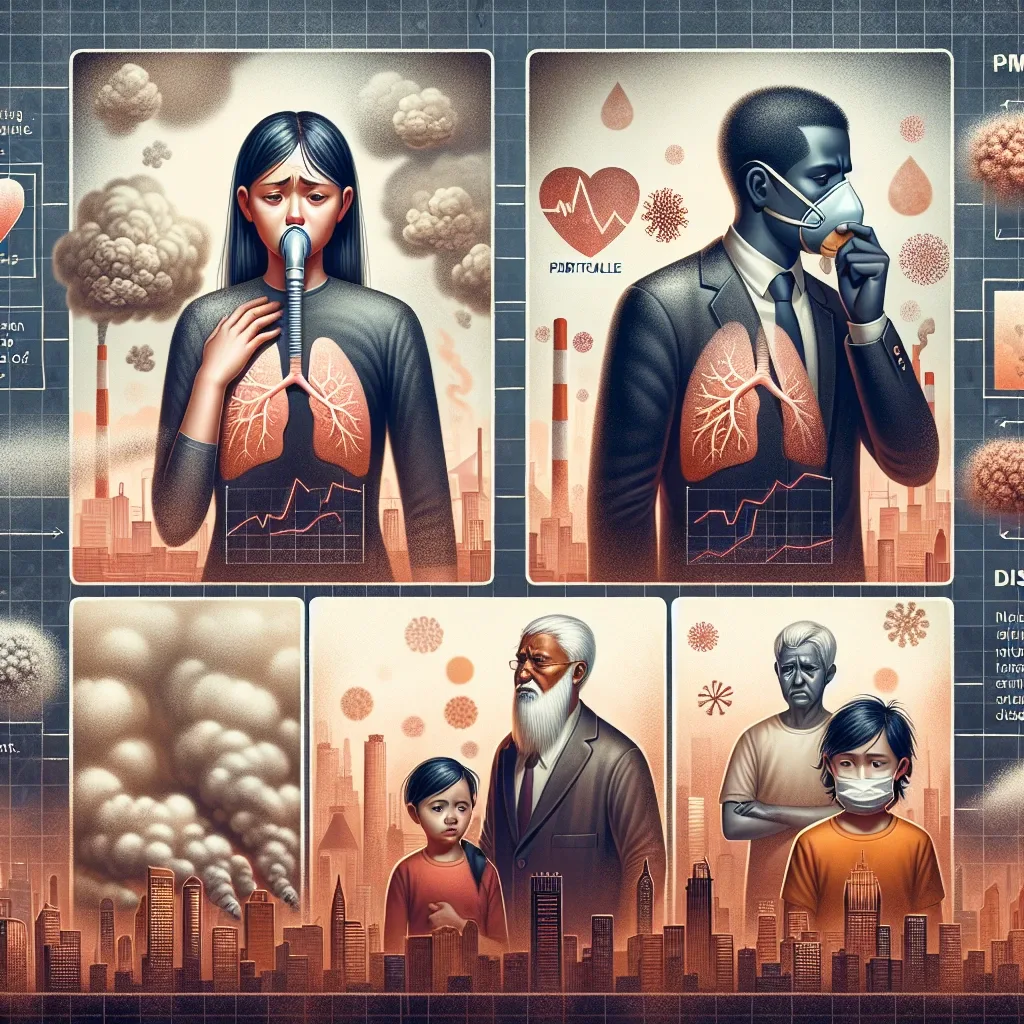
What Is PM2.5 and Why Is It Dangerous?
PM2.5 (Particulate Matter 2.5) consists of particles with a diameter no greater than 2.5 microns — approximately 20-30 times smaller than a human hair. This extreme smallness allows particles to pass completely through nasal hairs and upper airway mucous membranes, travel deep into the alveoli where oxygen exchange occurs, and enter the bloodstream directly.
Major sources include vehicle exhaust, industrial facilities, biomass and forest burning, construction dust, and even indoor cooking activities like stir-frying and deep-frying in oil.
Short-Term and Long-Term Health Impacts
The respiratory system is affected most immediately and directly. PM2.5 triggers coughing, sneezing, runny nose, and irritation of the nose and throat. Asthma sufferers experience exacerbations, and long-term exposure significantly increases the risk of chronic bronchitis, COPD, and lung cancer.
The cardiovascular system suffers nearly as severely. PM2.5 that penetrates the bloodstream causes vascular inflammation, increasing the risk of coronary heart disease, arrhythmia, and stroke. Research consistently shows that in areas with chronically elevated PM2.5, cardiovascular mortality rates are significantly higher.
For children and pregnant women, PM2.5 impairs fetal lung development, raises the risk of premature birth and low birth weight, and is associated with slower cognitive development and reduced academic performance in older children.
Basic Home Prevention Methods
Close doors and windows when outdoor PM2.5 exceeds 35 μg/m3. Use HEPA air purifiers in all frequently occupied rooms. Clean regularly with a HEPA-filter vacuum. Seal gaps around doors and windows with rubber weatherstripping. Avoid smoking indoors or near ventilation openings.
Checking PM2.5 levels every morning via Air4Thai or AirVisual before planning outdoor activities is an important daily habit.
Smart Home Technology for PM2.5 Prevention
Smart Home upgrades protection from Reactive (wait for pollution, then respond) to Proactive (respond immediately before it's felt). IoT sensors measuring PM2.5 in real time connect to air purifiers through Home Assistant to create fully automatic Automation.
Recommended Automation examples: PM2.5 > 35 μg/m3 → activate all purifiers at maximum and send a Line notification; PM2.5 < 12 μg/m3 → reduce to quiet mode; departure via Presence Detection → switch to energy-saving mode.
A Positive Air Pressure system that draws fresh outdoor air through a HEPA filter and creates higher indoor pressure than outdoors is an advanced option that HappySmart designs and installs. It prevents PM2.5 from flowing back in through gaps and seams.