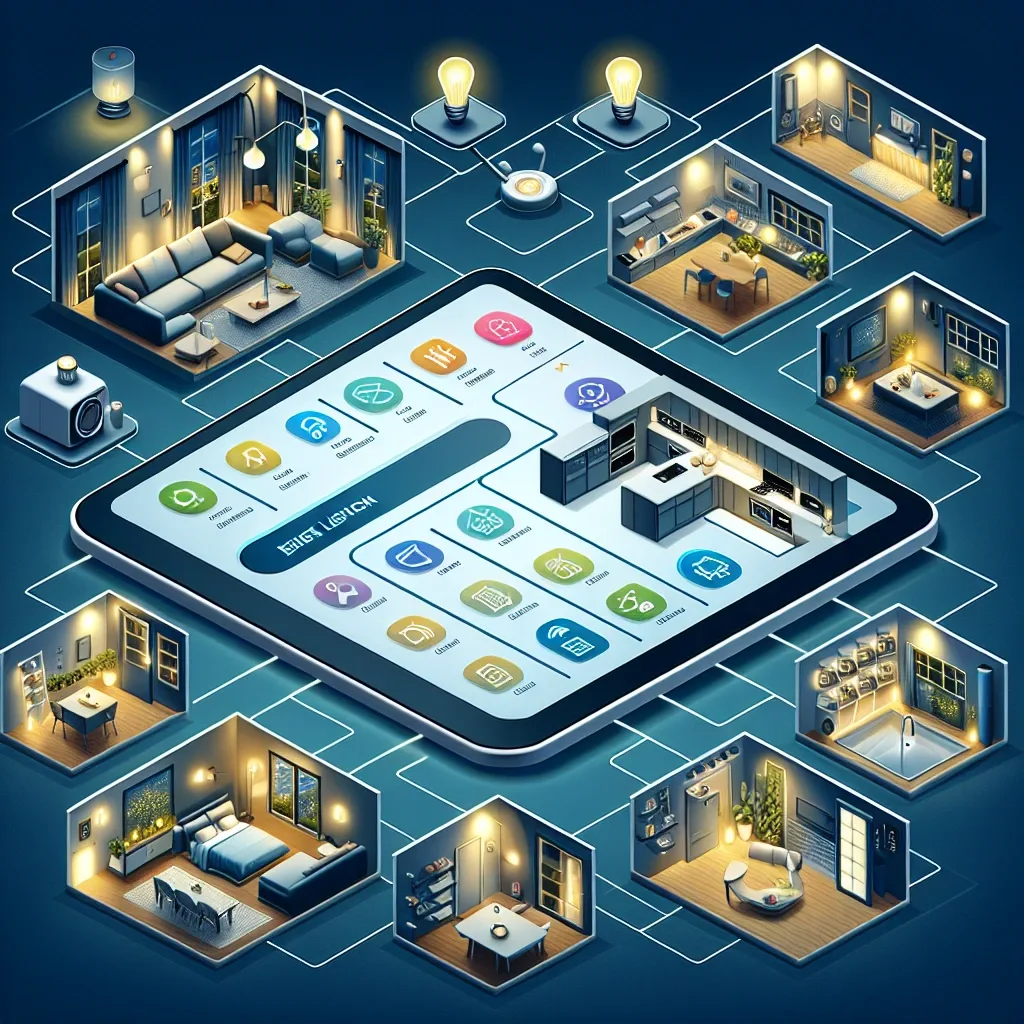
Why Smart Lighting Choices Matter More Than Most People Think
Light is not simply about brightness. The wrong colour temperature at the wrong time of day disrupts circadian rhythm, reduces work focus, and degrades sleep quality. A properly designed Smart Lighting system responds to how each space is actually used throughout the day.
HappySmart has designed smart lighting for homes in Bangkok, Hua Hin, and Khao Yai across hundreds of projects. The following tips are drawn directly from that experience.
Match the Light to the Room's Function
Living room lighting needs flexibility. Around 4000K suits daytime reading and conversation, while an evening shift to 2700K creates a relaxed, warm atmosphere. Bulbs that support dynamic CCT adjustment through HomeKit or Mi Home handle this automatically without any manual input.
Bedroom lighting should prioritise blue-light reduction after sunset. Zigbee bulbs certified under Matter 1.4 can be programmed to gradually dim and shift toward warm white in sync with the local sunset time each evening — without any command from the user.
Kitchen and study spaces need cool white light in the 5000–6500K range for visual clarity. Pair these with motion sensors so the system turns off lights automatically when the room is empty, cutting unnecessary consumption.
Corridors and staircases benefit from PIR or mmWave motion sensors that activate only when someone walks through. A low brightness level of 10–20% is sufficient for safe navigation at night without disturbing sleep.
Connectivity Standards Worth Understanding
Zigbee suits homes with many light points. Its mesh topology allows devices to relay signals between each other, providing wide coverage without multiple routers. TP-Link Tapo and Xiaomi both offer Matter 1.4-certified Zigbee bulbs at accessible price points.
Wi-Fi works well in smaller installations with fewer bulbs. Setup is straightforward, though it consumes more network bandwidth. Pair it with a Wi-Fi 6 router to minimise latency.
Matter 1.4 is the standard HappySmart recommends for all new installations. Devices certified under Matter work natively with HomeKit, Mi Home, Tuya, and Home Assistant simultaneously, eliminating future compatibility concerns regardless of which platform the client prefers.
Designing for Energy Efficiency
Lighting typically accounts for 15–20% of the total electricity bill in a Bangkok home. Switching to high-lumen-per-watt LED smart bulbs combined with automation that turns off unused lights can reduce this share by 40–60%.
HappySmart calculates the required lux level for each zone using IES standards, then selects bulbs that deliver adequate light at the lowest wattage. The result is both a better visual environment and a lower electricity bill.
Questions to Ask Before You Buy
Before committing to any system, confirm whether it supports Matter 1.4, what the long-term firmware update commitment is, and whether the system can be expanded without replacing the hub entirely.
HappySmart provides design consultation and installation for residential and developer projects, with long-term after-sales support.