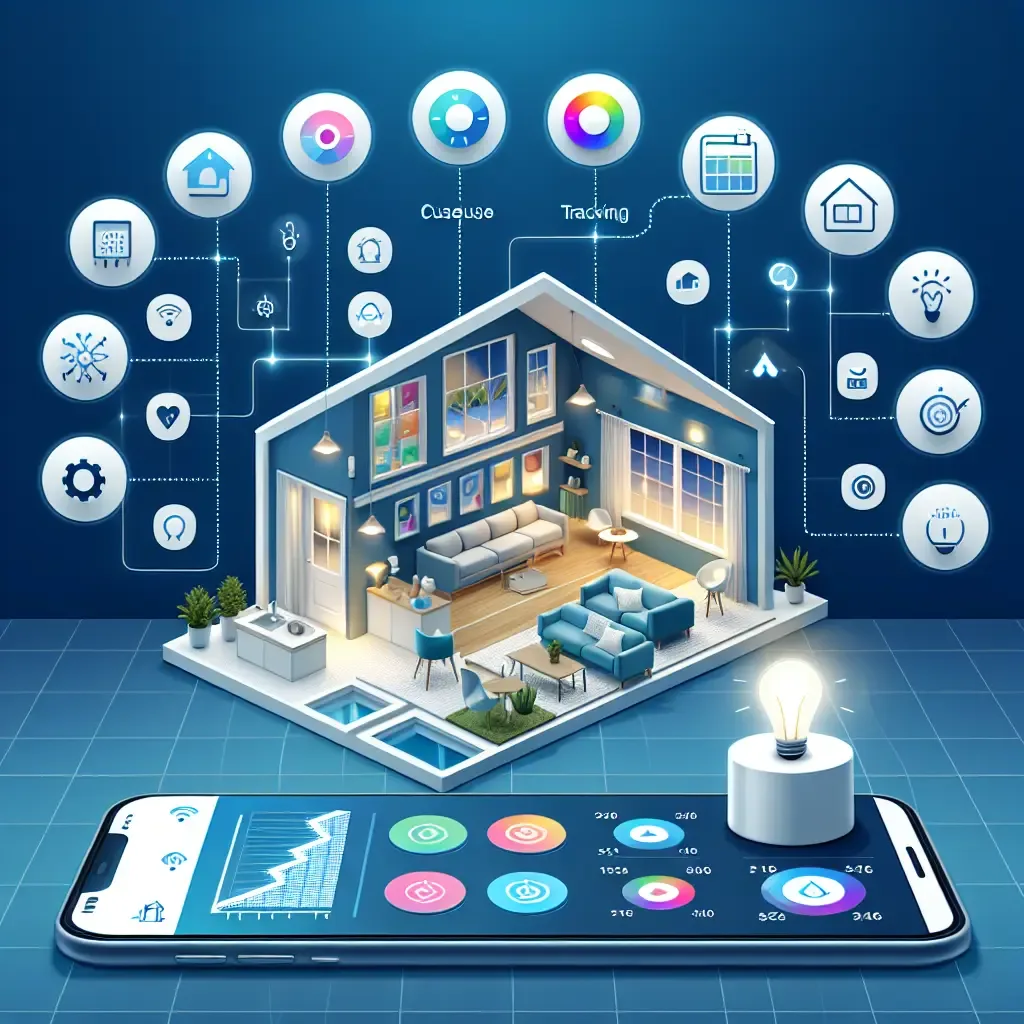
Why Smart Lighting Has Become the New Standard
A decade ago, smart lighting was a luxury reserved for high-end properties. In 2026, Wi-Fi and Matter 1.4-compatible smart bulbs start below ฿300 per unit, making the technology accessible to any home without rewiring a single circuit.
The rapid adoption is not trend-driven. Smart Lighting solves real everyday problems — convenience, energy savings, and security — in ways that conventional fixed switches simply cannot.
Control Every Light from One Device
Mi Home, Tuya Smart, and Apple Home each let you switch off every light in the house with a single tap before leaving, or dim the bedroom from the sofa without getting up. These seem like small wins individually, but they accumulate into a noticeably more comfortable daily experience.
The most-praised feature among Bangkok homeowners is remote control. Leaving home and forgetting whether you turned the lights off no longer requires going back. Open the app, check status, and switch off from anywhere — whether you are in a meeting across town or at your Hua Hin weekend house.
With Matter 1.4, the same lights respond to Siri, Google Assistant, and Amazon Alexa simultaneously, so every household member can use their preferred assistant without compatibility issues.
Real Energy Savings, Automatically
Smart LED bulbs consume 80% less energy than incandescent equivalents and around 40% less than CFL. Add Auto-Dim and Motion Sensor automations that switch lights off in unoccupied rooms, and the savings happen passively without any behaviour change required.
A typical Bangkok home converting 20 lights to Smart LED with Occupancy Automations reports a 15–25% reduction in monthly electricity costs.
For Hua Hin or Khao Yai properties that sit empty between visits, Schedule and Away Mode automatically power down all lights after departure and simulate occupancy patterns on a timer to deter intruders.
Scene Presets for Every Mood
The capability that most clearly distinguishes smart lighting from conventional fixtures is Scene control.
The same living room can become a private cinema with deep dimming and TV bias lighting, then shift to a bright family dinner setting, then warm to a soft evening gathering ambience — all pre-configured and activated in under a second.
HomeKit's Adaptive Lighting shifts colour temperature automatically through the day. Mi Home and Tuya Smart both offer Scene Schedules that run through a 24-hour cycle without any manual input.
Start Small, Scale at Your Own Pace
Modern Smart Lighting is fully scalable. Begin with a single bedroom bulb and expand room by room as budget and inclination allow. Because Matter 1.4 devices work together across brands, every addition integrates with what you already have.
HappySmart's entry Smart Lighting package starts at ฿1,599 for one bedroom, inclusive of installation and Scene configuration.