Light and Mental Health: The Connection Most People Overlook
Human biology evolved under natural light cycles — bright mornings, warm evenings, dark nights. Modern city living breaks that rhythm almost completely. Artificial lighting that stays at the same colour temperature all day confuses the body's Circadian clock, degrading sleep quality, elevating stress hormones, and dulling mood over time.
A well-designed Smart Home Lighting system is not just an aesthetic upgrade. It functions as a passive wellness tool that works in the background every hour of every day.
Circadian Lighting: Syncing Your Home to Your Biology
Current smart bulbs from Philips Hue, Xiaomi, and compatible Tuya devices support colour temperature adjustment from 2,700K (warm amber) to 6,500K (crisp daylight white). Home Assistant's Circadian Lighting integration automates the shift across the day without any manual input.
For Bangkok's climate and timezone, HappySmart recommends a profile that starts at 5,000K from 7–9 am to sharpen morning focus, transitions to neutral 4,000K through the workday, then gradually warms to 2,700K from 4 pm onward. This signals the body to begin natural melatonin production well before bedtime.
Users typically report falling asleep faster within the first week and waking with noticeably less grogginess within two to three weeks.
Room-by-Room Light Design
Every room has a different psychological function. Bedrooms benefit most from the warm-to-cool-to-warm daily cycle. Home offices need sustained cool-white lighting that sustains alertness without eye fatigue. Living areas should support multiple moods — movie watching, family conversation, quiet reading — each with a distinct Scene preset.
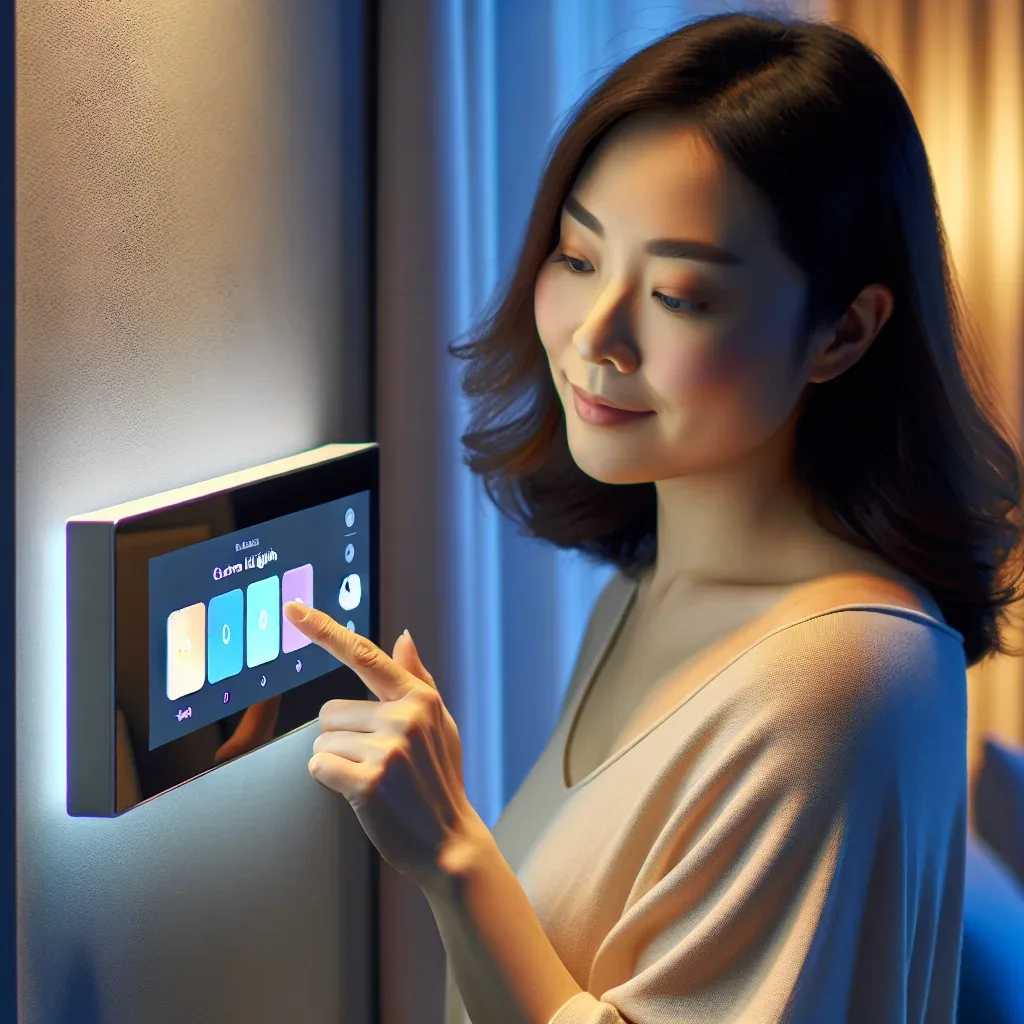
Tuya Smart and Mi Home both support Scene groups that save full lighting configurations as a single tap. Paired with HomeKit on iOS, you can link a Bedtime Shortcut to automatically shift every light in the home simultaneously.
Matter 1.4 further enables Synchronized Scenes across brands — so your Philips bulbs in the bedroom and your TP-Link Tapo strips in the living room can all shift together from the same trigger.
Reducing Daily Stress Through Ambient Control
Research published in 2025 found that switching from overhead lighting to low-level accent lighting in the evening significantly reduces salivary cortisol. Smart lighting makes this transition effortless by automating it on schedule.
A practical setup: set a "Wind Down" scene to activate at 8 pm every evening — dimming overhead lights to 20%, warming colour temperature to 2,700K, and if paired with a smart speaker, fading in ambient sound. No manual interaction required.
For homes with elderly residents or young children, a persistent low-brightness Night Light mode on corridors and bathrooms prevents falls in the dark without disrupting anyone's sleep.
Getting Started Without Replacing Everything
Begin with the bedroom. The sleep quality improvement is the fastest and most measurable result. A single Xiaomi Smart Bulb E27 costs under ฿500 and works immediately with Mi Home, with full Matter 1.4 compatibility for future expansion.
Once the bedroom is running well, extend to the living room and then the study. HappySmart designs personalised daily light profiles matched to your floor plan, lifestyle, and health goals — and installs everything in a single visit.