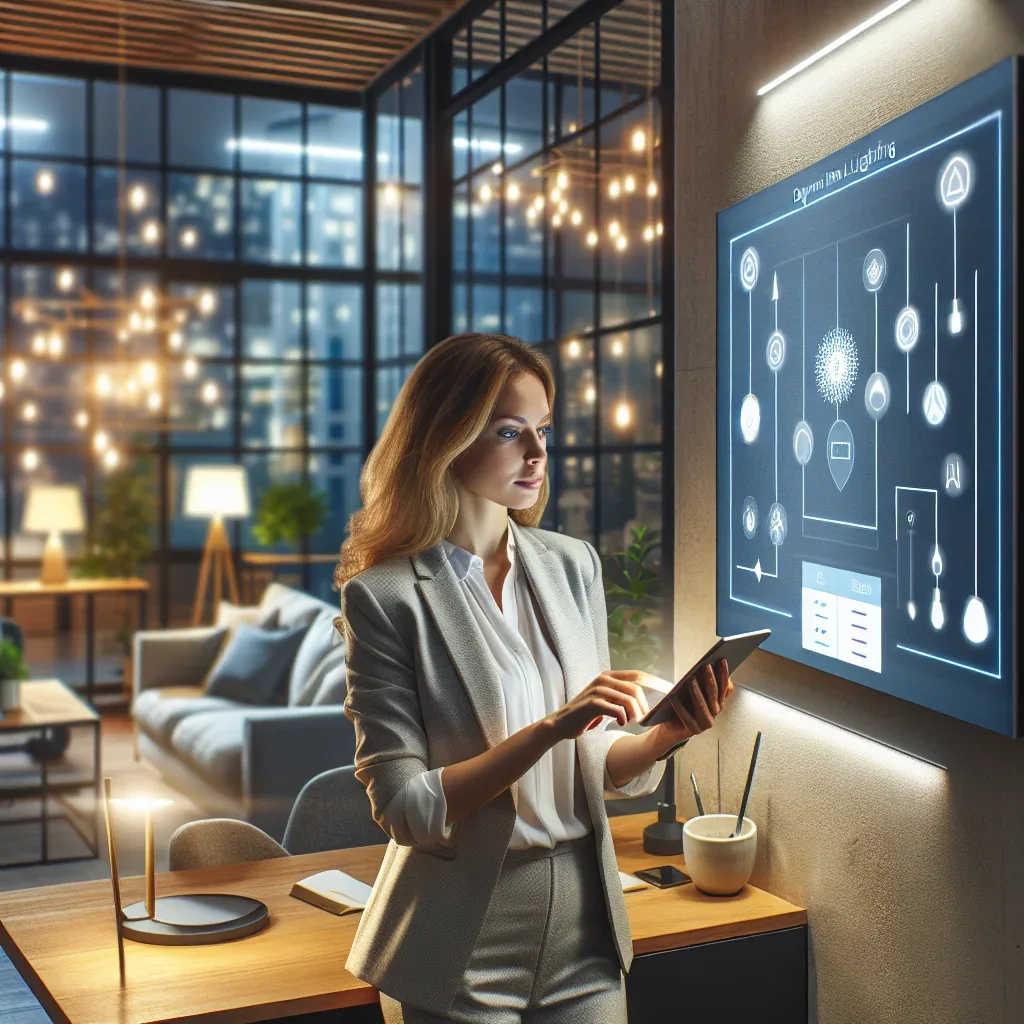
Lighting Affects Atmosphere and Energy More Than People Realise
Most homes and offices in Thailand still use conventional on-off switches — full brightness or complete darkness, no gradation, no time-awareness, no occupancy detection.
Moving to Smart Lighting is not purely about convenience. It is about designing an environment that actively supports health and productivity while reducing electricity consumption as a natural consequence.
Smart Lighting Types for Different Spaces
Living rooms and reception areas need maximum flexibility. The system HappySmart designs can switch between full-bright mode for social gatherings, dim mode for watching films, and warm white for evening relaxation — with a single tap on iPhone or a Siri voice command.
Home offices and study rooms benefit from cool white light at 5000K or above to sustain focus. Shifting gradually to 3000K before the end of the work session prepares the body for rest. Time-of-day automations handle this without any manual input.
Mid-size commercial offices can be served by a Zigbee mesh system managing hundreds of light points from a single hub. Occupancy sensors in each zone turn off lights when no one has been in that area for 15 minutes — particularly effective in meeting rooms and storage areas.
Corridors, car parks, and outdoor areas use dusk-to-dawn sensors or schedules combined with motion detection, running at low brightness throughout the night and reaching full illumination only when someone approaches.
Connectivity and Control
HappySmart uses Zigbee as the primary protocol for residential and commercial lighting systems, for several reasons.
Zigbee mesh means every bulb acts as a signal relay — the more lights there are, the stronger and more resilient the network becomes. There are no dead zones of the kind that Wi-Fi systems suffer from when devices are far from the router.
Matter 1.4-certified devices can be controlled simultaneously through HomeKit, Mi Home, Tuya, and Home Assistant, without being locked to any single platform.
TP-Link Tapo and Xiaomi both offer Matter 1.4-certified Zigbee bulbs at accessible price points, with high lumen output and rated lifespans exceeding 25,000 hours.
Energy Return on Investment
A 500 m² office with Smart Lighting and occupancy sensors throughout can reduce lighting electricity consumption by 45–55% compared to conventional always-on switch systems during working hours.
A 250 m² home typically saves ฿800–1,500 per month from smart lighting alone, placing the payback period for the lighting investment at approximately 18–24 months.
Starting with HappySmart
HappySmart designs Smart Lighting systems for homes and offices of all scales. Engineers calculate the required lux level for each zone, select the most cost-effective equipment, and design automations that function reliably across every scenario.