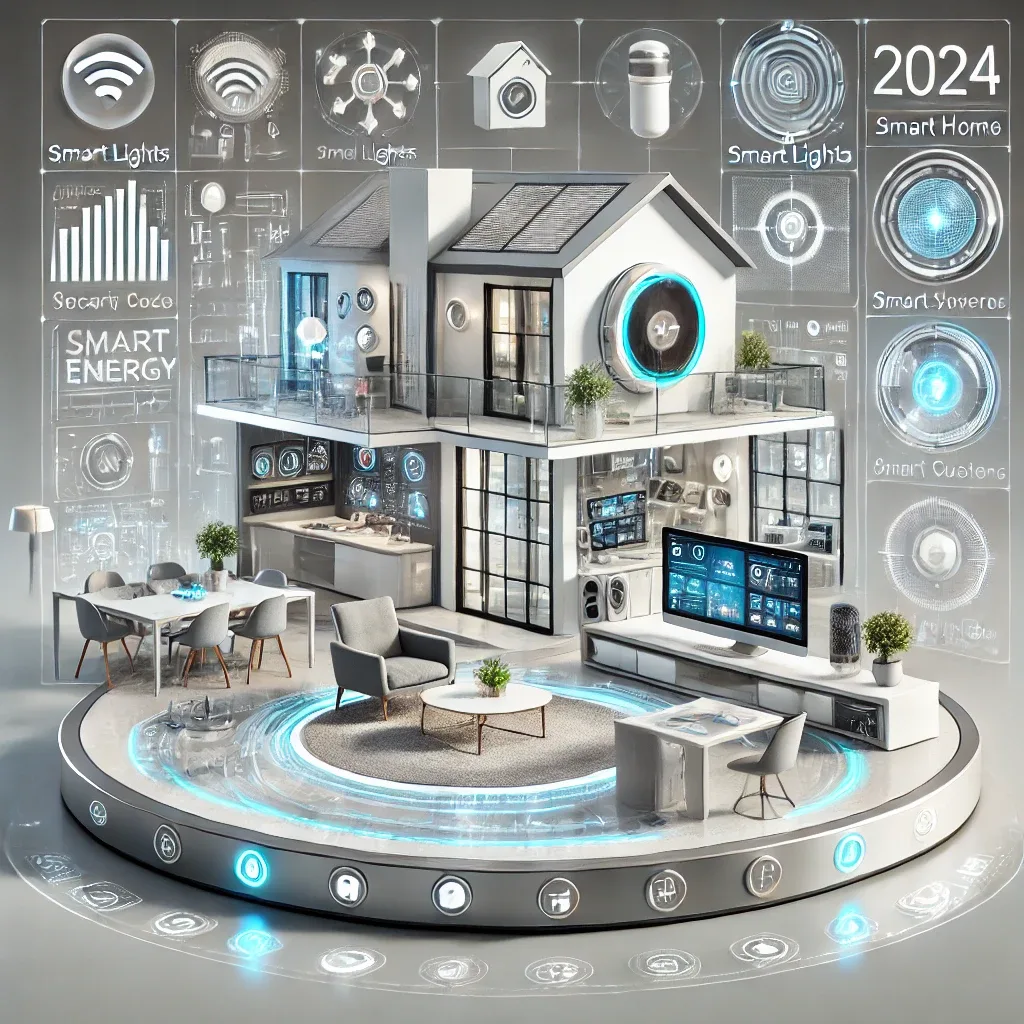
What Is Smart Home Technology
Smart home technology uses IoT to control and manage home devices through internet-connected networks — operated through smartphone apps, tablets, or voice commands. In 2024, these technologies have surpassed previous limitations significantly, offering convenience, energy savings, and elevated security that were impossible just years earlier.
AI and Machine Learning for Intelligent Control
The clearest trend is AI and Machine Learning genuinely automating smart home operation. Systems learn user behavior — typical return times, preferred temperatures, lighting patterns — and automatically adjust devices without manual configuration. AI also analyzes energy consumption data, identifies anomalies, and helps homeowners make more efficient decisions about their homes. This behavioral learning is what transforms a smart home from remote-controlled gadgets into a genuinely adaptive living environment.
Advanced Voice Assistants and IoT Integration
Google Assistant, Amazon Alexa, and Apple Siri in 2024 understand complex, flexible commands and control a wider range of devices simultaneously. A single instruction — "dim the living room lights to 50% and set AC to 25 degrees" — executes immediately. Industrial IoT integration connects homes with power generation systems, automated energy management, and intelligent EV charging that maximizes solar surplus usage.
Security, Privacy, and Energy Efficiency
2024 smart homes prioritize data security through improved encryption, Blockchain for data storage and transfer, and AI cameras with accurate person/vehicle/animal distinction. Energy management uses sensors and AI to optimize consumption patterns, integrated with solar energy sources to reduce electricity bills. Homes that actively generate and intelligently distribute their own power represent the new standard.
5G Connectivity: A Game Changer
5G represents the biggest infrastructure shift for smart homes in 2024. Far faster and more stable than 4G, it supports many IoT devices simultaneously without latency. Sensor and camera data streams in real time, making voice and app control genuinely seamless. The response lag that previously undermined smart home reliability effectively disappears with 5G, unlocking the full potential of densely connected home ecosystems.