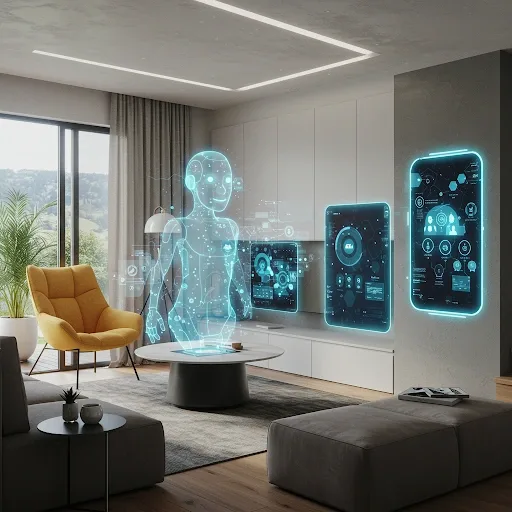
How AI Works in a Smart Home
Artificial intelligence in 2025 smart home systems operates across three primary levels. The first is learning and temperature adjustment — the AI observes when household members prefer certain temperatures at different times of day and adjusts the AC proactively before anyone feels uncomfortable.
The second level is energy management. The system detects which rooms are unoccupied and switches off devices automatically, reducing electricity consumption without affecting comfort. The third level is security — AI analyzes normal household activity patterns and detects anomalies, such as unexpected presence in the home during unusual hours.
AI Voice Recognition: Commands That Actually Understand You
AI-powered smart lighting understands complex voice commands — not just on and off, but brightness adjustments, color changes, and atmospheric scene settings for different activities. AC voice control includes remote operation, temperature adjustments on command, and integration with motion sensors that switch off the AC automatically when a room empties.
Entertainment control by voice covers music, video, and television, including setting atmosphere modes for movies or relaxed listening sessions. Security systems support voice-activated unlocking with identity verification, real-time camera viewing on display screens, and automatic emergency alert delivery.
AI Camera: Understanding Rather Than Just Recording
AI camera features in 2025 include Face Recognition that identifies household members and only alerts for unfamiliar faces. Motion Detection distinguishes between people, pets, and vehicles, eliminating false alerts from wind-blown foliage or a wandering house cat. Night Vision operates in complete darkness. Cloud Storage with Smart Playback finds key events automatically without requiring manual review of hours of footage.
AI Behavior Analysis That Personalizes Your Home
The AI learns what time you typically turn lights on and begins adjusting illumination automatically based on time of day. It learns your preferred temperature settings and adapts AC operation to your actual lifestyle. The system can alert you automatically when a household member has not returned home at their usual time — a particularly valuable feature for families with elderly members living independently.
Measurable Benefits of AI in Your Smart Home
AI delivers increased daily comfort because the home adapts to your needs without constant manual input. Energy savings come from automatic shut-off of lights and AC in unoccupied spaces. Security improves through AI cameras and anomaly detection. Health monitoring capabilities through air quality sensors and fall detection systems add a meaningful safety layer for elderly residents.