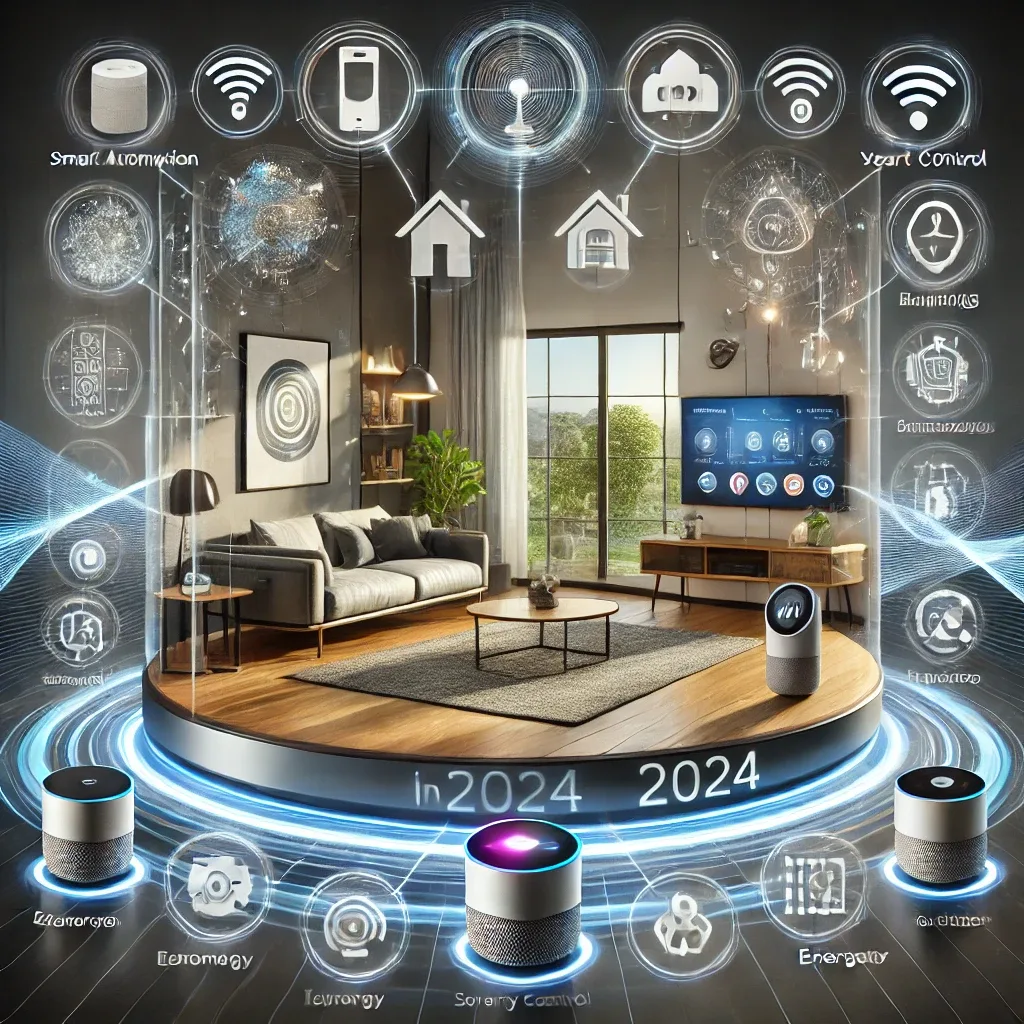
How Smart Home Technology Changed in 2024
2024 marked a pivotal year for the smart home industry. Devices from multiple brands became more seamlessly interconnected, while artificial intelligence took on a genuine role in managing intelligent homes. These changes affect both residential users and businesses looking to automate their operations.
Matter Standard: Seamless Device Connectivity
Matter is an open-source standard backed by major global manufacturers including Apple, Google, Amazon, and Samsung. Matter-compatible devices work together regardless of ecosystem. Thai users can now take a Matter-certified bulb from any brand and control it through Home Assistant or Apple Home immediately, without compatibility concerns. This unification has dramatically lowered the barrier to building mixed-brand smart home setups in 2024.
AI Automation: Homes That Learn Your Behavior
2024's smart home AI doesn't merely execute pre-set commands — it learns household behavioral patterns and adjusts automatically. The system recognizes that you typically set the AC to 25°C when arriving home at 6 PM and pre-conditions the temperature accordingly. In Home Assistant, combining Scrypt Engine with GPS data creates truly intelligent automations. These behavioral automations reduce manual intervention and make the home feel genuinely responsive to its occupants.
Smart Energy Management with Solar Integration
Merging solar systems with smart homes became a fast-growing trend in 2024. Systems monitor solar production in real-time and schedule high-consumption appliances — washing machines, air conditioners — to run during peak generation hours. Home Assistant's Energy Dashboard displays real-time consumption and production data, helping users achieve 30–50% electricity cost reductions. For Bangkok households with rooftop solar, this integration transforms excess generation into direct operational savings.
AI Security Cameras
New-generation IP cameras in 2024 incorporate AI that accurately distinguishes between people, pets, and vehicles, dramatically reducing false alerts. Frigate NVR running on Home Assistant supports Google Coral TPU acceleration for real-time object detection without sending footage to external cloud servers. All video data stays within the local network, eliminating privacy and data leakage risks. This local processing approach is particularly valuable for businesses handling sensitive environments.
IoT for Health Monitoring and B2B Applications
Health-focused IoT sensors advanced significantly in 2024. Smart watches measure SpO2 and heart rate continuously, PM2.5 sensors automatically trigger air purifiers, and fall-detection systems safeguard elderly residents. On the B2B side, organizations deploy IoT for inventory tracking, cold storage temperature control, and office building energy management — achieving meaningful operational cost reductions. The convergence of health IoT and business automation represents the next phase of smart technology adoption.