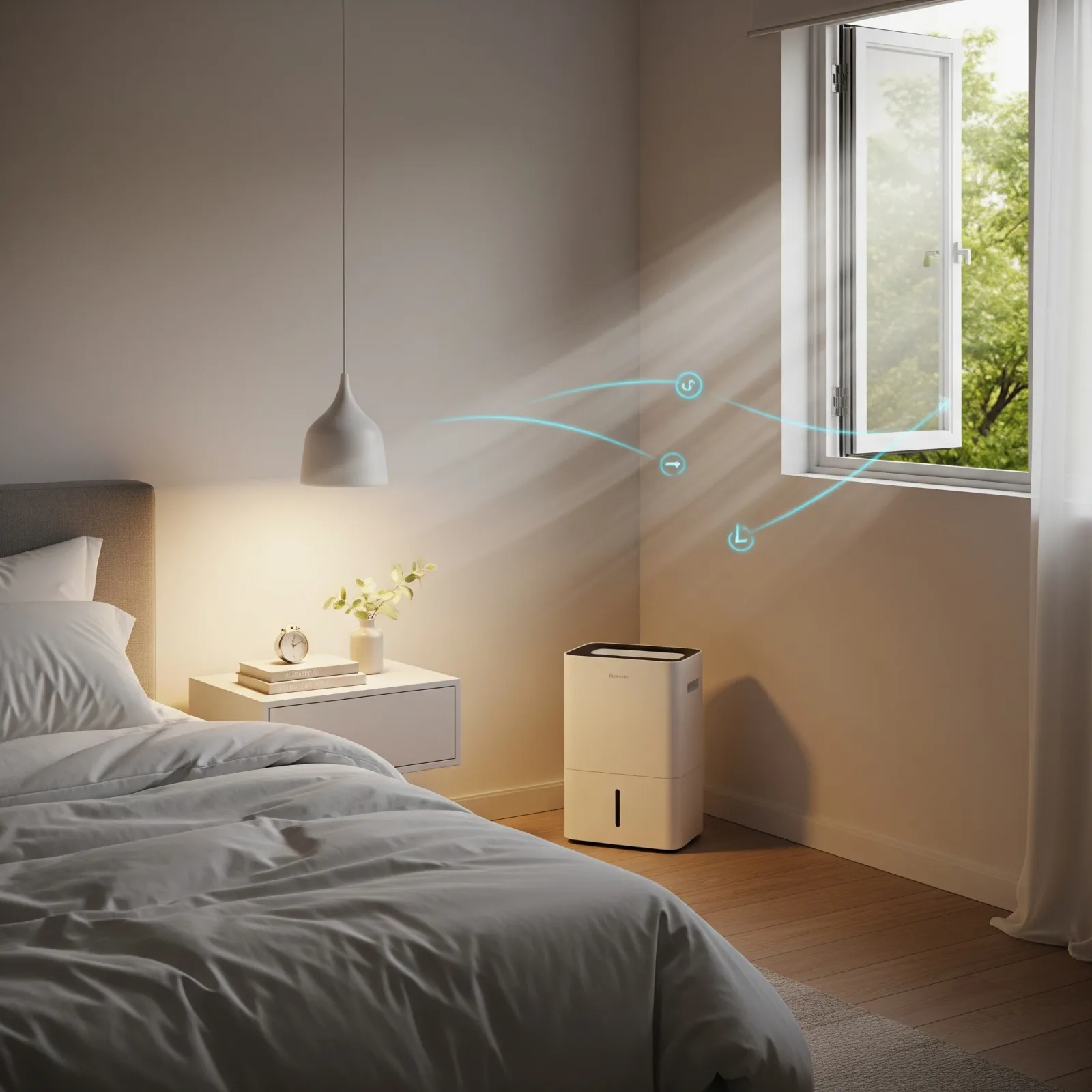
The Science Behind Air Quality and Sleep
Humans average 6–8 hours per night in the bedroom — one-third of a lifetime. During this time, the respiratory system operates continuously and air quality directly governs the body's recovery. Three key factors determine bedroom air quality: CO2 above 1,000 ppm prevents deep sleep and causes morning headaches; humidity below 40% RH dries respiratory membranes and worsens snoring; and humidity above 65% RH promotes mould and dust mites that trigger allergies. These factors interact — high humidity combined with elevated CO2 and a warm temperature creates a compounding effect far more disruptive to sleep than any single factor alone.
A Practical CO2 Reference Table for the Bedroom
CO2 levels and their effects: below 600 ppm (clean air, ideal for deep sleep), 600–1,000 ppm (slightly stuffy, minor cognitive slowdown), 1,000–2,000 ppm (clearly degraded sleep quality, unrefreshed on waking), above 2,000 ppm (drowsiness, dizziness — ventilate immediately). These values map directly to Home Assistant automation trigger thresholds.
Smart Device Features Worth Prioritising for the Bedroom
Essential features include: mobile app connectivity for real-time readings and remote adjustment; sensor-responsive automation (e.g., CO2 high → activate fan); alert notifications when values exceed set thresholds; historical data logging to identify trends and refine habits; and voice control via Google Assistant, Alexa, or Siri.
Home Assistant Automation for Complete Sleep Quality
A full-cycle bedroom automation sequence: Pre-sleep (22:30): start the air purifier 30 minutes before bed to pre-clean the air; During sleep: when CO2 exceeds 1,000 ppm, activate the exhaust fan; when RH drops below 40%, run the humidifier; when RH exceeds 65%, start the dehumidifier and push an alert; Morning (07:00): switch off all devices and send an overnight summary report of average CO2 and RH via the app. This system creates a bedroom that manages its own air quality entirely, requires no manual intervention, and generates data for continuous long-term improvement.
Start with HappySmart
HappySmart's team of Smart Home specialists is ready to help design a smart bedroom system tailored to your space, budget, and specific needs — from sensor selection through to full Home Assistant configuration.