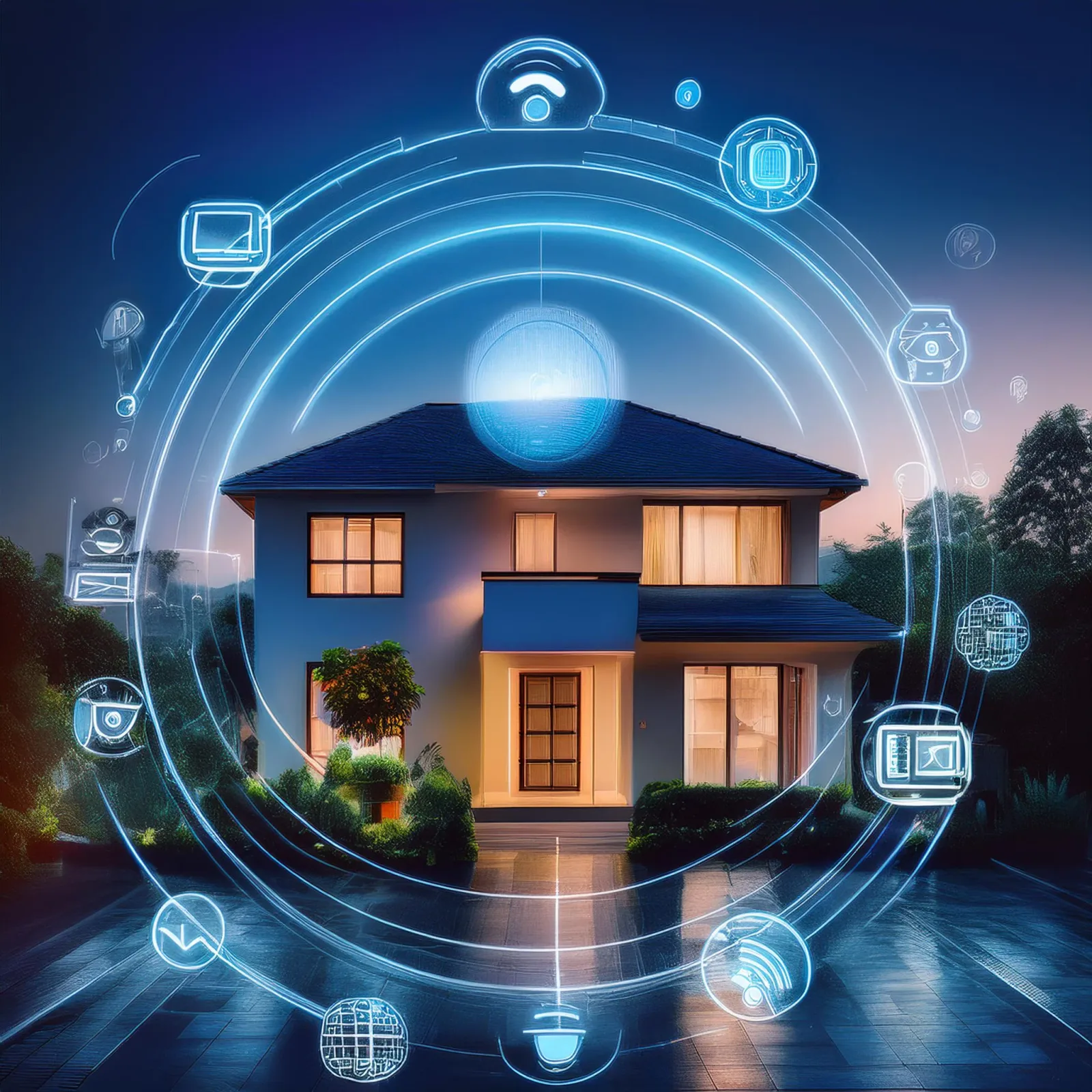
The Beginning: Automation Only for the Wealthy
In the 1990s, home automation was an expensive toy for luxury villas alone. Installation required proprietary cabling, specialist engineers, and budgets that ran to seven figures in Thai baht. Those systems could switch lights on and off — but had no real intelligence.
The arrival of the internet and the smartphone around 2010 began shifting that picture. But incompatibility between brands remained a significant barrier for most homeowners.
IoT and Matter 1.4 Change Everything
2026 is a genuine turning point. The Matter 1.4 standard, developed by the Connectivity Standards Alliance, allows devices from Apple HomeKit, Google Home, Amazon Alexa, and Asian brands such as Xiaomi and Tuya to work together on a single system.
You no longer have to choose one ecosystem. New devices no longer become incompatible with your existing setup.
For Bangkok residents, this means you can buy a smart bulb at a shopping mall, connect it to the HappySmart platform at home, and control it via LINE immediately.
The Evolution of Control: From Switches to Voice
Smart home control has developed through four eras:
The switch era — manual on and off, no intelligence.
The remote era — wireless control, but a separate device for each appliance.
The unified app era — platforms like Mi Home and Tuya brought multiple devices into one app with scheduling and scene creation.
The voice and AI era — voice commands via Siri, Google Assistant, or Amazon Alexa, with the system learning your habits and adjusting the environment automatically.
HappySmart combines all four eras into one platform managed from a single app.
Why Bangkok Is Adopting Faster Than Expected
Thailand smart home market grew 31% in 2025 and continues accelerating into 2026. Key drivers include:
- Bangkok residents use apps more intensively in daily life than most others in the region
- Rising electricity costs make energy-saving systems financially compelling
- Mid-to-high-end developers are installing smart systems as a standard feature
- Prices for devices from Xiaomi, TP-Link, and EZVIZ have dropped substantially
HappySmart: A Platform That Grows With You
HappySmart is designed to start small and scale without limits. Begin with lighting and air conditioning control, then add cameras, sensors, and security as your needs grow.
The platform supports HomeKit, Matter 1.4, Tuya, and Mi Home — so existing devices connect without replacement.
Contact HappySmart via LINE @HappySmart for a free consultation and quote.