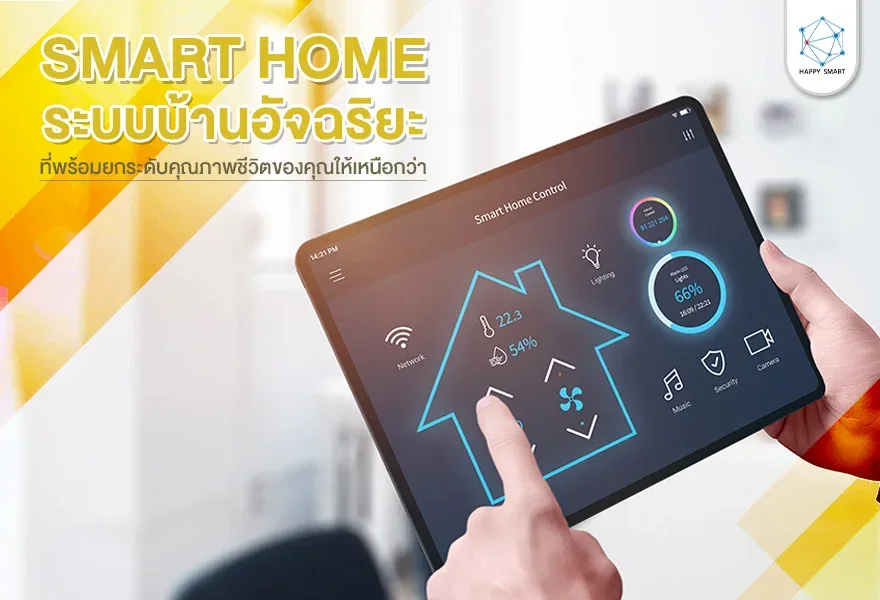
What Is a Smart Home and Why It Matters in 2026
A smart home connects every device in your residence — lights, air conditioners, security cameras, door locks, and motorized blinds — into a single IoT network. Each device communicates with the others and responds instantly to your smartphone or voice commands, wherever you are in the world.
The arrival of the Matter 1.4 standard in 2026 has eliminated one of the biggest pain points: cross-brand compatibility. Apple HomeKit, Xiaomi Mi Home, Tuya, and TP-Link Tapo all now speak the same protocol. You are no longer forced to choose one ecosystem and live with its limitations.
The Central Hub: Brain of Your Smart Home
A central hub is what separates a collection of smart gadgets from a genuinely intelligent home. HappySmart designs systems around hubs that support Matter 1.4, Zigbee 3.0, and Z-Wave Plus simultaneously, giving maximum device coverage regardless of brand.
With a hub in place, automation becomes powerful. When an EZVIZ camera detects motion outside your front door at night, the system can switch on perimeter lights, push a notification to your phone, and lock every door — all within 0.3 seconds and without relying on a third-party cloud server.
4 Core Benefits You Feel From Day One
Security The EZVIZ H8c Pro shoots in 4K and uses AI Person Detection to distinguish people from pets, cutting false alerts by up to 90%. The Xiaomi Smart Lock E10 supports fingerprint, PIN, NFC, and full app control, so you can grant or revoke access from anywhere.
Convenience Control every device by voice through Siri, Google Assistant, or Amazon Alexa. Build Scenes that match your routine — one tap on "Arriving Home" and the air conditioning starts, lights shift to warm tone, blinds open, and your playlist begins.
Energy savings The TP-Link Tapo P115 smart plug measures real-time power draw per device. Combined with presence-based automation that powers down appliances when no one is home, HappySmart clients report an average 22% reduction in electricity bills within the first three months.
Health and air quality Mi Home-compatible PM2.5, CO₂, and humidity sensors trigger air purifiers and HVAC units automatically when indoor air quality drops below your defined thresholds — no manual intervention needed.
Ecosystems HappySmart Recommends for the Thai Market in 2026
We do not lock clients into a single platform. Our recommendations are driven by real use cases.
- Xiaomi Mi Home + Matter 1.4 — ideal for flexible-budget projects; covers more than 6,000 device models in 2026.
- Apple HomeKit — best for iPhone households that prioritize privacy; all processing stays on the local network, nothing sent to external cloud.
- Tuya Smart — preferred by property developers who need OEM and white-label solutions at scale.
- EZVIZ + TP-Link — the reliable choice for security infrastructure and network stability in large residences.
All four ecosystems interoperate via Matter 1.4, so mixing them is straightforward and fully supported.
How to Start Your Smart Home Installation with HappySmart
Our process is transparent and built around your property. It runs in four stages: (1) site survey and assessment of existing electrical infrastructure; (2) Blueprint design and ecosystem selection; (3) installation and commissioning by certified technicians; (4) user training and a 2-year system warranty.
HappySmart serves Bangkok, Hua Hin, and Khao Yai, with 24-hour remote support. For property developers, we provide a dedicated consultancy team available from Design Phase onward — ensuring smart-home specifications are built into the project from the ground up, not retrofitted as an afterthought.
Contact HappySmart via LINE @HappySmart for a free consultation and quote.