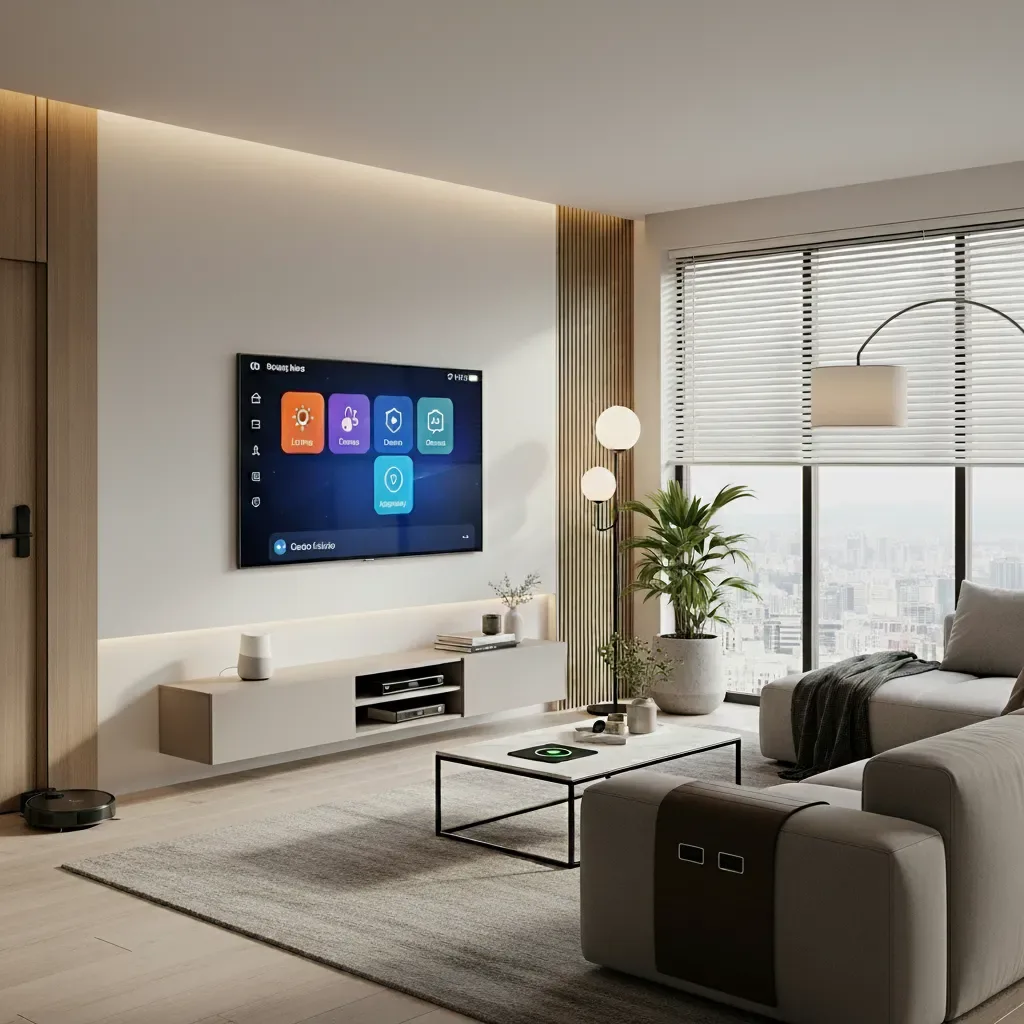
What Is a Smart Home in 2026?
A smart home in 2026 is a connected living ecosystem where devices respond to your behaviour, coordinate across brands, and actively reduce waste. The defining development of the past two years has been broad adoption of Matter 1.4, an open protocol from the Connectivity Standards Alliance that allows Apple HomeKit, Mi Home, Tuya, TP-Link Tapo, and Google Home devices to operate together under a single app — eliminating the fragmented, multi-app experience that frustrated earlier adopters.
In the Thai market, demand has accelerated among mid-to-upper homeowners in Bangkok, Hua Hin, and Khao Yai, driven by rising electricity costs, the desire to manage properties remotely, and a premium real estate market where smart home features demonstrably increase resale value.
Smart Security: Cameras, Locks, and Sensors
Security remains the primary motivation for Thai homeowners investing in smart technology. Cameras such as the EZVIZ H3 Pro and TP-Link Tapo C220 ship with native Matter 1.4 support in 2026, recording in 4K with on-device AI for facial detection and perimeter alerts that reach LINE in under two seconds.
Smart locks from Xiaomi and Yale support temporary PIN codes for housekeepers or delivery staff, log every entry with timestamps, and integrate directly into HomeKit or Tuya automation routines. HappySmart AI SmartHome packages include earthquake sensor integration as standard — a practical consideration for Bangkok given its seismic exposure to the Mae Klong fault system — activating emergency guide lighting before significant shaking begins.
Energy Efficiency That Pays for Itself
Bangkok's year-round ambient temperature of 29–35°C makes air conditioning the single largest household electricity expense. Smart thermostats from Xiaomi and TP-Link learn occupancy patterns within two to three weeks and adjust cooling setpoints based on real-time room occupancy. Paired with PIR-triggered lighting that cuts power in vacant rooms without manual input, the combined system reliably reduces monthly electricity bills.
HappySmart AI SmartHome users in Thailand report savings of 22–30% per month. For a mid-size Bangkok townhouse spending ฿4,000 monthly on electricity, that translates to ฿880–1,200 in monthly savings — typically recovering the cost of a starter package within two to three months.
Matter 1.4 and Thread: The Infrastructure Behind the Experience
Matter 1.4, ratified in late 2024, extended the protocol to cover energy management devices, EV chargers, and a broader sensor range. Devices under the Energy Management cluster share real-time consumption data with the central hub, enabling the system to schedule high-draw appliances — dishwashers, water heaters, washing machines — automatically during MEA off-peak hours.
Thread, the mesh networking standard that underpins Matter, allows devices to communicate directly with one another at latencies below 50ms without routing through the cloud. This means a door sensor can trigger the entry light and disarm the alarm in under a second, even during an internet outage — a meaningful reliability gain for Thai homes where ISP stability can vary by area.
Getting Started with HappySmart AI SmartHome
HappySmart AI SmartHome, offered by Vish Architect Group, starts at ฿1,599 for a starter kit comprising two smart switches, one door sensor, and professional system configuration. The platform supports HomeKit, Mi Home, Tuya, and Google Home simultaneously, so existing devices are not made redundant. The system scales incrementally — adding cameras, locks, sensors, or energy monitoring modules without requiring a platform change.
For new builds, integrating smart home planning into the architectural phase reduces wiring cost and enables proper infrastructure for in-wall switches, structured cabling, and Wi-Fi mesh positioning. HappySmart's team conducts an on-site assessment, delivers a custom system design, and provides post-installation support.