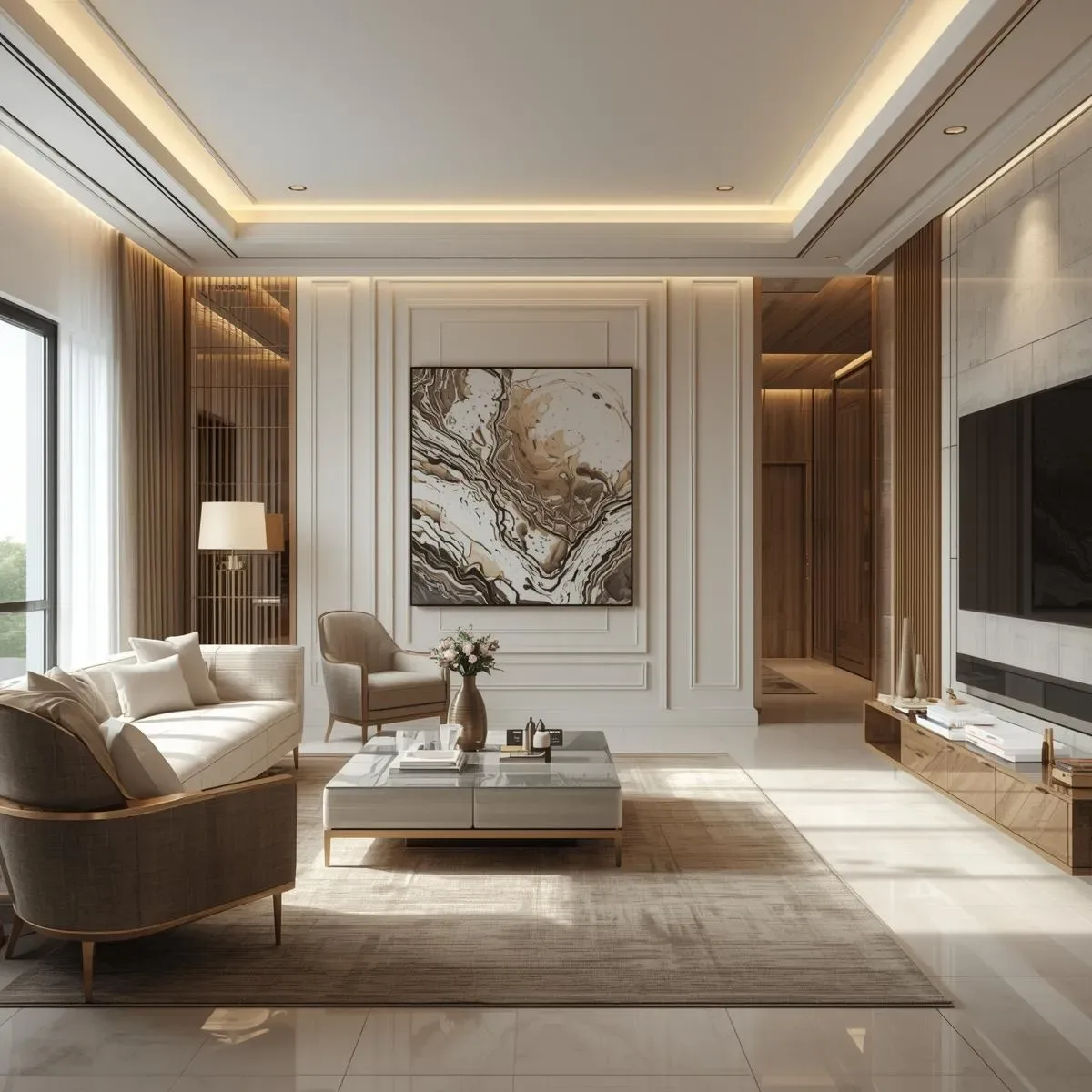
Urban Thai residents spend 80–90% of their time indoors, making indoor air quality a greater determinant of personal health than outdoor air for most people. Conventional interior materials—MDF panels with melamine coating, standard latex paint, synthetic carpet, and silicone adhesives—continuously emit Volatile Organic Compounds (VOCs) including formaldehyde, which the WHO classifies as a Group 1 carcinogen (definite human carcinogen at sufficient exposure levels).
Key VOC standards to specify: Paint labeled Low-VOC must contain under 50 g/L (compared to standard latex at 150–400 g/L); Zero-VOC means under 5 g/L. For engineered wood panels, E0 certification (under 0.5 mg/L formaldehyde) is the highest standard; E1 (under 1.5 mg/L) is acceptable minimum; Japan’s F4 Star (JIS standard) is equivalent to E0. For flooring and carpet, FloorScore Certification or GREENGUARD Gold confirms chamber-tested emission levels under realistic room conditions—more meaningful than manufacturer claims.
Safe material alternatives for Thai SmartInterior: FSC-certified solid wood (no formaldehyde-based adhesives), Engineered Bamboo (naturally very low VOC), Porcelain Tile or Natural Stone (replacing VOC-emitting Vinyl Flooring that contains phthalate plasticizers), Mineral Silicate or Natural Clay Paint (Zero-VOC with natural antifungal properties—relevant in Bangkok’s high-humidity climate), and GOTS-certified organic fabric for curtains and upholstery.
TVOC Monitoring System: Install a multi-gas sensor continuously measuring TVOC, formaldehyde, CO2, PM2.5, and PM10—devices like Airthings Wave Plus or Sensirion SCD40 integrate with Home Assistant. TVOC baseline in a well-specified home: under 100 μg/m³. Alert at TVOC exceeding 300 μg/m³ triggers automatic Mechanical Ventilation. Alert at formaldehyde exceeding 0.08 ppm (WHO Guideline) triggers ERV at maximum speed and sends a LINE OA notification with the current reading.
Post-Construction Bake-Out Protocol: new materials emit peak VOCs during the first 2–4 weeks. Before occupancy, conduct a Bake-Out: set indoor temperature to 30–35°C with 100% fresh air ventilation running 8–12 hours daily for 3–5 consecutive days. This accelerates off-gassing to the equivalent of 2–3 weeks of normal emission. The TVOC monitor confirms that levels have returned to baseline before occupancy begins—providing measurable verification rather than relying on elapsed time alone.