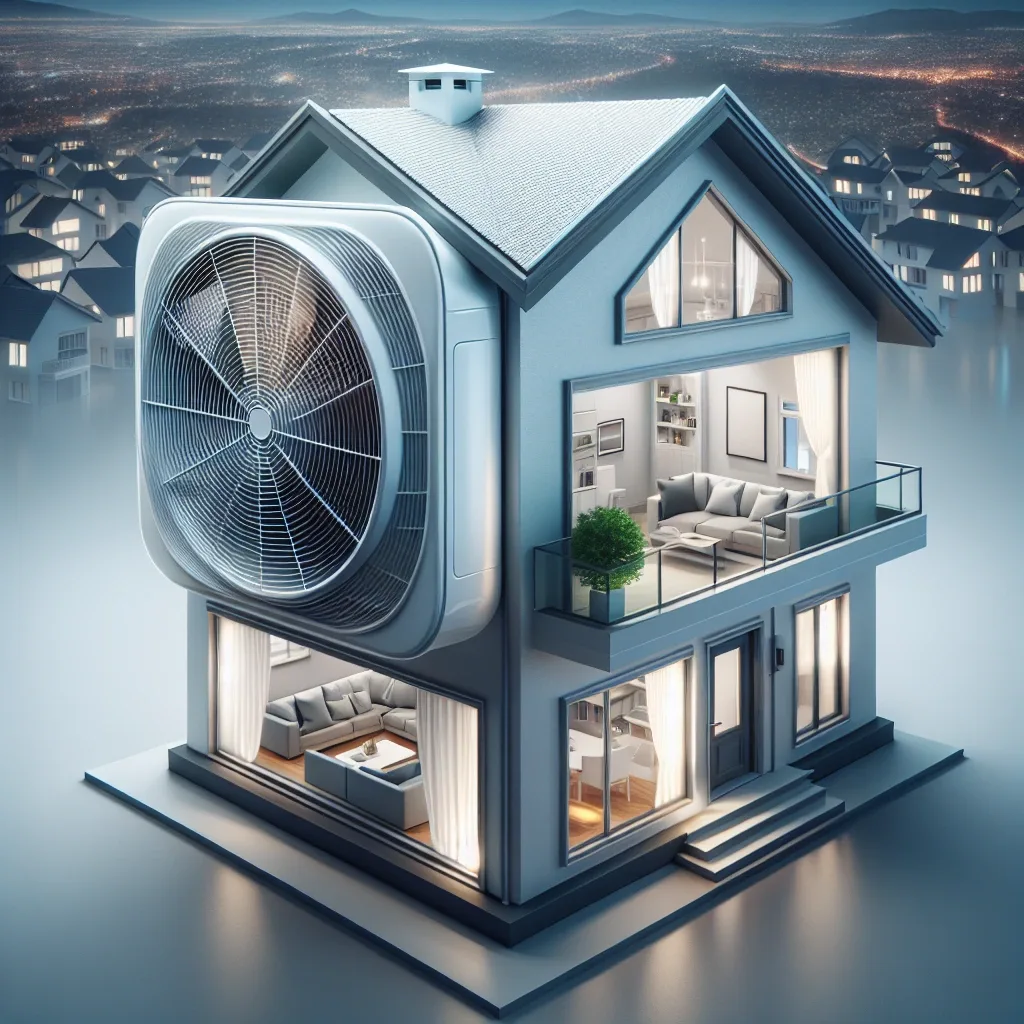
Why Fresh Air Matters More Than You Think
The human body breathes in over 10,000 liters of air every day. The quality of that air directly affects every aspect of health, from brain performance and sleep to immune function and chronic disease risk.
The problem is that most people have no idea how polluted their indoor air actually is, because the most harmful pollutants have no color, no smell, and are invisible to the naked eye.
Indoor Air Pollutants You Need to Know
Three main categories of indoor air pollution affect health.
PM2.5 particles are smaller than 2.5 microns. They pass through most standard filters and can penetrate directly into the alveoli and bloodstream. Indoor sources include cooking (which can spike PM2.5 to 200 µg/m³ in the kitchen), burning incense or candles, and smoking. The WHO 24-hour safety standard is 15 µg/m³.
CO2 accumulates from breathing in enclosed spaces. In a sealed room with 2-3 occupants, CO2 can reach 2,000-3,000 ppm within 2-3 hours. At 1,000 ppm, cognitive performance drops by 15%; at 2,500 ppm, it drops by 40%. Harvard's 2015 study found that people working at 550 ppm CO2 scored 101% higher on decision-making tests than those at 1,000 ppm.
VOCs (Volatile Organic Compounds) come from paint, varnish, adhesives, new furniture, and cleaning products. Common household products contain formaldehyde and benzene, both known carcinogens. The safety threshold is below 250 ppb.
What Is an ERV and How Does It Work?
An ERV (Energy Recovery Ventilator) ventilates your home by exchanging energy between incoming and outgoing air streams, delivering fresh air without importing outdoor heat and humidity.
How it works: outdoor air (which may contain PM2.5) passes through an HEPA H11-H13 filter before entering the home. Stale indoor air (high CO2) is exhausted outward. Both air streams pass through a heat exchanger core that transfers heat and moisture back into the incoming stream, saving 40-60% energy versus simply opening windows.
Recommended ERVs for Bangkok include Panasonic FY-15ZJD1 (150 CMH, ~35,000 THB), Mitsubishi Lossnay VL-100EU5-E (100 CMH, ~28,000 THB), and Daikin VAM150 (150 CMH, ~40,000 THB).
How HEPA H13 Differs from Standard HEPA
HEPA H13 filters 99.97% of particles at 0.3 microns or larger — significantly better than HEPA H11 at 95%. For effective PM2.5 protection, HEPA H13 or higher is required.
Recommended HEPA H13 air purifiers include Dyson Purifier Hot+Cool HP09 (with formaldehyde filter, ~25,000 THB), Blueair Blue Pure 211+ Auto (HEPA H13, ~12,000 THB, highest CADR in its price range), and Philips AC3858 (HEPA H13 + Carbon, ~8,000 THB).
Minimum CADR formula: room area (sq m) x 3 = minimum CADR (m³/hr). A 20 sq m bedroom requires a minimum CADR of 60 m³/hr.
Building a Smart Home with Automatic Air Management
Combining ERV and HEPA H13 air purifiers with Home Assistant creates a fully automatic air quality management system.
System architecture: install CO2 sensors (Sensirion SCD40) and PM2.5 sensors (IKEA VINDSTYRKA) in key rooms; connect the ERV via Modbus and the air purifier via Zigbee smart plug. Configure four automation rules in Home Assistant: CO2 > 800 ppm triggers ERV Speed 2; outdoor PM2.5 < 50 µg/m³ AND indoor CO2 > 600 ppm triggers ERV Speed 3; outdoor PM2.5 > 75 µg/m³ triggers air purifier Turbo Mode; and 06:00-08:00 triggers Morning Ventilation at ERV Speed 3.
The result: indoor CO2 stays below 800 ppm around the clock, indoor PM2.5 stays below 25 µg/m³ even when outdoor levels reach 100 µg/m³, and energy consumption drops 20-30% compared to manual management.