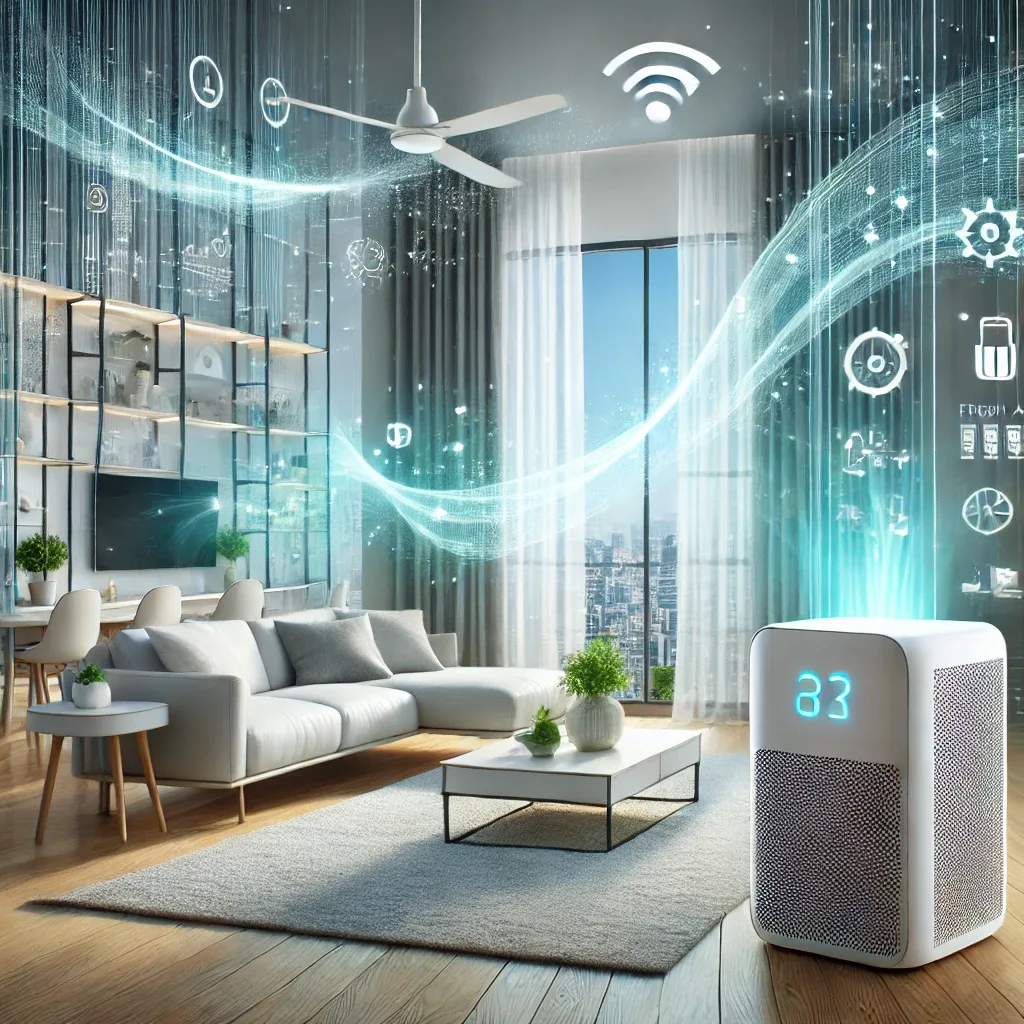
Why a Fresh Air System in a Smart Home Creates Real Comfort
Home comfort is not just about furniture and decor. The air you breathe directly affects how you feel, your alertness, and your health. Integrating a Fresh Air System into a smart home means air quality is managed automatically without any manual effort.
In Bangkok — with its hot, humid climate and seasonal PM2.5 spikes — a smart Fresh Air System lets you live comfortably without worrying about air quality.
Components of a Smart Home Fresh Air System
A complete smart Fresh Air System has three main components.
Air Filters capture PM2.5 particles, bacteria, and allergens. Choose HEPA H13 or higher for effective PM2.5 protection and replace every 6-12 months.
Ventilation Controllers manage the rate at which fresh air enters and stale air exits the home. The ERV (Energy Recovery Ventilator) is the top choice for Bangkok — it exhausts CO2-laden air while recovering heat and moisture, saving 40-60% energy versus open-window ventilation.
Air Quality Sensors measure PM2.5 (IKEA VINDSTYRKA or Awair Element), CO2 (Sensirion SCD40), and VOCs (Aqara TVOC) in real time to trigger the right automation response.
How to Connect Fresh Air Systems to Smart Home
Three primary connection methods exist.
Method 1 — Modbus RS-485: most Panasonic, Mitsubishi, and Daikin ERVs use RS-485. Connect via an RS-485-to-USB adapter on RPi5 and configure the Modbus Integration in Home Assistant.
Method 2 — Wi-Fi API: air purifiers with local APIs such as Xiaomi Air Purifier connect through the Xiaomi Miot Integration without cloud dependency.
Method 3 — Zigbee Smart Plug: for devices without a smart API, use a Sonoff S31 Lite or IKEA TRADFRI Outlet to control power and monitor energy consumption.
Recommended Automation Rules for Bangkok
Rule 1: CO2 > 800 ppm activates ERV at Speed 2 (150 CMH). Rule 2: outdoor PM2.5 < 50 µg/m³ AND indoor CO2 > 600 ppm raises ERV to Speed 3 to capitalize on clean outdoor air. Rule 3: outdoor PM2.5 > 75 µg/m³ closes ERV and switches the air purifier to Turbo Mode. Rule 4: 06:00-08:00 Morning Ventilation runs ERV at Speed 3 to flush overnight CO2 accumulation. Rule 5: humidity > 70%RH activates the dehumidifier.
Measurable Quality of Life Improvements
Bangkok users of smart Fresh Air Systems report uninterrupted sleep with bedroom CO2 below 700 ppm all night, waking refreshed without headaches, reduced dust allergy and respiratory symptoms, and 15-20% electricity savings compared to open windows or air conditioning alone.
Investing in a smart Fresh Air System pays back through better health and reduced medical costs.