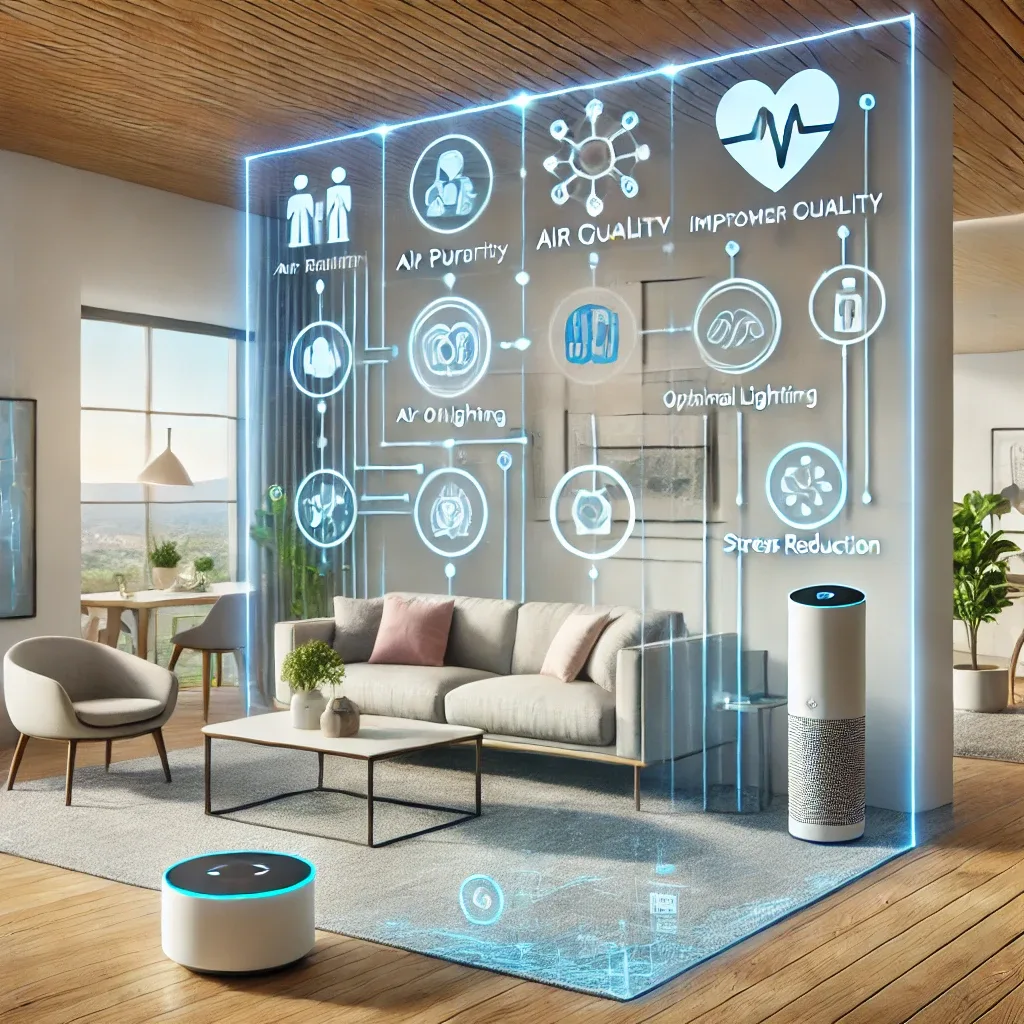
How Strongly Does the Home Environment Affect Health?
Thai residents spend more than 70 percent of their daily lives indoors. Indoor air quality therefore influences health more directly than the outdoor air quality that receives most public attention. In Bangkok, where seasonal PM2.5 spikes are a documented reality, knowing what the air inside your home is doing right now — and being able to correct it immediately — has measurable value.
HappySmart's Smart Living Solution approach focuses on automatically maintaining a health-supportive environment, not on issuing alerts that require the resident to take manual action.
Indoor Air Quality: Numbers That Matter
CO2 levels above 1,000 ppm in a bedroom or home office measurably impair concentration and sleep quality. CO2 sensors from Xiaomi and TP-Link integrated with Home Assistant can automatically activate ventilation fans or adjust air conditioning to increase fresh air intake when levels exceed the threshold — without any user intervention.
PM2.5 above 35 μg/m³ warrants air purifier activation. HappySmart connects PM2.5 sensors to Xiaomi Air Purifiers through Mi Home integration in Home Assistant, so the purifier responds to actual air quality rather than a fixed timer. In Bangkok's variable urban air environment, real-time response is significantly more effective than schedule-based operation.
Optimal indoor humidity for Thai climatic conditions is 50 to 65 percent. Smart humidity sensors linked to a dehumidifier automation prevent mould growth in poorly ventilated rooms without the homeowner having to monitor readings manually.
Lighting and Sleep Quality
Blue-spectrum light in the evening disrupts melatonin production and degrades sleep quality. Smart lighting from Xiaomi or Philips Hue supports automatic colour temperature adjustment — shifting from 6500K daylight tone during the afternoon to 2700K warm white in the two hours before bedtime.
In children's rooms, the system can gradually dim lights as bedtime approaches and activate a dim warm light when a child wakes at night, avoiding the full-brightness activation that makes returning to sleep difficult.
Smart Living for Elderly Family Members
In homes with elderly residents, HappySmart recommends mmWave fall-detection sensors in bathrooms and bedrooms. These devices operate without cameras, preserving privacy while providing immediate alerts to family members if an anomaly is detected.
Combining data from multiple sensors — motion, CO2, and water usage — allows the system to observe daily routine patterns and flag significant deviations that may indicate health changes worth monitoring. This passive monitoring approach supports independence while maintaining a meaningful safety net.