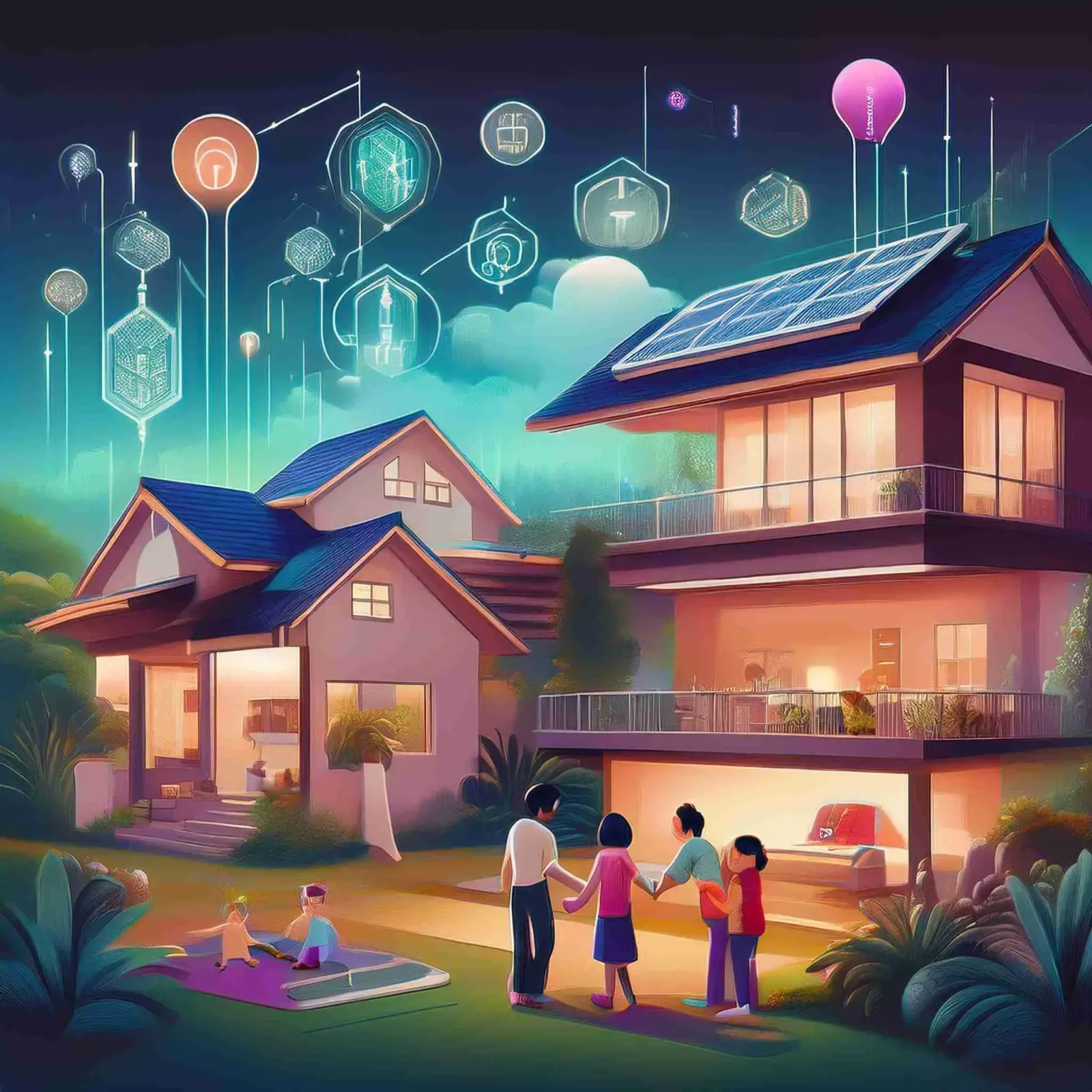
Why 2026 Is a Turning Point for Smart Homes
For the past three years, smart home adoption in Thailand moved faster than interoperability standards could keep pace. Homeowners ended up with devices from different ecosystems that rarely talked to each other cleanly. That situation has changed materially in 2026, with Matter version 1.4 now supporting a much broader device category list including cameras and energy management hardware.
Apple HomeKit, Mi Home, and Tuya-based devices can now share automations through a single Matter fabric without requiring multiple hubs. The investment risk from buying into a single proprietary ecosystem is lower than it has ever been.
mmWave Sensors: The New Presence Detection Standard
Passive infrared motion sensors have been the default choice for smart home presence detection for decades. They work, but they have a fundamental limitation: they can only detect significant movement. Sit still at a desk for a few minutes and the lights cut out.
Millimetre-wave radar sensors solve this by detecting micro-movements including breathing and slight posture shifts. In practical terms, a room occupied by someone reading, sleeping, or working stays classified as occupied. Aqara and several other brands now offer Matter 1.4 compatible mmWave sensors at accessible price points in 2026, and they integrate directly with Home Assistant without any bridging layer.
For Bangkok apartments and Hua Hin villas where residents spend long hours in study rooms or media rooms, the upgrade from PIR to mmWave delivers immediate quality-of-life improvement.
On-Device AI: Automation That Learns Rather Than Just Executes
Earlier generations of home automation ran fixed schedules and simple condition-action rules. The current generation adds pattern recognition. Home Assistant's 2026 release includes AI-powered automation suggestions that analyse historical device usage and propose new automations rather than requiring manual configuration.
A household with regular video call schedules can have the system learn to suppress device notifications, adjust lighting colour temperature, and lower blinds automatically during call hours — without ever creating a single manual routine. The learning happens locally on the home server, which matters for privacy-conscious homeowners.
Platform Integration: The Biggest Practical Change in 2026
Matter 1.4 combined with Thread border routers built into the latest Apple TV 4K and HomePod mini means that devices from Xiaomi, TP-Link Kasa, EZVIZ, and Tuya can appear natively in HomeKit. This removes the need for Homebridge as a translation layer for most common device types.
For homeowners who want maximum flexibility and local control, Home Assistant running on a Raspberry Pi 5 remains the strongest foundation. The Pi 5 has sufficient processing headroom to run small local AI inference models alongside the main automation engine, keeping all data on-premises.
What Bangkok and Hua Hin Homeowners Should Prioritise
If you are planning a smart home installation in 2026, anchor your device choices around Matter 1.4 compatibility. Choose mmWave sensors over PIR for any room where people spend extended time stationary. If you want full ecosystem flexibility, Home Assistant on Raspberry Pi 5 gives you more room to grow than any cloud-dependent platform. HappySmart designs and installs systems tailored to each property, from Bangkok condominiums to Khao Yai villas.