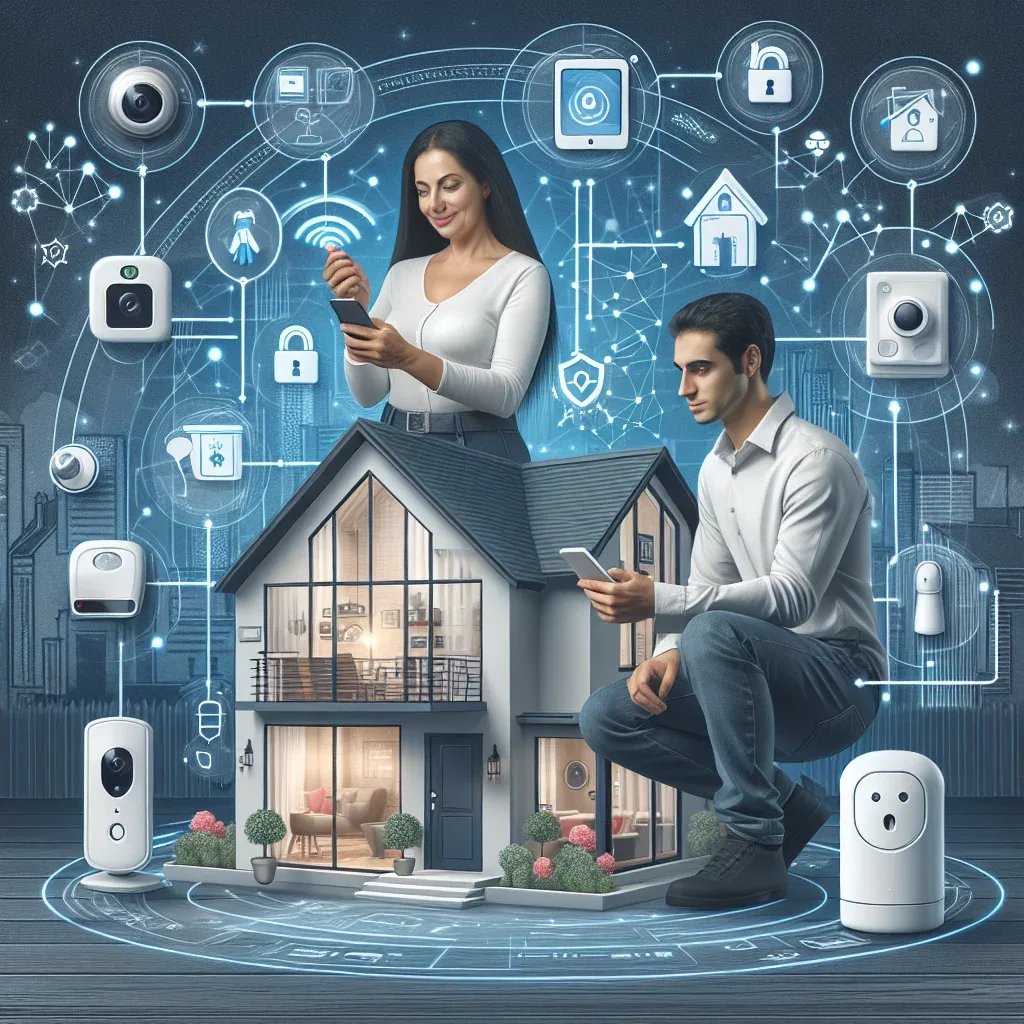
Why IoT Security Has Become the New Standard
Homes in Bangkok, Hua Hin, and Khao Yai face different security contexts but share similar core risks: intrusion, electrical faults, and gas leaks. IoT transforms protection from reactive to proactive.
Devices connected via Wi-Fi 6, Zigbee, or Matter 1.4 share data in real time. Security cameras, door and window sensors, and smart locks work as a unified system rather than isolated hardware pieces that never communicate.
Smart Cameras: Eyes That Never Sleep
The EZVIZ H8c and H9c, popular in the Thai market through 2026, feature AI facial recognition and 4K Color Night Vision recording. Both integrate natively with Mi Home and Tuya, so you monitor live footage inside the same app that controls your lights and air conditioning.
The TP-Link Tapo C420 suits homes with tighter budgets. It supports Matter 1.4, connecting to HomeKit or Home Assistant without an additional bridge.
mmWave Sensors: Precision Beyond PIR
Traditional PIR motion sensors trigger false alarms when wind moves foliage or a cat walks by. New mmWave sensors from Aqara and Xiaomi distinguish between humans and animals and can detect breathing even from a completely still person.
For homes with elderly residents this capability matters significantly. If the system detects no movement within a defined period, it sends an alert to designated family members immediately.
Smart Locks and Access Control
New digital locks from Xiaomi and Tuya-certified brands support fingerprint, PIN, RFID card, and smartphone unlocking. You can create temporary codes for housekeepers or repair technicians that expire automatically after a defined time window.
Every entry and exit is logged with a timestamp and photo. Homeowners traveling abroad or staying at another property retain full awareness and control.
Integrating Everything with Home Assistant
For homes demanding maximum flexibility, Home Assistant running on a Raspberry Pi 5 is the most powerful hub available. It consolidates EZVIZ cameras, Xiaomi locks, Aqara sensors, and notification rules into a single dashboard with local processing.
HappySmart designs end-to-end security systems: site survey, device selection, installation, and automation configuration. Starter packages begin at ฿1,599.