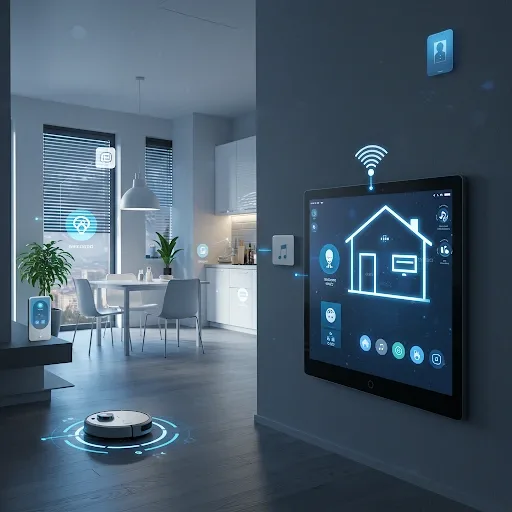
Smart Home and Clean Energy: The Perfect Partnership for 2025
Integrating smart home technology with clean energy solutions is rapidly becoming the defining characteristic of modern homes in 2025. This is not simply about reducing electricity bills — it is about building homes that achieve greater energy self-sufficiency while meaningfully reducing long-term environmental impact.
For Bangkok, with its strong year-round solar irradiance, solar panels represent an exceptionally sound investment. When combined with a smart home system, the efficiency gains are compounded substantially.
Intelligent Solar Panels: Generating Power Smarter
Next-generation solar panels in 2025 feature automatic angle adjustment systems that track sunlight throughout the day to maximize energy capture. Companion smartphone apps provide real-time tracking of electricity generated, electricity consumed, and energy stored in battery reserves.
Integration with battery storage systems means electricity generated during daylight hours is stored for use at night, reducing dependence on the public grid. Some households achieve 60-80% energy self-sufficiency annually through this combination.
Energy Storage Systems: Using Power Intelligently
AI-powered energy storage systems calculate real-time power allocation, prioritizing devices that require continuous electricity — such as medical equipment and security systems — before distributing power to other appliances. This ensures the home continues operating normally during grid outages or extended periods of low solar generation.
Grid independence planning reduces monthly electricity costs significantly. In Thailand, developing net-metering policies are beginning to allow households to sell surplus energy back to the grid, improving the investment return on solar installations further.
Smart Home Energy Technology in Practice
Smart lighting with ambient light sensors automatically adjusts brightness, reducing electricity use when natural daylight is sufficient. Motion sensors switch off lights in unoccupied rooms without manual intervention. Smart AC systems use outdoor temperature sensors, AI behavior learning, and remote app control to minimize energy consumption without compromising comfort.
Energy monitoring systems track electricity consumption per device in real time, alert you when usage exceeds defined thresholds, and generate daily and monthly reports for informed energy planning.
Practical Tips for Building a Sustainable Green Home
Always start with energy-efficient appliances — LED lighting and inverter-type AC units — as the foundation. Add renewable energy generation as a second step when budget allows. Use automation to reduce consumption without affecting lifestyle quality. Monitor and analyze usage data through apps to identify ongoing improvement opportunities.