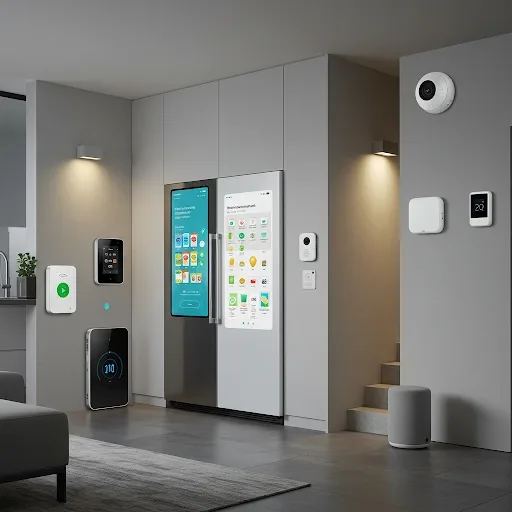
Why 2025 Is the Best Time to Build a Smart Home
The smart home market in 2025 has reached a compelling inflection point. Device prices have dropped significantly while AI and IoT technology has matured to become genuinely useful rather than gimmicky. The Matter standard now allows devices from different brands to work together seamlessly, meaning you no longer need to commit to a single brand ecosystem from day one.
Smart Door Lock: Intelligent Security for Your Entrance
Smart door locks rank among the most popular smart home devices in 2025, and for good reason. Multiple unlock methods — PIN code, fingerprint, RFID card, smartphone app, and physical backup key — eliminate the frustration of forgetting your keys. Tamper alerts notify you immediately if someone tries to force the lock or enters an incorrect PIN repeatedly. Auto-lock timers ensure the door locks behind you whether or not you remember to lock it manually.
Notable models available in Thailand include the Aqara U200, Yale Assure Lock 2, and Samsung SHP series, all of which support Matter and connect easily to Smart Home hubs.
AI Security Camera: Eyes That Actually Understand What They See
AI security cameras in 2025 go far beyond simple video recording. Advanced models distinguish between people, pets, and vehicles, dramatically reducing false alerts. Real-time notifications include short video clips sent directly to your smartphone so you can assess situations instantly. Facial recognition in premium models identifies family members separately from strangers. Integration with smart lights and alarm systems means cameras trigger automatic responses when unusual activity is detected.
Popular options in Thailand include the TP-Link Tapo C210, Xiaomi Smart Camera, and Google Nest Cam, all offering both cloud and local storage options.
Smart Thermostat: Cut Electricity Bills in Bangkok's Heat
In Bangkok's consistently hot climate, a smart thermostat offers a clear return on investment. AI learning algorithms study household behavior patterns and adjust temperatures automatically according to daily routines. Integration with door and window sensors causes the AC to pause automatically when a window opens — a simple feature that can meaningfully reduce electricity consumption over time.
Voice Assistant: The Central Hub of Your Smart Home
Smart speakers like Google Nest Hub, Amazon Echo, or Apple HomePod serve as the command center for your entire home. A single voice command can control multiple devices simultaneously. For Thai users, Google Nest Hub offers the best Thai language support, handling commands, questions, and displaying recipe guides or video calls on its touchscreen.
Smart Plug: The Easiest and Most Cost-Effective Starting Point
Smart plugs are the ideal entry point for anyone starting a smart home on a budget. Starting at just 200-500 THB, they add scheduling, automatic cut-off when overheating is detected, and real-time energy monitoring through a companion app. The TP-Link Tapo P110 is a consistently popular choice in Thailand for its full feature set at an accessible price.
Buying Guide: How to Choose Smart Home Devices Wisely
Start by defining your primary goal — whether that is security, energy savings, or convenience. Check compatibility with your existing platform before purchasing. Plan your budget over a longer horizon because smart home building is an investment that compounds over time. Begin with basic devices and expand as your needs and confidence grow.