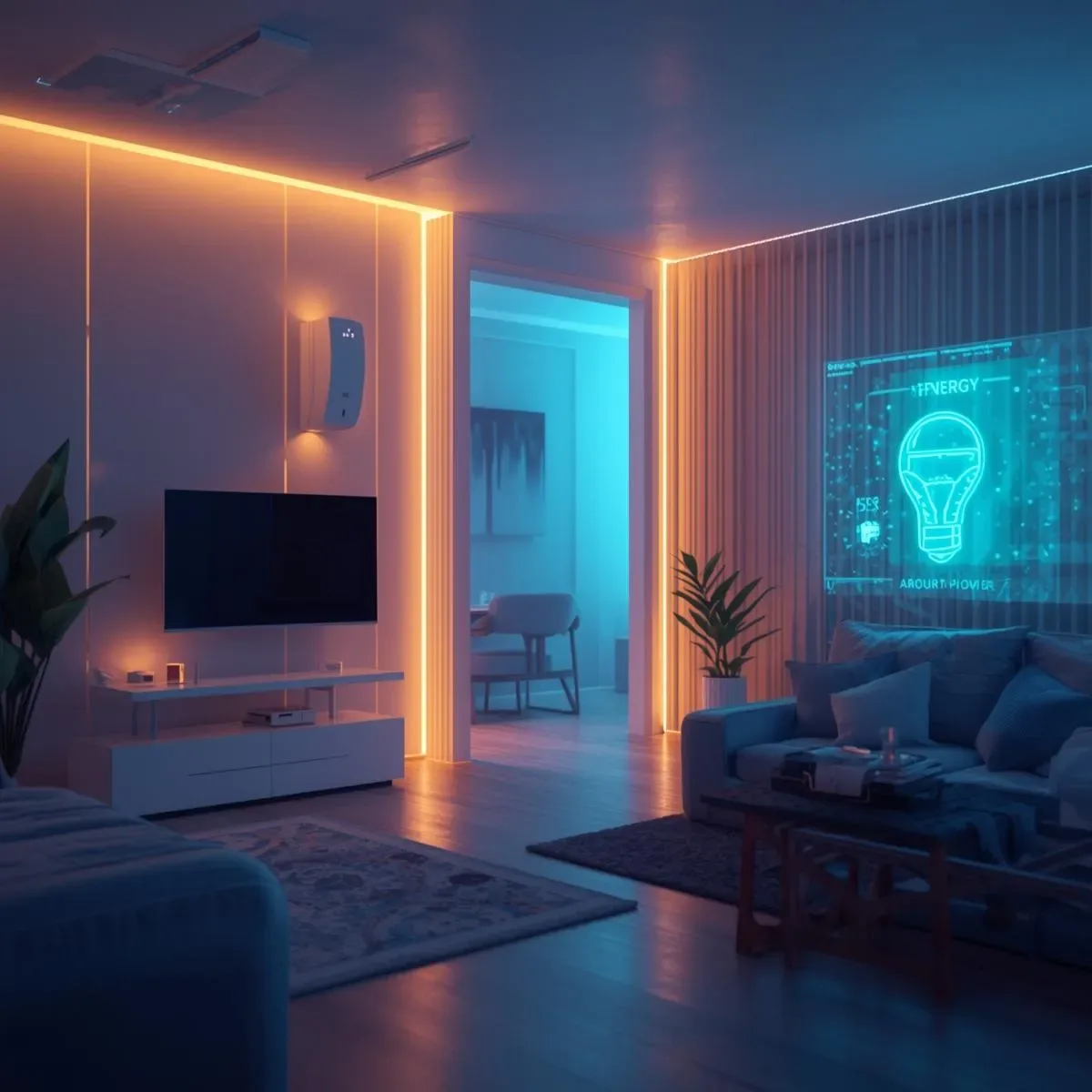
Why Smart Home Saves Electricity Better Than Other Methods
Traditional electricity saving depends on personal discipline — which in real life is easy to lapse. Smart Home changes the equation by making energy saving automatic. No need to remember, no need to walk back and turn things off.
10 Practical Electricity-Saving Methods with Smart Home
’Turn off devices immediately when not in use’ — motion sensors detect when a room is empty and automatically switch off lights and air conditioning.
’Choose energy-efficient devices’ — smart LED bulbs use 60–80% less electricity than conventional bulbs and dim automatically based on need.
’Set air conditioning temperatures intelligently’ — Smart Thermostat systems learn behavior and adjust temperature automatically, avoiding unnecessary overcooling.
’Use Smart Plugs to measure and control energy use’ — instantly identify which device consumes the most power and cut electricity remotely via mobile app.
’Maximize natural light’ — light sensors adjust bulb brightness relative to natural daylight, reducing electricity use during daytime hours.
’Stagger heavy appliance loads’ — schedule washing machines, dryers, and electric ovens to operate outside peak electricity rate periods.
’Use smart timer scheduling’ — set devices to switch on and off precisely according to your daily routine.
’Monitor energy consumption in real time’ — the app displays hourly electricity usage graphs, helping you identify peak consumption periods and adjust behavior.
’Maintain appliances regularly’ — air conditioners with dirty filters consume 20–30% more electricity. Smart Home systems send maintenance reminders automatically.
’Change behavior, not just technology’ — the data the system collects helps you understand your own electricity habits and improve them with clear targets.
The Future: Predictive Automation and Self-Adaptive Environments
Technology is moving toward homes that do not merely respond but ’anticipate’ needs. ’Predictive Automation’ uses AI to analyze historical data and adjust the home in advance, reducing energy waste beyond what reactive systems achieve.
The ’Matter’ standard is enabling seamless cross-brand device interoperability, ushering in an era where consumers are no longer locked into a single brand ecosystem.
HappySmart designs energy-saving Smart Home systems tailored to your home. Free consultation via LINE OA.