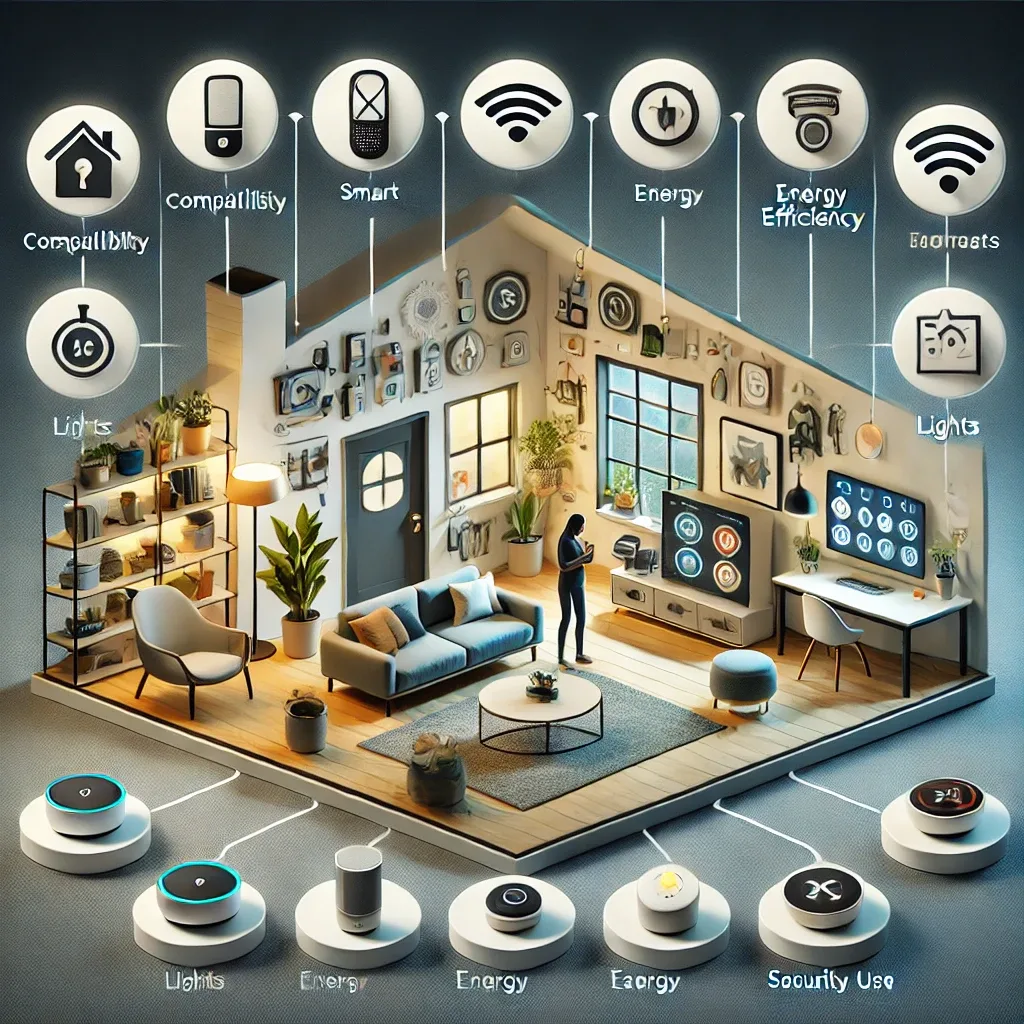
Why Choosing the Right Smart Home Devices Matters
The smart home device market offers thousands of options ranging from a few hundred to tens of thousands of baht. A wrong choice doesn't just waste money — it creates headaches from incompatible devices, overly complex apps, or products abandoned by manufacturers within a few years.
Careful planning before buying ensures you build a system that grows with your family's needs, stays within budget, and genuinely improves daily life.
Method 1: Plan Your Home's Needs Before Buying
Start by answering: what does your home need most? Security (cameras, smart locks), health (air sensors, purifiers), convenience (smart lighting, remote-controlled AC), or energy management (smart plugs, thermostats)?
Prioritize and start with the category delivering the clearest benefit for your household. Buying one category at a time lets you evaluate results and adjust plans before committing further investment.
Method 2: Choose Devices Compatible With a Central System
The biggest frustration in smart homes is devices that don't work together. The solution: choose devices supporting standard protocols — Zigbee, Z-Wave, Matter — or that integrate with Home Assistant, which supports over 3,000 brands.
Verify that devices have Home Assistant integrations or support Matter Protocol — the new standard co-developed by Apple, Google, and Amazon. Matter devices work natively across all ecosystems.
Method 3: Prioritize Security and Privacy
Smart home devices transmit behavioral data to manufacturer servers. Choose brands with clear, transparent privacy policies — or better yet, use local Home Assistant deployment that keeps all data within your home network.
Check whether the manufacturer has a track record of releasing security patches. Look for WPA2/WPA3 encryption for Wi-Fi connections and TLS for data transmission.
Method 4: Choose Devices That Are Easy to Install and Use
Good smart home devices should install without requiring a technician or advanced technical knowledge. Smart plugs, LED smart bulbs, and most sensors install in 5-10 minutes without tools.
Apps should have intuitive UIs, support multiple family members with different permission levels, and be accessible to less tech-savvy elderly or young family members. Clear guided wizards for first-time setup are essential.
Method 5: Compare Price and Total Value Comprehensively
The purchase price is not the only cost. Check for monthly subscriptions, cloud service fees, or feature restrictions in free tiers. Some brands sell cheap hardware but lock essential features behind ongoing subscriptions.
Read real-user reviews on Reddit r/homeassistant or Thai community forums to understand genuine usage pain points. HappySmart recommends Raspberry Pi 5 with Home Assistant as the most cost-effective and flexible long-term hub investment for Thai smart homes.