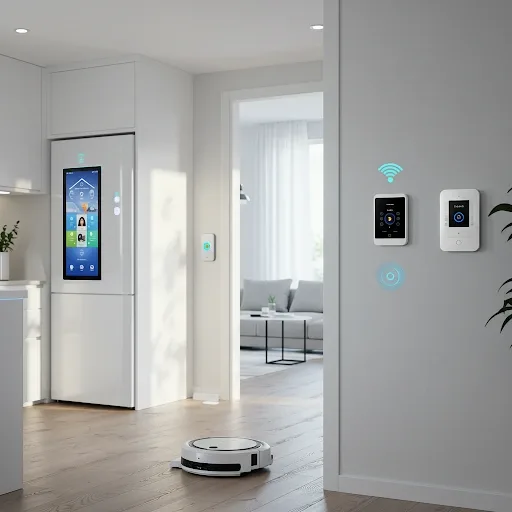
Why 2025 Is the Best Time to Start Your Smart Home
Smart home technology has hit a sweet spot in 2025: wide device variety, accessible prices, and genuinely easy self-installation. Whether your priority is convenience, security, or energy savings, smart home devices now address every dimension of modern living.
10 Smart Home Devices You Should Not Miss
Smart Lighting lets you control on/off, adjust brightness, and change color through an app or voice command. Schedule automatic timers for energy savings and set different lighting scenes for different activities throughout the day.
An AI Security Camera distinguishes people, pets, and objects with precision. It pushes real-time app alerts the moment anything unusual is detected and records high-resolution video continuously.
A Smart Plug transforms any ordinary appliance into a remotely controlled device. Set automatic schedules and monitor individual energy consumption from your phone in real time.
Door and Window Sensors detect open and close events in real time and alert you immediately if unauthorized entry occurs. They consume minimal power and install in minutes with adhesive backing.
A Smart Door Lock offers fingerprint, PIN, or smartphone access. It logs every entry and exit and lets you grant temporary digital keys to guests or technicians on demand.
A Smart Air Purifier with IoT connectivity measures PM2.5 and CO2 levels in real time and runs automatically when air quality drops. Particularly valuable in Bangkok where dust levels frequently spike.
A Smart Thermostat learns your usage patterns and adjusts the air conditioner temperature automatically throughout the day, delivering measurable reductions in monthly electricity bills.
Smart Smoke and Gas Detectors monitor for fire smoke and gas leaks automatically, sending immediate phone alerts and integrating with other security systems for a layered safety net.
A Smart Irrigation System handles watering automatically based on schedules or real-time weather data. It saves water and keeps your garden healthy even when you travel, which suits Bangkok condo owners with balcony gardens.
A Home Assistant Hub or Smart Controller unifies every device under one voice command or a single app. Scene automation such as Movie Mode or Away Mode handles multiple devices simultaneously, and support for hundreds of brands makes it future-proof.
How to Choose the Right Devices for Your Home
Always define your budget and priority before buying. If security is the focus, start with a camera and door sensors. If energy savings matter most, begin with smart plugs and bulbs. If indoor health is the concern, prioritize the smart air purifier.
Verify platform compatibility before purchasing. Devices that support Google Home, Amazon Alexa, or Apple HomeKit work together smoothly and allow cross-device automation without complex technical setup.
Plan your system to grow. Choose devices that accept future additions without requiring a complete replacement. Starting thoughtfully protects your investment and ensures the system scales gracefully as your needs evolve.