Warning Signs Your Body Is Responding to PM2.5
PM2.5 is a silent threat that infiltrates the body without immediate sensory warning. Common symptoms fall across several categories. Respiratory symptoms include dry cough or phlegm production, nasal congestion or runny nose, chest tightness, labored breathing, and worsening asthma attacks in those with existing conditions. Cardiovascular symptoms may include chest discomfort, palpitations, or irregular heartbeat in some individuals. Other effects include eye irritation and redness, headaches, unusual fatigue, and reduced concentration from diminished oxygen delivery to the brain.
When any of these symptoms appear during high-PM2.5 conditions, stop outdoor activities immediately, drink water, and move to an area with clean air. Continuing activity increases the cumulative dust load deposited in the lungs.
Nasal Rinsing and Gargling: First-Response Respiratory Care
Rinsing the nasal passages with physiological saline solution (0.9% NaCl) flushes dust and toxins trapped in the nasal cavity. Use commercially prepared sterile saline rather than homemade solutions, which risk incorrect concentration.
Proper technique: tilt the head slightly, spray saline into one nostril while breathing through the mouth, allow it to drain from the other nostril, then repeat on the other side. Perform once or twice daily during high-PM2.5 periods. Gargling with warm saline for 30 seconds reduces throat irritation and helps clear accumulated contaminants.
Choosing the Right Mask
N95 masks filter ≥95% of particles at 0.3 microns and are appropriate for areas with severe PM2.5 elevation. KN95 follows a comparable Chinese standard. KF94 meets Korean standards at 94% filtration with a shape that conforms better to diverse face geometries.
Standard surgical masks filter only 30-60% of PM2.5 particles — insufficient protection during heavy-pollution periods. Cloth masks provide minimal protection and are not recommended when AQI registers as unhealthy. Adjust the mask to fit snugly and test by exhaling sharply; air escaping around the edges means the seal must be corrected before going outside.
Hydration and Internal Health Support
Plain water and warm water are the best choices during high-PM2.5 periods, keeping respiratory mucous membranes hydrated, facilitating mucus clearance, and diluting absorbed toxins. Avoid caffeine and alcohol, both of which contribute to dehydration. Avoid high-sugar drinks that promote systemic inflammation.
Sleep 7-8 hours each night, as the body repairs PM2.5-induced cellular damage during sleep via antioxidant and repair processes. Avoid smoking or secondhand smoke environments, which compound the oxidative damage already caused by PM2.5 exposure.
Indoor Air Purification Technology for the PM2.5 Era
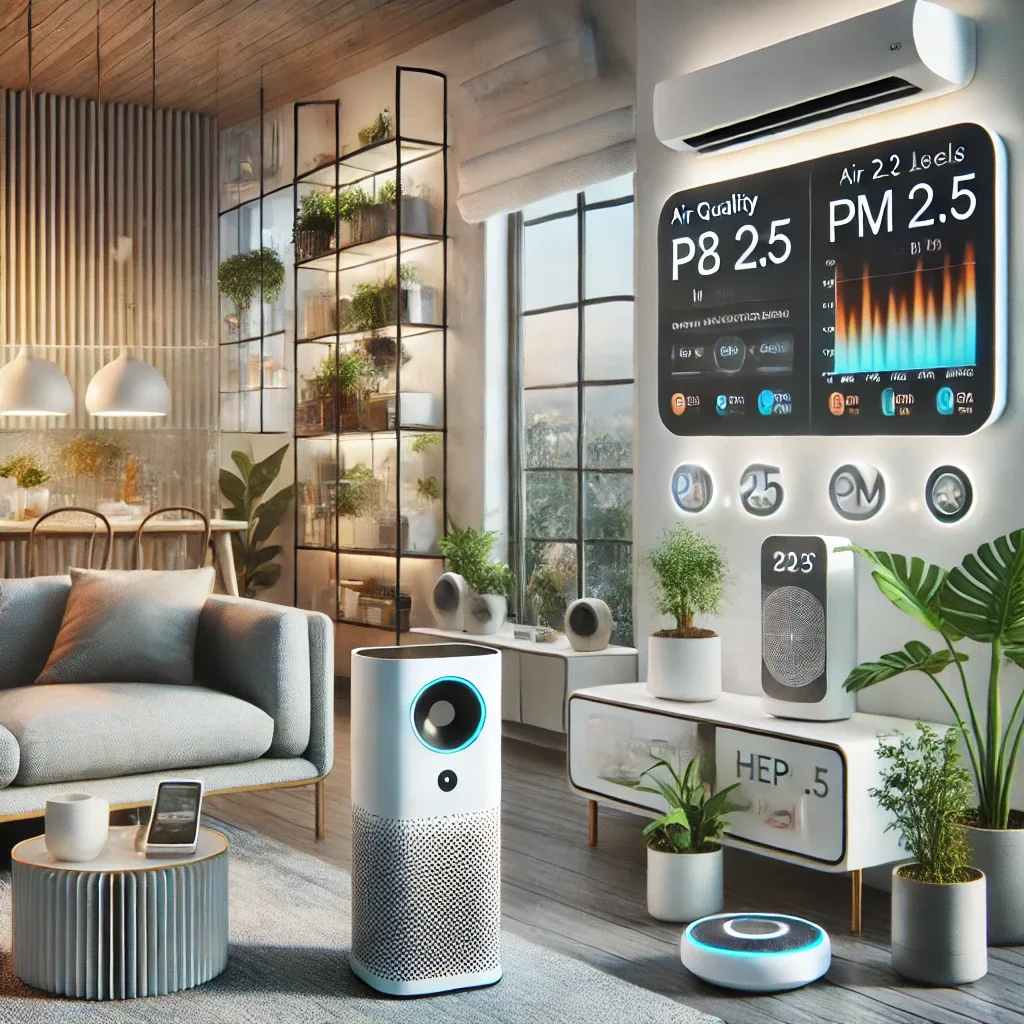
HEPA air purifiers are the primary tool for removing PM2.5, filtering 99.97% of particles. Smart models with built-in sensors automatically adjust fan speed based on real-time air quality readings. Some air conditioner models include HEPA or Plasma filtration systems that clean air simultaneously with cooling. HEPA vacuums prevent recirculation of collected particles during cleaning. Air quality monitors provide real-time data to support informed decisions about when to run purifiers.
Positive Pressure Ventilation systems push clean filtered air into the home to prevent dust infiltration. AI and IoT technology — through Home Assistant — connects all devices to run automatically based on sensor inputs. HappySmart installs these systems and provides consultation to create comprehensive PM2.5 protection for your home.