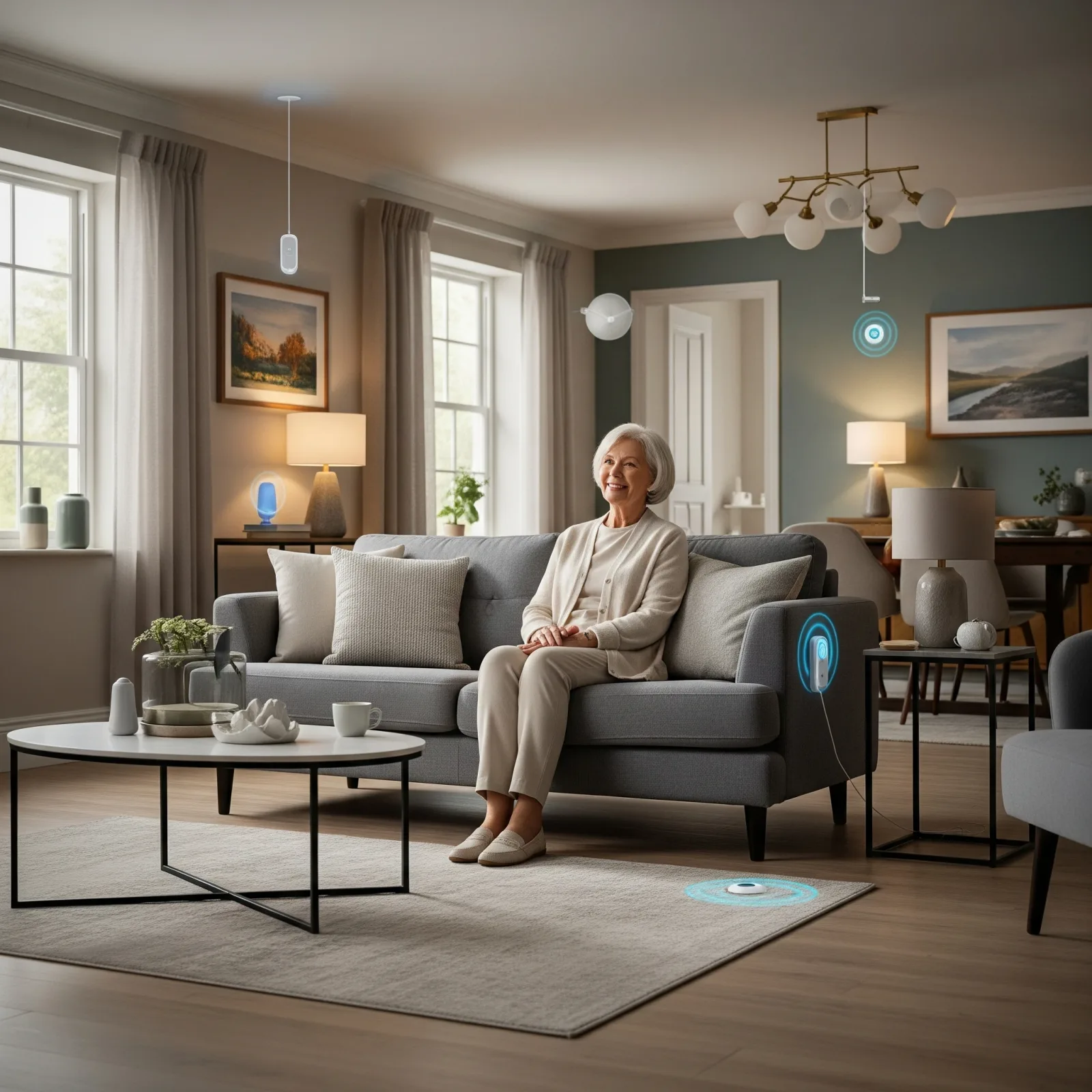
Why Fall Detection Is the Most Critical Feature
Out of 10 Smart Home features Thai families want for elderly, Fall Detection scored the highest importance at 9.1/10 in a Chulalongkorn University study (2024). Nothing prevents serious loss better than knowing within 30 seconds.
But the market has dozens of options priced from 1,500 to 50,000 THB. Most families don’t know what to choose.
Technology 1: Camera-Based AI (e.g. Kami Fall Detect)
How it works: IP Camera with Real-time AI pose analysis. Cited accuracy 99.5% (in well-lit rooms).
Advantages:
- High accuracy in good lighting
- Low starting price (3,500–8,000 THB)
- Provides real video — doubles as a video call device
Disadvantages:
- Privacy Score low — 77% of elderly refuse bedroom/bathroom installation
- Accuracy drops in low light or with obstructions
- Cloud-dependent — if internet goes down, system goes down
- Monthly subscription 299–599 THB
Best for: Living room, home entrance, areas where elderly consent
Technology 2: Dedicated mmWave Sensor (e.g. Vayyar Care)
How it works: 60 GHz mmWave Radar, wall-mounted, covers 1 room per unit. Detects falls, breathing, and Vital Signs without any camera.
Advantages:
- Privacy Score 10/10 — no camera, no audio
- One unit covers one full room
- Works without any wearable
- Local processing — no cloud dependency
Disadvantages:
- High price (15,000–25,000 THB/unit including installation)
- Requires one unit per room for coverage
- Complex setup — requires specialist
Best for: Bedroom, bathroom — highest-risk zones
Technology 3: AI Fall Detection Software (e.g. ElderFallGuard)
How it works: Software running on an existing IP camera, analysing Depth Camera Point Cloud for fall detection without recording actual images.
Advantages:
- Better privacy than standard camera (no actual images stored)
- Works with existing compatible cameras
- Mid-range price (5,000–12,000 THB)
Disadvantages:
- Requires Depth Camera (more expensive than standard IP camera)
- Accuracy depends on setup and camera angle
- Higher False Positive rate than dedicated mmWave
Best for: Living room, kitchen, hallway
Technology 4: DIY mmWave Module (e.g. LD2410 + Home Assistant)
How it works: Budget mmWave module connected to Home Assistant via ESPHome or Zigbee, with custom Fall Detection Rules.
Advantages:
- Very low cost (800–2,500 THB/unit)
- Privacy 10/10 — no camera
- 100% customisable via Home Assistant
- No monthly subscription
Disadvantages:
- Requires DIY skill or a skilled installer
- Lower Fall Detection accuracy than dedicated devices
- No manufacturer technical support
Best for: Tech-savvy users or those with a skilled installer
Summary Comparison Table
| Feature | Kami AI Camera | Vayyar Care | ElderFallGuard | DIY mmWave |
|---|---|---|---|---|
| Price | 3,500–8,000 | 15,000–25,000 | 5,000–12,000 | 800–2,500 |
| Privacy Score | 2/10 | 10/10 | 7/10 | 10/10 |
| Accuracy | 99.5% (good light) | 97% (all conditions) | 93–96% | 85–92% |
| Easy install | Easy | Medium | Hard | Very Hard |
| Local Processing | No | Yes | Partial | Yes |
| Monthly fee | 299–599 | None | 199–499 | None |
Budget-Based Recommendations
Under 10,000 THB: Living room → Kami Camera + bedroom → Panic Button 10,000–30,000 THB: Bathroom → Vayyar Care × 1 + Panic Button in every room Over 30,000 THB: Vayyar Care in bedroom + bathroom + Camera in living room — full risk coverage