Selecting flooring for elderly homes in Bangkok’s 75-80% RH climate requires evaluation against three criteria: Coefficient of Friction (COF), Water Absorption Rate, and service life. SPC (Stone Plastic Composite) satisfies all three.
Four-way flooring material comparison:
- SPC (Stone Plastic Composite): COF 0.6-0.8, water absorption 0%, service life 15-25 years, price 350-650 THB/sqm. Does not swell, mold-proof, 100% waterproof, suitable for all rooms.
- LVT (Luxury Vinyl Tile): COF 0.5-0.7, absorption below 0.1%, 10-20 years, 250-450 THB/sqm. Lighter than SPC but less rigid.
- Porcelain tile: COF 0.6-0.9, absorption below 0.5%, 30+ years, 200-800 THB/sqm. Highly durable but cold and hard when fallen on.
- Engineered wood: COF 0.4-0.6, absorption 3-8%, 10-15 years, 400-900 THB/sqm. Swells under Bangkok’s high humidity — not recommended.
Anti-mold paint chemistry: effective anti-fungal paints must contain Zinc Pyrithione or Silver Ion (Ag+) biocides that inhibit Aspergillus niger and Cladosporium sp. at 99.9% efficacy with 5-7 year active life. Recommended brands: TOA Mildew Guard and Nippon Paint Anti-Mould at 1,200-2,000 THB per 5L covering 30-40 sqm.
Biophilic design and humidity: Boston Fern absorbs 600-800 ml of airborne moisture per day; Peace Lily also reduces VOCs. However, plants also release transpiration moisture, so they should be used alongside a dehumidifier rather than as a replacement. Placing 2-3 plants in a bedroom can reduce RH by 2-5% while creating a calming atmosphere.
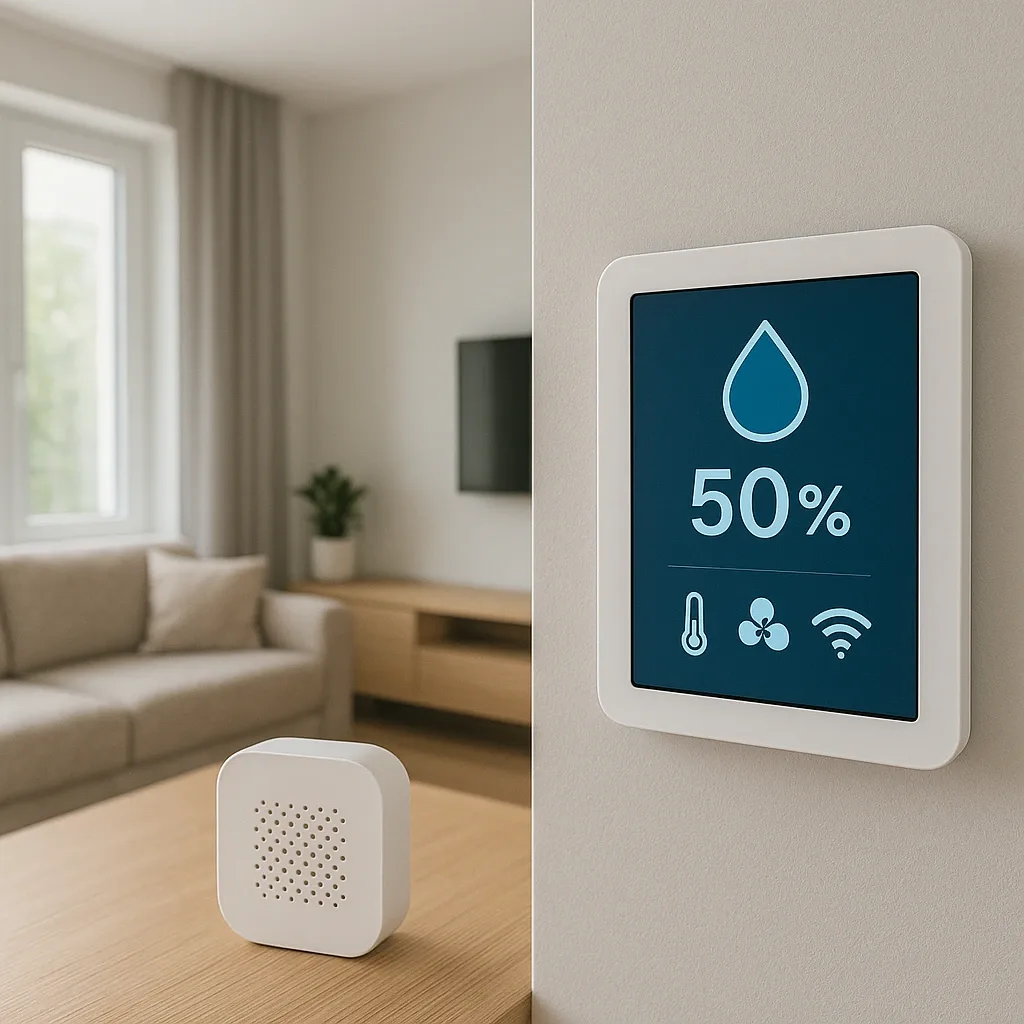
Smart Dehumidifier Integration: HA connects to a dehumidifier via Wi-Fi (Xiaomi Deerma) or a Zigbee smart plug, controlled by an Aqara humidity sensor targeting 50-55% RH in the bedroom and shutting off below 48% to conserve electricity. Average electricity cost for a 16L/day dehumidifier is 150-250 THB/month at 4.5 THB/kWh.