Bangkok experiences severe Urban Heat Island (UHI) effects. Research from the Asian Institute of Technology (2023) found urban core temperatures running 2.4-3.8°C higher than suburban areas, with midday temperatures reaching 38-41°C during the hot season (March-May) — conditions that pose serious risk to elderly residents whose thermoregulation has declined with age.
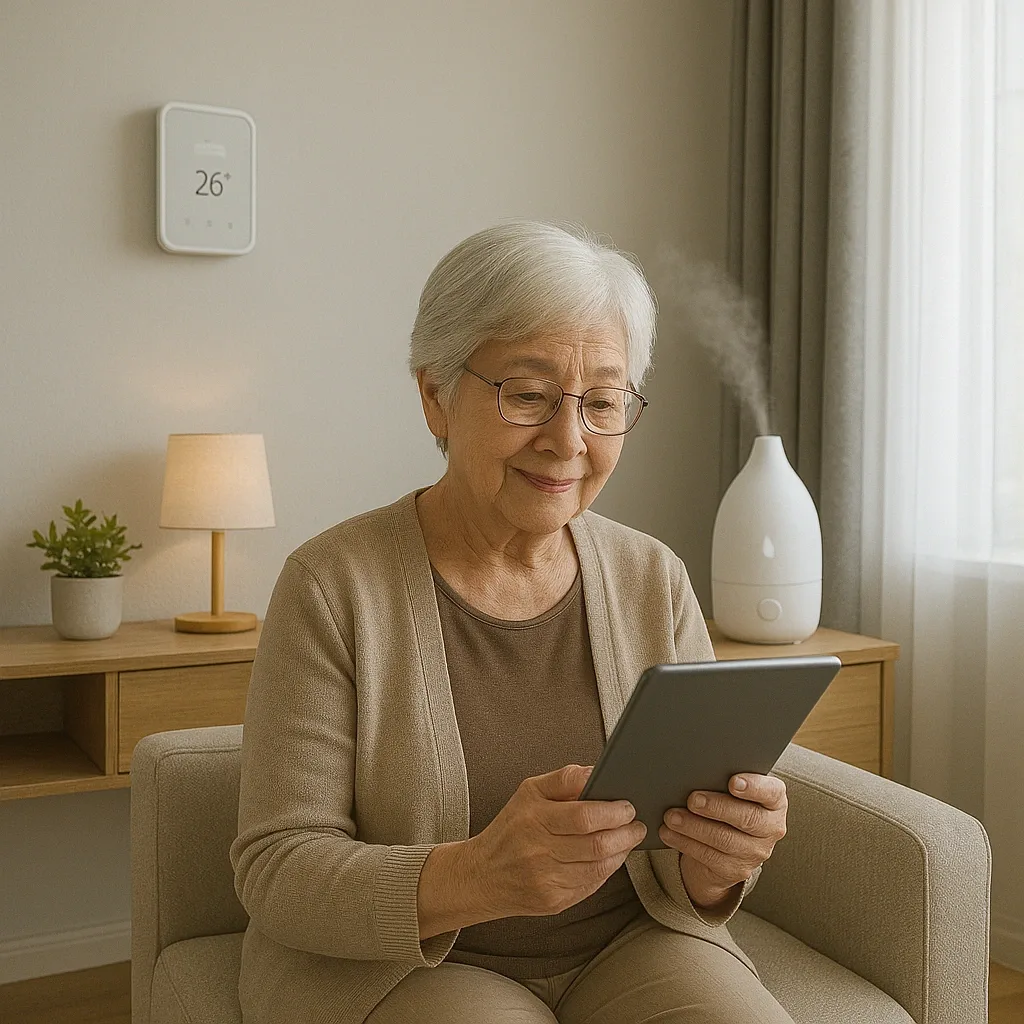
Elderly residents and thermal regulation: adults over 65 years old have thermoregulatory systems that produce 20-30% less sweat than younger people, making heat dissipation significantly slower. Their risk of heat stroke is 3-4 times higher. WHO recommends an indoor temperature of 26-28°C for elderly residents (not below 24°C, as excessively cool environments weaken immune function).
HappySmart Thermal Comfort System: Smart AC combined with mmWave presence detection and temperature sensors creates an automatic comfort loop. Home Assistant targets 27°C ± 1°C for the elderly bedroom — reducing AC temperature by 1°C when the room exceeds 28°C, increasing it when below 25°C, and switching off entirely when the room is unoccupied to conserve energy.
Humidity and temperature interaction: at 28°C with 80% RH, the Heat Index (Feels Like temperature) reaches 32-33°C — dangerous territory for elderly residents. Reducing humidity from 80% to 55% at the same temperature drops the perceived temperature by 3-4°C without increasing AC usage, saving 15-20% on electricity.
Interior design for thermal comfort: cool-tone wall colors (beige, grey, white) with high reflectance reduce radiant heat gain; blackout curtains cut solar heat gain by 15-25%; SPC flooring does not retain heat like dark-toned tiles; exterior canopy plants reduce solar gain by 20-30%; and ceiling fans (50-75W) create perceived cooling at a fraction of air conditioner energy consumption (versus 1,200W for AC).