Bangkok’s Humidity: A Silent Health Hazard for Elderly Residents
Thailand’s Meteorological Department records Bangkok’s average relative humidity at 75–80% year-round, peaking at 85–90% during the monsoon season (June–October). These moisture levels create ideal conditions for Aspergillus and Cladosporium mold species and Dermatophagoides dust mites — the primary triggers of asthma and allergic rhinitis.
For elderly residents whose immune and respiratory systems weaken with age, chronic mold and dust mite exposure elevates risk of pneumonia, persistent allergies, and joint pain from prolonged humidity. WHO research shows that maintaining indoor relative humidity between 40–60% reduces dust mite populations by up to 80% and airborne mold spores by over 50%.
Moisture-Resistant Interior Design Materials
Effective SmartInterior design begins with material selection that eliminates moisture accumulation:
Flooring Porcelain ceramic tiles (water absorption < 0.5%) and 100% waterproof Luxury Vinyl Tile (LVT) are optimal for Bangkok homes. Avoid solid hardwood and carpet, which absorb moisture and harbor dust mites.
Walls Mold-inhibiting paints such as Dulux Weathershield or TOA Mildew Resistant applied over moisture-sealing primer resist fungal growth. In bathrooms and kitchens, ceramic tile beats wallpaper categorically.
Ceilings Moisture-resistant gypsum board (MR-grade) outperforms standard gypsum in high-humidity rooms. Aluminum ceiling systems in bathrooms offer the most durable long-term solution.
Furniture MDF boards with melamine coating or stainless steel and aluminum furniture for wet areas resist moisture absorption. Avoid bare timber in consistently humid zones.
Humidity Sensor Selection Guide
Four sensor options serve different budgets and technical requirements. The DIY SHT31 (Sensirion) offers ±2% RH accuracy at 150–300 THB for technically inclined users. The Xiaomi LYWSD03MMC (250–400 THB) flashed to Zigbee firmware integrates seamlessly with Home Assistant. The Aqara Temperature & Humidity Sensor (500–700 THB) connects natively via Zigbee, requires no cloud, and runs on a single CR2032 battery for one to two years — HappySmart’s recommended choice. The Govee H5101 (400–600 THB) suits users who prefer a standalone app without home automation integration.
Automated Humidity Control
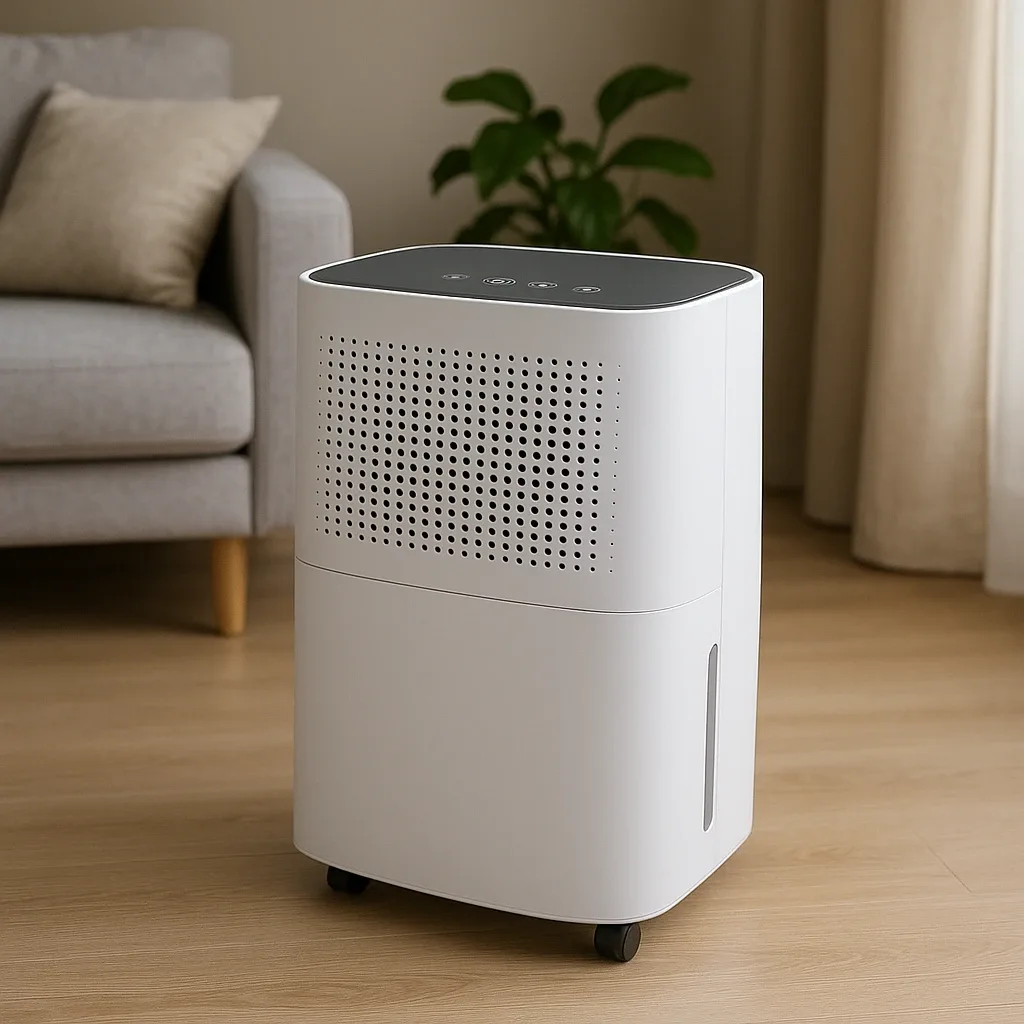
A Home Assistant automation monitors bedroom humidity continuously: when the sensor exceeds 60% RH, it activates the dehumidifier via a Sonoff smart plug and sends a LINE alert to the family group. When humidity drops below 45%, the dehumidifier switches off automatically, maintaining the 45–60% target range without manual intervention.
Case Study: Lat Krabang Home Reduces Humidity from 72% to 52%
A Bangkok family installed HappySmart’s humidity management system comprising three Aqara sensors, a Daikin dehumidifier (11L/day) on a smart plug, and a Panasonic FV-04VE1 Energy Recovery Ventilator. After one month, average bedroom humidity fell from 72% to 52%. The elderly resident’s morning allergy symptoms reduced noticeably, wooden furniture stopped swelling, and electricity costs increased by only 400–600 THB per month — far less than the resident’s previous monthly allergy medication expense.