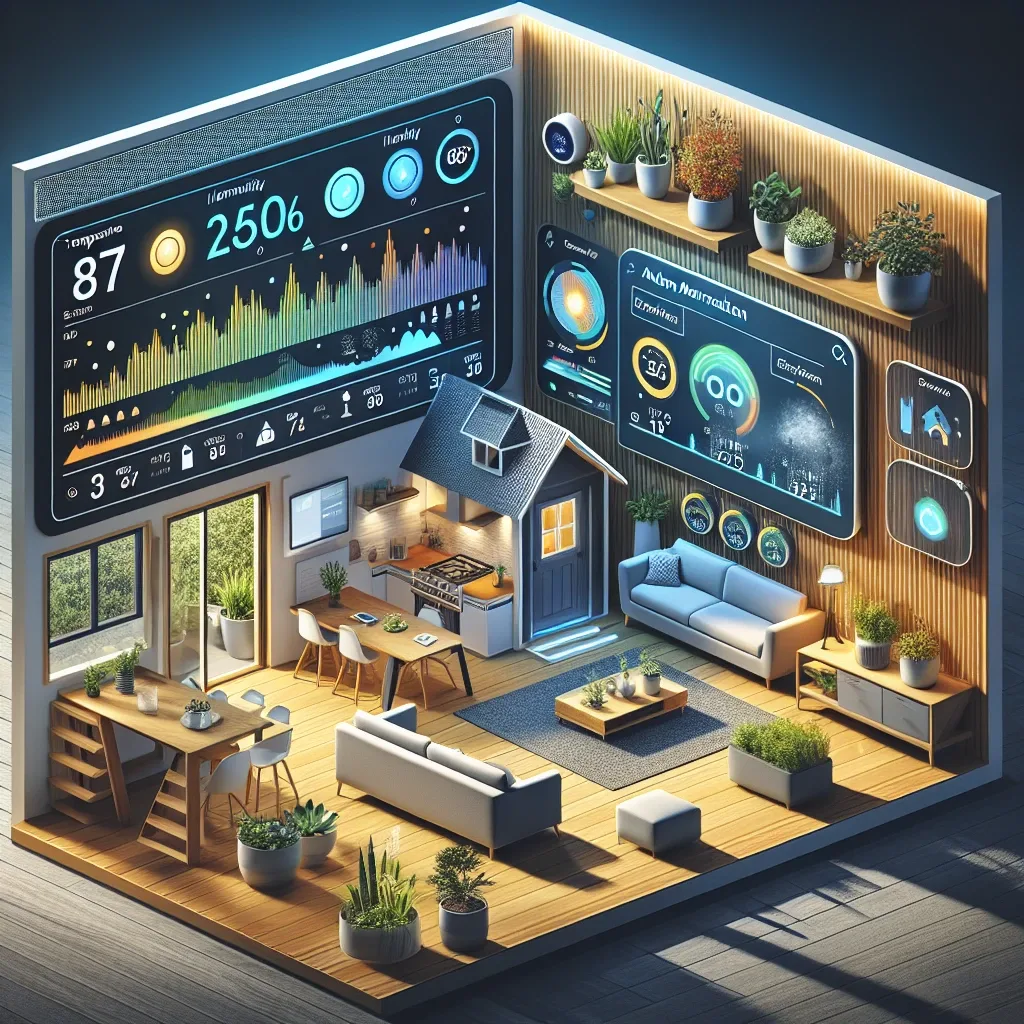
In an era when Bangkok's PM2.5 can spike to 100 µg/m³ during crisis periods, relying on open windows or standard air purifiers is no longer sufficient. Smart Home systems that integrate multiple technology layers provide the efficient, manageable solution.
Health Impact of Air Quality
Indoor air contains pollutants from multiple sources: PAH compounds from cooking smoke, PM2.5 infiltrating through building gaps, VOC from new furniture and wall paint, CO2 from everyone breathing, and mold from humidity accumulation.
WHO research shows living long-term in high indoor air pollution increases cardiovascular disease risk by 30-35% and lung cancer risk by 20-25%. For young children who breathe faster than adults, the risks are even higher.
Smart Air Purifiers: HEPA vs Activated Carbon
Effective smart air purifiers require two complementary filtration layers. HEPA H13 physically filters PM2.5, PM10, pollen, and dust at 99.95% efficiency. Activated Carbon adsorbs VOCs, odors, formaldehyde, and chemical vapors.
The Xiaomi Smart Air Purifier 4 Pro at 8,500-12,000 THB uses HEPA H13 plus Carbon, covers 60 square meters, and connects to Home Assistant via Mi Home API. The Dyson Purifier Hot+Cool HP09 at 30,000-40,000 THB has built-in PM2.5, NO2, and VOC sensors with API control. The Blueair Classic 480i at 25,000-35,000 THB uses HEPASilent™ technology that is 50% quieter than standard — ideal for bedrooms.
Multi-Parameter Air Sensors
Single-point measurement is insufficient. Sensors should be deployed in every key room. The Awair Element at 6,500-8,500 THB measures CO2, VOC, PM2.5, temperature, and humidity in one device, connecting to Home Assistant via Awair Local API.
For budget installations, the Aqara TVOC at 2,500-3,000 THB or Sensirion SCD40 at 600-800 THB provide accurate CO2 data via Zigbee directly to Home Assistant without relying on manufacturer cloud services.
Smart Thermostat Integration for Temperature and Humidity Control
Smart thermostats integrate effectively with air quality sensors. The Ecobee SmartThermostat at 8,000-12,000 THB includes a built-in humidity sensor, supports Matter protocol, and connects directly to Home Assistant. When indoor humidity exceeds 60%, the system automatically activates dehumidifier mode or adjusts ERV settings.
Fresh Air via HRV Systems
HRV (Heat Recovery Ventilation) systems at 20,000-50,000 THB suit Bangkok homes that need fresh outdoor air without increasing air conditioning load. HRV recovers cooling energy from exhaust air, pre-conditioning incoming fresh air before the AC works, saving 15-25% on energy.
Automating the HRV intake closure when outdoor PM2.5 exceeds 75 µg/m³, and opening only when PM2.5 falls below 35 µg/m³, delivers fresh air without importing outdoor pollution.