Thailand's Aging Society
Thailand is undergoing a significant demographic shift. In 2020, the country had over 12 million residents aged 60 and above, representing approximately 18% of the total population. This figure is expected to continue rising, with Thailand projected to become a fully aged society by 2030.
The central challenge is enabling elderly residents to maintain independence and dignity while ensuring their safety — particularly when adult children live and work in cities and cannot provide constant in-person care. Smart home technology offers the most practical and scalable answer to this challenge.
Health Monitoring: Wearables and Sensors
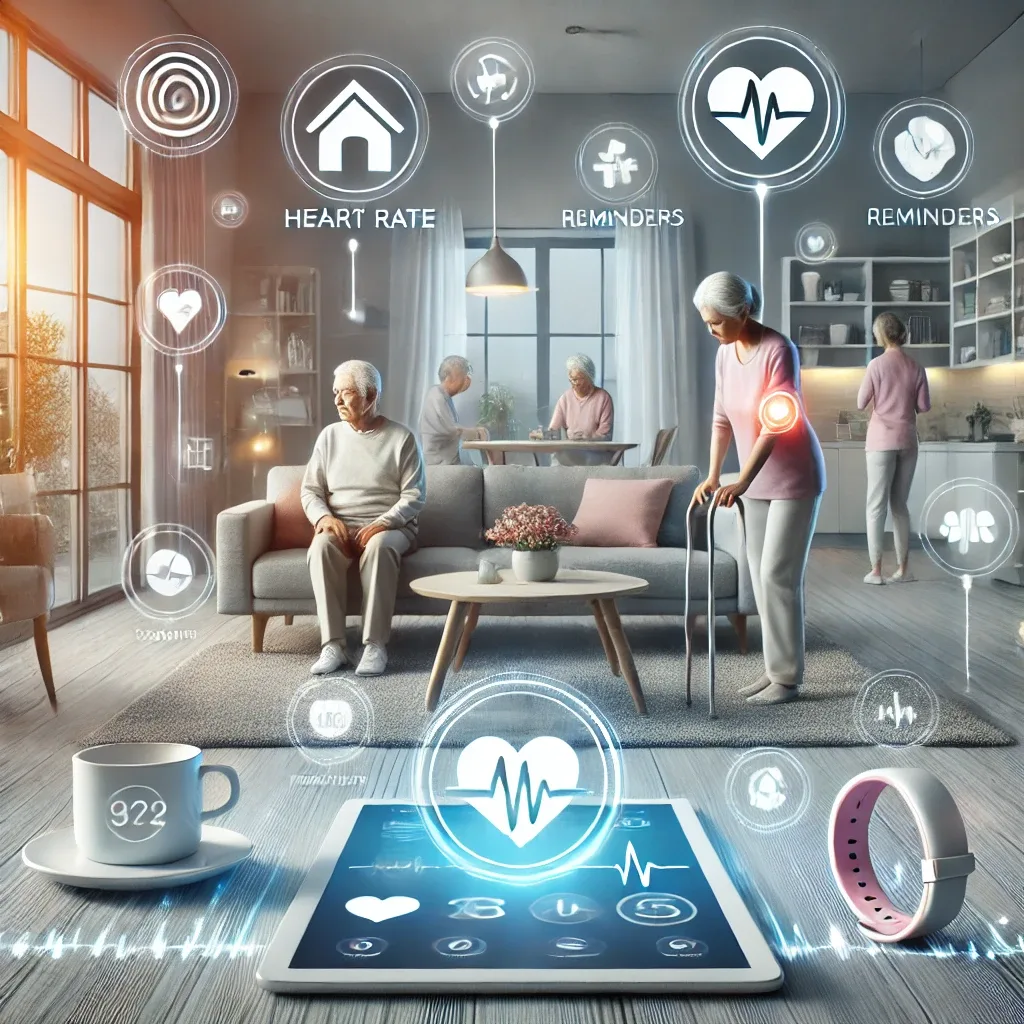
A complete elderly health monitoring system combines two layers. The first is wearable devices such as smartwatches or smart bands that continuously measure blood pressure, heart rate, SpO2, and physical activity around the clock. This data feeds into a Home Assistant dashboard that family members can access remotely from their smartphones.
The second layer consists of in-home sensors: air quality monitors measuring PM2.5, CO2, and humidity; radar sensors detecting falls in bathrooms and bedrooms without cameras; and PIR motion sensors tracking daily activity patterns to identify any behavioral changes that may indicate declining health.
Mobility Assistance Technology
For elderly residents with mobility limitations, technology enhances capability through GPS-equipped smart canes and walkers with emergency call buttons, and voice or app-controlled smart wheelchairs. When integrated with the smart home, residents can control lights, doors, and lifts by voice command, eliminating the need to walk to switches or panels.
Emergency Alert Systems
Wireless SOS buttons worn on the body or placed at key locations throughout the home send immediate alerts to all family members via LINE or SMS when pressed, including GPS coordinates if the device is wearable.
Intelligent AI systems can also detect emergencies without requiring a button press — for example, when no movement is detected for an unusually long period, or when wearable data shows an abnormal heart rate pattern — sending proactive alerts before a situation becomes critical.
Smart Home Design for Elderly Residents
Smart homes designed for elderly users prioritize simplicity and safety above all. Automatic lighting that activates when motion is detected at night prevents falls in the dark. Smart locks that auto-unlock when the resident returns remove the complexity of key management. Gas sensors that automatically shut the valve if the stove is left on address one of the most common home hazards for elderly residents.
Raspberry Pi 5 running Home Assistant serves as the reliable, cost-effective hub coordinating all of these systems continuously.
HappySmart Home Care Package
HappySmart specializes in designing and installing smart home systems for elderly care. We understand that every family has unique needs and constraints, and all our packages are fully customizable — from basic safety monitoring to comprehensive health management systems, complete with training for both elderly residents and all family members.
Common risks to address when deploying smart home technology for elderly care include system complexity causing confusion, over-reliance on technology without human oversight, personal health data privacy, and installation and maintenance costs. HappySmart addresses all of these through intuitive system design, a 24-hour support team, and exclusive use of local storage for all sensitive health data.