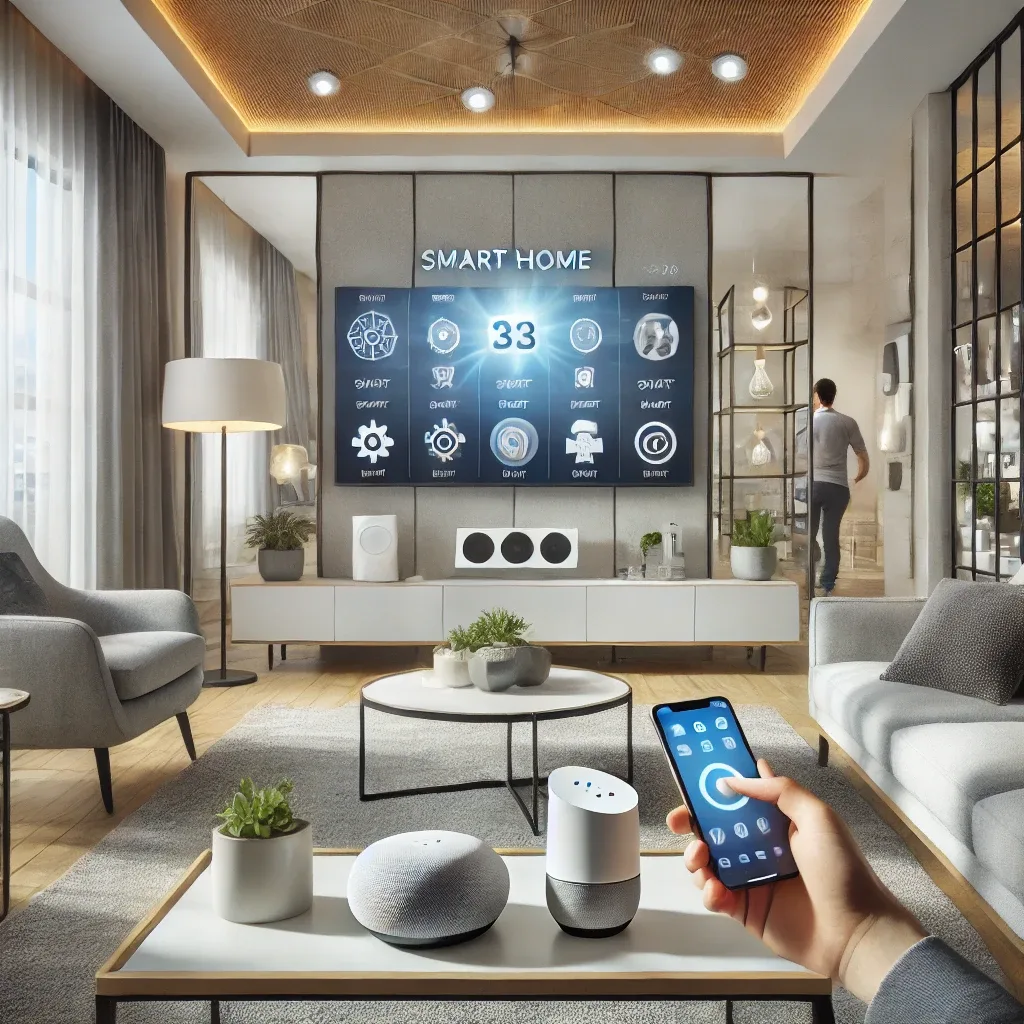
What Is a Smart Home and Why Does It Matter?
A smart home is a residence where devices connect to the internet or a local network, allowing control and monitoring of every appliance via smartphone, tablet, or voice commands — from lighting and cameras to air conditioning and entertainment systems, all managed from a single unified interface.
The real value of a smart home is a system that works for the resident, not one that requires the resident to work around it.
Categories of Smart Home Devices
Before purchasing, understanding the main device categories helps enormously. Smart lighting adjusts brightness, color temperature, and operates automatically. Smart security encompasses cameras, smart locks, and motion sensors. Smart thermostats adjust air conditioning based on occupancy and weather. Smart health devices include air quality sensors and wearables. Smart entertainment covers connected TVs and smart speakers.
Choosing Devices to Fit Your Lifestyle
The first step is assessing your genuine needs and the specific problems you want to solve. If you travel frequently and leave home unattended, security systems and smart locks deliver the highest immediate value. If air quality concerns you — particularly relevant in Bangkok and northern Thailand — smart air quality sensors and purifiers are essential.
The second step is checking compatibility with your existing setup. If you plan to use Home Assistant or Homebridge, select devices supporting Zigbee, Z-Wave, or compatible Wi-Fi protocols to ensure they integrate smoothly without workarounds.
The third step is establishing a realistic budget. Start with devices solving your most critical problem, then expand the system incrementally over time.
Benefits of Choosing the Right Devices
Key benefits include unified control of all devices from a single interface, enhanced security through cameras and smart locks, energy savings through scheduling and automation, personalized automations that adapt to individual daily routines, and improved work-from-home productivity through stable networking and optimized lighting.
Limitations to Be Aware Of
Common limitations include higher upfront installation costs for complete systems, complexity in configuring advanced features, privacy concerns with third-party cloud services, compatibility issues when mixing brands without a plan, and internet dependency for cloud-based functions. HappySmart addresses all of these by planning systems from the start, selecting devices that support Home Assistant, and prioritizing local-first operation to minimize cloud dependency.