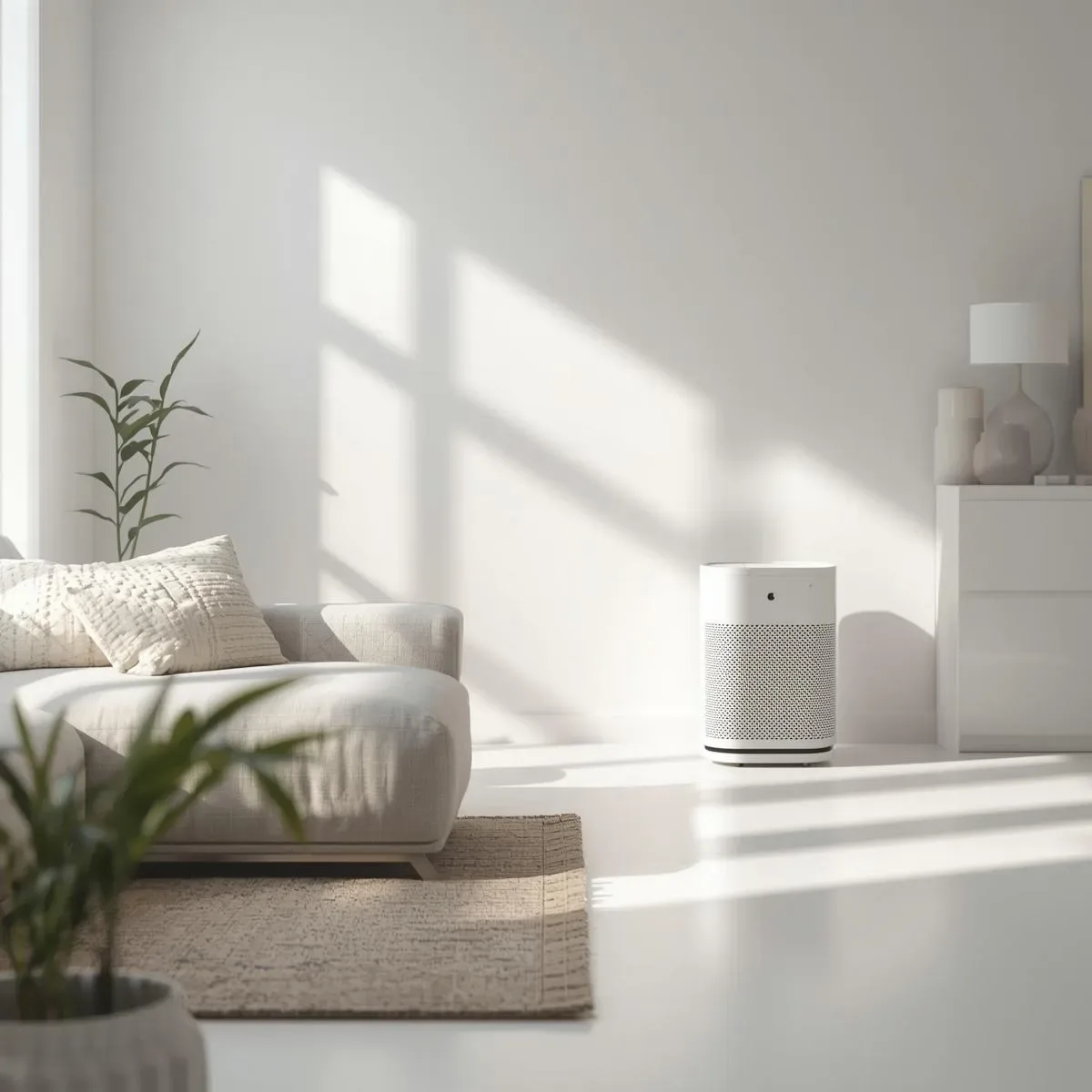
Why Indoor Air Quality Matters More Than You Think
People spend 80–90% of their lives indoors, yet indoor air quality can be 2–5 times worse than outdoor air. Key indoor pollutants include PM2.5 from cooking, accumulated CO2 from breathing, VOCs from furniture and paint, and mold spores.
Sensor System: Know Before You Feel It
The foundation of a dust-free home is real-time air measurement using three core sensor types. PM2.5 sensors (such as Ikea Vindstyrka or Sensirion SPS30) measure fine particulate matter that reaches the lungs — values should stay below 12 μg/m³ per WHO 2021 standards. CO2 sensors (such as SenseAir S8 or Aranet4) detect concentration levels where cognitive performance declines above 1,000 ppm and headaches occur above 2,000 ppm. TVOC sensors (such as Sensirion SGP41) detect volatile organic compounds from cleaning products, sprays, and new construction materials.
Multi-Stage Filtration System
Effective air filtration requires multiple stages working in series. A Pre-Filter captures large dust, pet hair, and fibers and lasts 1–3 months. A HEPA H13/H14 filter captures 99.97% of particles at 0.3 μm including bacteria and mold spores, lasting 12–18 months. An Activated Carbon filter absorbs VOCs, odors, and gaseous toxins, with a lifespan of 6–12 months depending on pollution load.
ERV: Fresh Air Without Energy Loss
An Energy Recovery Ventilator brings fresh outdoor air inside while simultaneously transferring heat and moisture from exhaust air back into the supply stream, saving 60–80% of energy compared to simply opening windows. In Bangkok, where AQI spikes during PM2.5 season (November–March), pairing ERV with an external pre-filter prevents outdoor pollutants from entering with the fresh air supply.
Intelligent Automation: The System Acts Before You Feel It
A well-designed air quality automation monitors PM2.5 and CO2 levels continuously and responds automatically when thresholds are exceeded — activating the air purifier at high speed, enabling ERV ventilation, and notifying residents via LINE with exact sensor readings. The system acts proactively, before air quality degradation becomes noticeable.
PM2.5 Season Mode
During the dusty season, switch from ERV to Recirculation Mode and add slight positive pressurization to prevent outdoor dust from infiltrating through gaps. Home Assistant can trigger this mode automatically by pulling real-time AQI data from the IQAir API, adjusting ventilation strategy based on actual outdoor air conditions.
Conclusion
A truly dust-free home requires good design, appropriate equipment, and automation that responds to air quality in real time. Smart home systems transform indoor air management from a manual task into a continuous, self-managing process.