Five Types of Indoor Pollution to Monitor
Most people assume indoor air is cleaner than outdoor air, but EPA data shows indoor pollutants can be two to five times higher than outside. Five key pollutants found in Thai homes are PM2.5 from outdoor dust and cooking, VOC from wall paint, new furniture, and cleaning products, CO2 that accumulates when people stay in closed rooms, mold and spores from humidity exceeding 60%, and allergens from pets and dust mites.
Choosing the Right Sensors for Each Zone
You don't need every sensor type in every room. Bedrooms need CO2 sensors because breathing during sleep causes CO2 to accumulate, and levels above 1,000 ppm degrade sleep quality. Kitchens need VOC and PM2.5 sensors because Thai cooking with high heat and oil rapidly generates both pollutants. Living rooms with pets benefit from humidity sensors to prevent dust mite proliferation.
Automation Rules for Each Pollutant
Home Assistant enables precise automations for each pollutant. For PM2.5: when it exceeds 50 μg/m³, run the purifier at high speed; when it drops below 15 μg/m³, reduce to low. For CO2: above 1,000 ppm, activate exhaust fans or ERV to bring fresh air in. For humidity: above 60%, run bathroom exhaust fans and lower AC temperature by 2°C. For temperature: above 28°C, automatically set AC to 24°C.
Using hysteresis is essential — activate at PM2.5 > 50 but deactivate at PM2.5 < 35 to prevent rapid on-off cycling that shortens motor life.
A Clear, Readable Dashboard
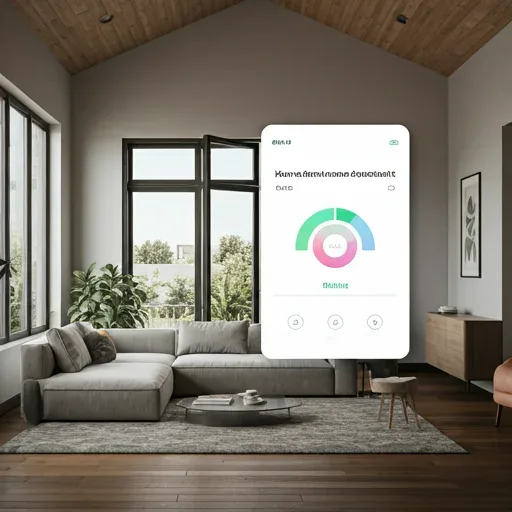
Lovelace Dashboard design should group data by room, with each room showing PM2.5, CO2, VOC, humidity, and temperature alongside clear color codes: green for good, yellow for caution, red for danger. Adding 24-hour mini graphs helps you understand your home's pollution patterns over time.
Real Results from a Bangkok Home
A family of four in Lat Phrao installed Home Assistant with HappySmart and saw their two allergy-prone children improve noticeably within three weeks. Bedroom PM2.5 averaged 8 μg/m³ continuously, and allergy medication use dropped 60%. CO2 data revealed that bedroom doors should be left open for at least 30 minutes each morning — actionable insight they gained directly from the system.
Getting Started Simply
For beginners, HappySmart's Starter Kit includes one Air Sensor for the living room and one Smart Purifier, installable in 30 minutes with no IT knowledge required. New nodes can be added one at a time as budget and needs expand.