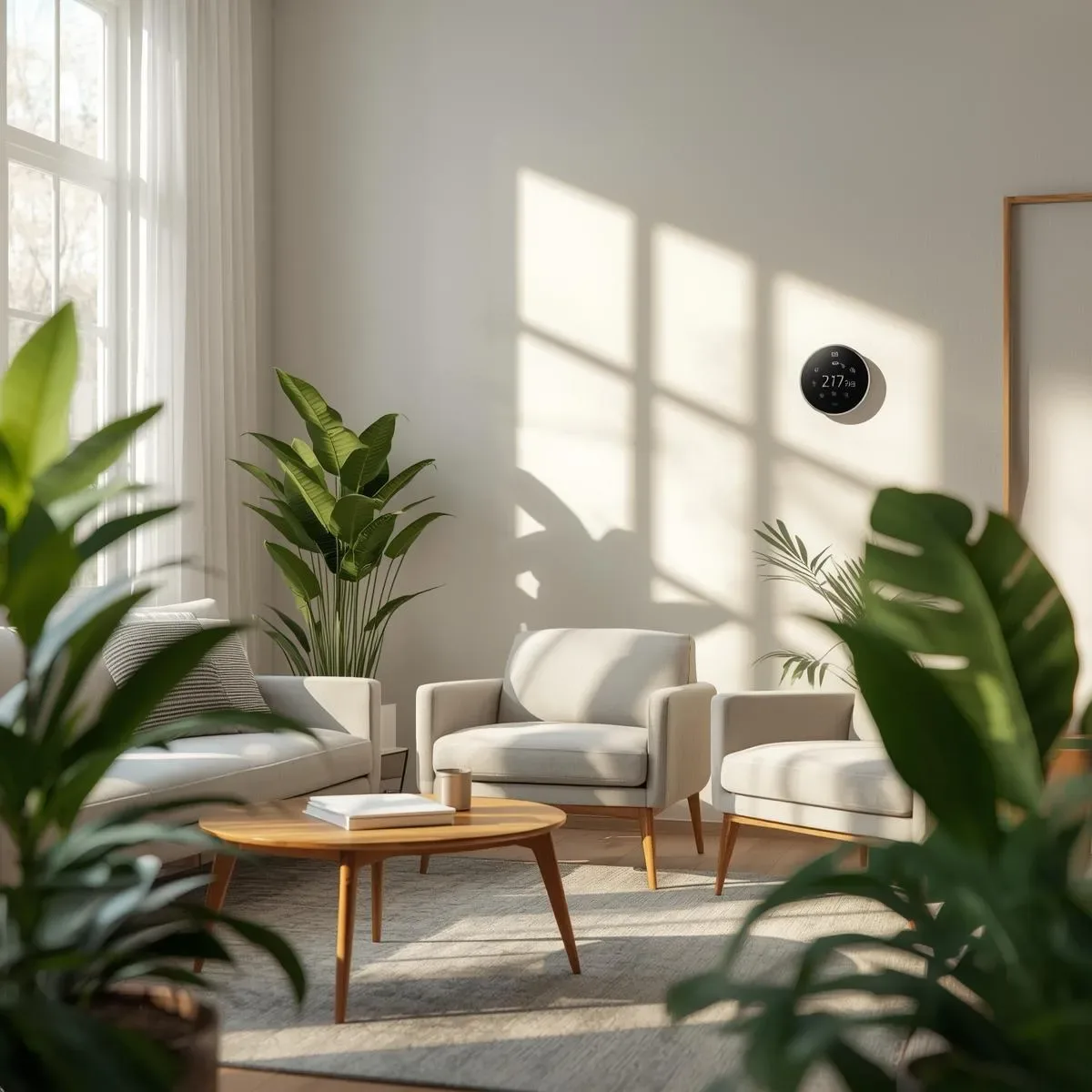
Interior Design That Reduces Dust at the Source
Before relying on air purifiers, the right interior design can reduce household dust accumulation by 30–50% without additional equipment costs.
Easy-clean surfaces: Choose polished concrete, hardwood, or large-format tile (60×60 cm and above) over carpet or rugs that trap PM2.5 and pet dander. Minimise grout lines that collect dust.
Closed built-in furniture: Fully sealed built-in cabinetry reduces dust-collecting open surfaces by 60–70% compared to open shelving. Handleless design further reduces dust catch points.
Curtain vs roller blind: Heavy fabric curtains accumulate dust and VOCs. Roller blinds or Venetian blinds are easier to wipe clean. If fabric curtains are preferred, tightly-woven polyester resists dust far better than cotton.
Ceiling design: Smooth plaster ceilings are far easier to maintain than coffered ceilings or exposed beams that collect dust in recesses. Where texture is desired, choose low-texture washable paint.
Smart Air Quality Monitoring Integrated with Interior Design
Concealing sensors within the interior design:
Skirting-board sensors: Install air quality sensors (CO2 + PM2.5) at skirting-board level, colour-matched to the wall. Detecting dust at floor level — where it actually accumulates — is more accurate than ceiling placement.
Smart vents with decorative covers: Replace standard HVAC vents with Smart Vents (Keen Home, Flair) controllable per room through HA, with designer covers that complement the interior.
Hidden built-in air purifier: Built-in purifiers installed inside a false ceiling or feature wall circulate air invisibly. The Blueair Pro series is sized to fit within furniture cavities.
Biophilic Design and Air Quality
Indoor plants: Species such as Peace Lily and Spider Plant absorb small amounts of VOCs, but their efficiency is far lower than any air purifier. Their real benefits are modest CO2 reduction, slight humidity increase, and significant psychological wellbeing.
Caution: Standard potting mix harbours mould. Use perlite or hydroponic substrate instead, and add a moisture sensor to prevent overwatering, which promotes mould growth.
Proactive Air Quality Automation
yaml
alias: "Dust-Free Home - Proactive Air Management"
trigger:
  - platform: numeric_state
    entity_id: sensor.living_room_pm25
    above: 15
  - platform: numeric_state
    entity_id: sensor.living_room_co2
    above: 900
action:
  - service: fan.set_percentage
    target:
      entity_id: fan.living_room_purifier
    data:
      percentage: >
        {% if states('sensor.living_room_pm25') | float > 35 %}
          100
        {% elif states('sensor.living_room_pm25') | float > 15 %}
          60
        {% else %}
          30
        {% endif %}
Low-VOC Building Materials for New Builds
For new construction or renovation, choose low-VOC or zero-VOC materials:
Paint: Low-VOC options available in Thailand include Jotun Sens (zero VOC) and Beger Healthy Home — releasing far fewer chemicals than conventional wall paint.
Adhesives and sealants: Choose water-based adhesive over solvent-based for flooring installation.
Furniture: Solid wood or E0-grade plywood (lowest formaldehyde) instead of particle board or MDF, which release elevated formaldehyde levels.
ROI of Dust-Free Home Design
The additional cost of low-VOC materials, sealed cabinetry, and hard flooring in a new build averages 5–10% of the total build budget. The long-term savings on respiratory healthcare, air filter replacements, and professional cleaning are substantial — and combined with Smart Home automation, the result is a sustainably healthy home that largely takes care of itself.