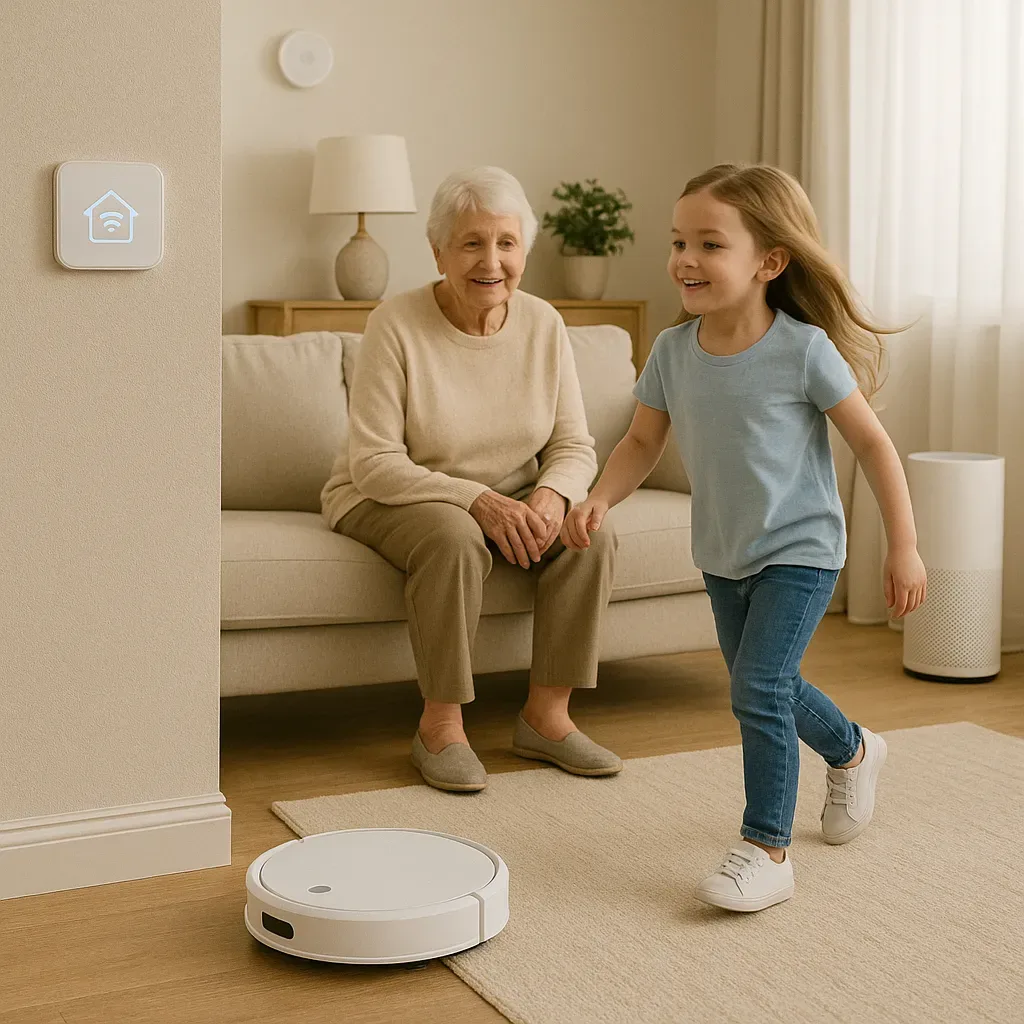
Why Children and Elderly Residents Need Cleaner Air Than Average
Children’s immune systems and lungs are still developing — PM2.5 particles and VOC chemicals directly impact brain development and respiratory function. Elderly residents with heart disease, diabetes, or lung conditions face a significantly higher risk of flare-ups triggered by poor air quality. The goal of a Smart Air Quality System is to maintain PM2.5 <12 µg/m³, CO2 <800 ppm, humidity 45–60% RH, and TVOC <300 µg/m³ continuously.
Essential Air Quality Sensors for Homes with Children or Elderly
PM2.5 + PM10 Sensor: Detects the most dangerous fine particles. Options: Xiaomi HHCCJCY10 (consumer), SDS011 (DIY, high accuracy), or Sensirion SPS30 (medical-grade accuracy).
CO2 Sensor: CO2 above 1,000 ppm causes drowsiness, poor concentration, and long-term immune impact. Recommended: Sensirion SCD40/SCD41 or Aranet4 for children’s bedrooms.
TVOC Sensor: Detects Volatile Organic Compounds from paint, new furniture, and cleaning products — especially harmful to children. Recommended: Sensirion SGP40 or ENS160.
Humidity Sensor: Below 40% RH dries respiratory membranes and makes pathogens airborne more easily. Above 65% RH risks mould growth. Recommended: SHT31 or BME280 for precise measurement.
Smart Air Quality System for Homes with Young Children
Children’s bedroom: Install CO2 + PM2.5 + TVOC + humidity sensors linked to a HEPA H13 purifier and HRV or exhaust fan. Auto-activate when CO2 exceeds 800 ppm. Set HA to alert parents if PM2.5 exceeds 12 µg/m³ at bedtime.
Living room/dining area: Watch for CO spikes during cooking. Install a CO sensor and a smart kitchen hood that auto-activates via HA when cooking begins.
Example automation for a children’s bedroom:
yaml
alias: "Kids Room Air Quality Guard"
trigger:
  - platform: numeric_state
    entity_id: sensor.kids_room_co2
    above: 800
  - platform: numeric_state
    entity_id: sensor.kids_room_pm25
    above: 12
action:
  - service: fan.turn_on
    target:
      entity_id: fan.kids_room_purifier
  - service: notify.line_notify
    data:
      message: >-
        Kids room: CO2={{ states('sensor.kids_room_co2') }}ppm
        PM2.5={{ states('sensor.kids_room_pm25') }}µg/m³ — purifier activated
Smart Air Quality System for Homes with Elderly Residents
Elderly residents with heart or lung conditions need dashboards readable at a glance from a distance. Recommended approach:
Traffic-light display on Dashboard: Green (PM2.5<12, CO2<800), Yellow (PM2.5 12–35, CO2 800–1,200), Red (PM2.5>35, CO2>1,200) — visible clearly from a Smart TV or tablet in the living room.
Family notifications: Automation sends a LINE message to family members when indoor air quality deteriorates continuously for more than 30 minutes — prompting a phone call to check in.
Humidity control: Bangkok’s dry season (December–February) increases elderly vulnerability to respiratory infections. Automate a humidifier to activate when RH drops below 45%.
Devices to Avoid in Homes with Children or Elderly
Scented candles and incense: Release very high PM2.5 and VOCs — room PM2.5 can spike above 100 µg/m³ briefly. Use an electric Essential Oil diffuser instead.
Ozone-generating air purifiers: Some plasma or UV-C units produce ozone, which damages lungs — especially in children and elderly people. Choose pure HEPA filtration only.
Large carpets and heavy curtains that trap dust: If anyone in the household has dust allergies, switch to hardwood or tile flooring with a HEPA-filter robotic vacuum running at least three times per week.
Summary: Smart Air Quality for Homes with Children and Elderly
Investing ฿3,000–6,000 in a complete air quality sensor kit (CO2 + PM2.5 + TVOC + humidity) linked to Home Assistant creates a 24-hour automated response system that maintains healthy indoor air without manual monitoring. The returns are measurable: better health outcomes, fewer sick days, and genuine peace of mind for the whole family.