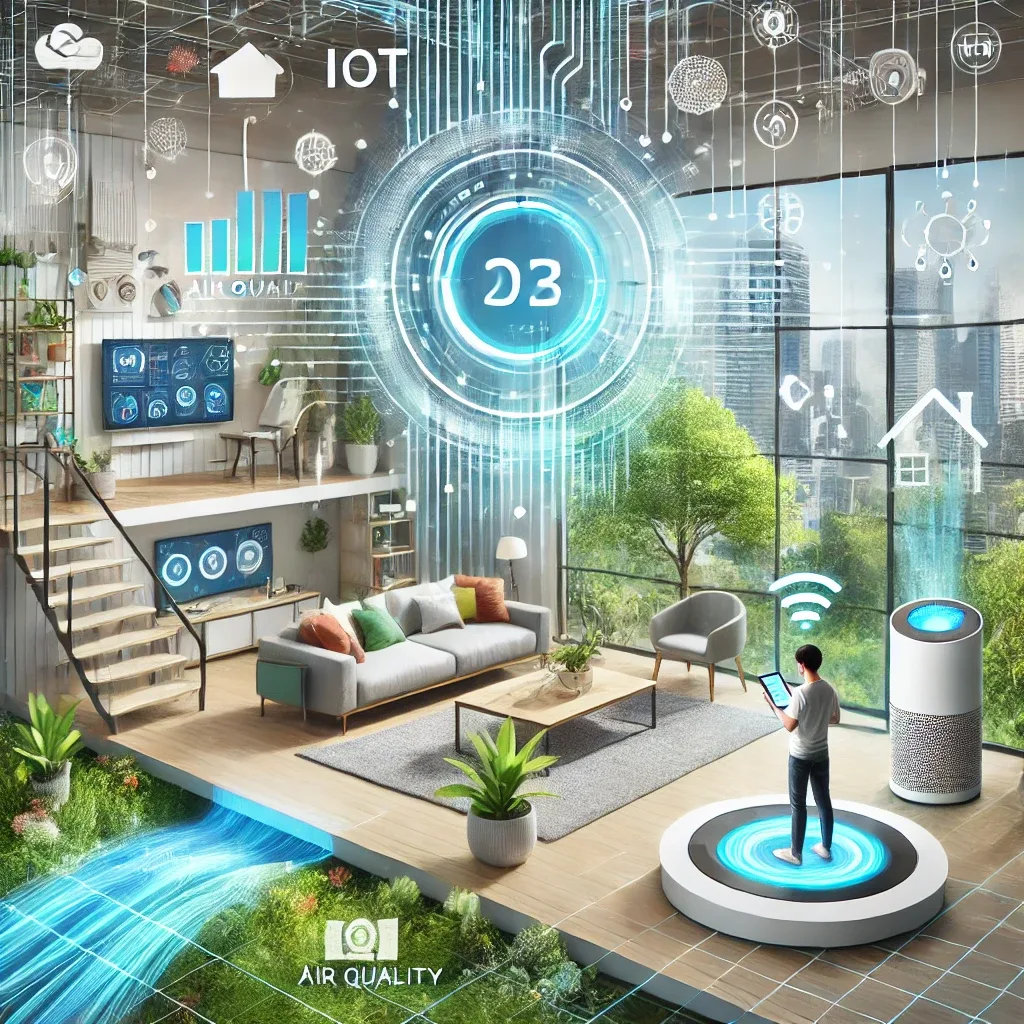
Why Real-Time Monitoring Matters
Indoor air quality fluctuates constantly. Cooking spikes CO2 and grease particles. Opening doors and windows imports outdoor PM2.5. An uncleaned air conditioner accumulates mold spores. Relying on daily averages is insufficient — real-time data is required to respond before occupants are exposed to harmful concentrations.
Essential Sensors for a 2025 Smart Home
A complete sensor setup covers four categories. PM2.5 and PM10 via high-accuracy laser diode sensors. CO2 and VOC to measure air freshness and chemical concentrations. Temperature and humidity to assess mold growth risk. Carbon monoxide for safety against combustion-related CO buildup. Recommended devices include the Airthings Wave Plus (approx. 5,500–7,000 THB), the Awair Element, and the Aqara TVOC Air Quality Monitor, which supports Zigbee for direct Home Assistant integration.
AI-Powered Smart Air Purifiers
Modern smart purifiers go beyond filtering — they use AI to learn household patterns. The system adjusts fan speed every minute based on live PM2.5 readings, forecasts high-pollution windows (before cooking or during morning rush hour), shifts to energy-saving mode when rooms are unoccupied, and sends filter replacement alerts based on actual usage rather than a fixed schedule. HEPA H13 combined with activated carbon handles both fine particles and gaseous pollutants simultaneously.
Multi-Level Smart Notification System
An effective alert system operates at graduated thresholds that occupants can customize. Green level (PM2.5 < 25): dashboard display only. Yellow (25–50): app push notification with advisory tips. Orange (50–75): LINE Notify broadcast to all household members, automatic High mode activation on purifiers. Red (> 75): SMS alert and automated window closure. Critically, notifications should explain the likely cause and suggest immediate actions — not just report a number.
AI Learning and Continuous Optimization
AI's defining advantage is long-term pattern recognition. The system learns that Sunday evenings involve extended cooking that pushes CO2 high, or that the bedroom needs 24°C and PM2.5 below 15 before sleep. This learning allows the system to pre-activate purifiers 20–30 minutes ahead of predicted peaks, minimizing noise disruption and achieving 20–30% energy savings compared to running devices continuously at a fixed setting.